First, choose a desktop that works with your DAW, plug-ins and audio interface. Then compare the exact configuration for memory, storage and connectivity. A compact Mac or Windows desktop saves desk space, while a larger desktop or a model with easily accessible internal components may suit you if you need more storage or room to upgrade. Set up separate accounts for other users, and keep a backup of your projects too.
Who is this guide for?
Recital mixer with large sessions
You edit and mix multiple recorded tracks with effects, and want to check whether a particular configuration can handle your own sessions. Ableton and Steinberg explain how requirements depend on factors such as the number of tracks, plug-ins and recording duration.
Shared workspace user
Colleagues or housemates use the same desktop, so your own settings, files and access permissions matter to you. Microsoft Support and Apple Support explain how to set up separate user accounts.
Creator with a growing archive
You store recital recordings and projects locally, and want to compare storage, upgrade options and backups. Ableton recommends keeping a separate backup of Live projects and recordings.
What should you look for?
Compact Mac desktop
When: if your DAW, plug-ins and interface work with the macOS version you choose, and you have limited desk space.
Trade-off: allow for the ports and space needed for your monitor, interface and any external project or backup drive.
Compact Windows desktop
When: if Windows works with your software and you’re looking for a small computer for a shared workspace.
Trade-off: check the ports, upgrade options and driver for your own audio interface on each model.
Larger Windows desktop
When: if a specific configuration with more memory and local storage is better suited to your active projects.
Trade-off: a larger case takes up more space. The size or processor name alone doesn’t guarantee a particular number of audio tracks.
| What to consider |
What to look for when buying |
Who is this important for? |
| Capacity for your mixing session |
Compare your DAW and plug-in requirements with the processor, memory and exact configuration. Ableton recommends 16 GB RAM or more for Live; this isn’t a universal requirement for every DAW. |
For a long session with multiple tracks, I want to know whether my DAW and plug-ins will work with the configuration; around 33% of consumers put session capacity first. |
| Separate user access |
Check how to set up separate accounts and access to shared project files on the operating system you choose. Microsoft Support and Apple Support explain how to set up separate user accounts. |
If other people use the same desktop, I want my own settings and clear arrangements for project files; around 27% of consumers give separate user access top priority. |
| Project storage and backup |
Compare the SSD capacity and available ports on the exact variant. Ableton recommends a separate backup drive for Live projects and recordings. |
I want to store and restore recital recordings and projects; around 20% of consumers put archiving and backups first. |
| Interface and software compatibility |
Check that your interface, driver, DAW and plug-ins work with the operating system. Test the buffer setting with a representative project; Focusrite explains the trade-off between latency and processing time. |
With an existing interface and plug-ins, I want to know before choosing whether my recording and monitoring set-up will work; around 20% of consumers give compatibility and monitoring top priority. |
Common buying mistakes
-
Assuming a fast processor guarantees a trouble-free mix
The capacity you need also depends on your session and plug-ins. When monitoring through software, a smaller buffer reduces latency, but gives the processor less time to process audio.
Compare your own session and interface with the exact configuration, and test a representative project if possible.
-
Choosing a compact computer without planning for storage and connectivity
Projects and backups take up storage space. Depending on how you work, you may need an external working or backup drive and enough ports.
Check the ports and SSD on the variant you choose, and plan to use a separate backup drive rather than the drive you work from.
-
Sharing one login account with everyone
Separate accounts let users manage their own settings and documents. Shared project files also need clear access arrangements.
Create individual accounts and agree who can open or edit shared project folders.
Relevant brands
Apple
Mac mini M6 for those using macOS software and looking for a compact desktop.
- Apple lists 16 GB memory, with configurable options of 24 or 32 GB and a choice of SSD capacities.
- The specifications don’t confirm whether your existing plug-ins, interfaces and drivers will work. Check the variant and software combination you choose.
Dell
Pro Micro QCM1250 as a compact Windows option for a shared desk.
- The configuration reviewed lists Windows 11 Pro, an Intel Core Ultra 5 235T, 16 GB DDR5 and a 512 GB SSD.
- Check what’s included with the specific order; the configuration details aren’t a measure of audio latency.
Lenovo
ThinkCentre M75q Gen 5 Tiny for those looking for a small Windows workstation.
- Lenovo says the SSD and memory modules are accessible without tools.
- Accessible components don’t tell you the capacity of a specific variant or how it performs with a DAW.
HP
Elite Tower 800 G9 for those looking for a larger Windows desktop with a clearly specified configuration.
- For variant 99M56ET#ABH, HP lists Windows 11 Pro, an Intel Core i7-14700, 32 GB RAM and a 1 TB SSD.
- Check that your order is for this variant; specifications or claims for other workstation models don’t automatically apply to this one.
Joybuy products
This selection includes Windows desktops and compact Apple Mac mini configurations for anyone looking for a desktop to mix recital recordings and share with others. Check the DAW and interface compatibility and exact configuration for each model.
 No image available
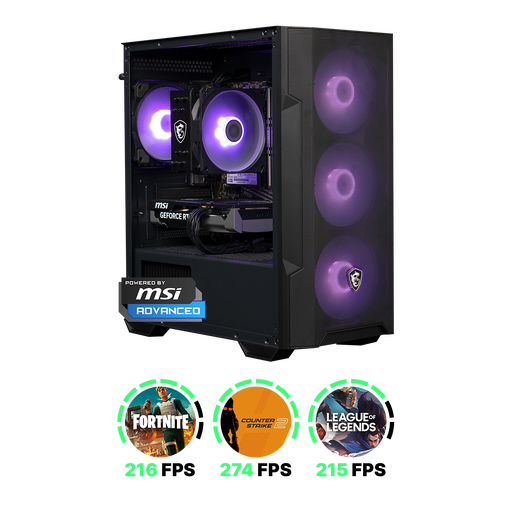
Shark Max Bite R500 Gaming PC, Powered by MSI
May suit you if you’re looking for a Windows desktop for a shared workspace; check how your own DAW, interface and session work with this configuration.
The product information lists a Ryzen 5 5500, 16 GB DDR4 and 500 GB NVMe storage.
According to the product information, the charger must be purchased separately.
View at Joybuy
 No image available
RGB Gaming PC, Ryzen 5, RTX 5060, 16 GB, 480 GB SSD
A Windows desktop option for a shared workspace; check compatibility with your DAW, plug-ins and interface before you buy.
The configuration lists 16 GB DDR4, a 480 GB M.2 PCIe 4.0 SSD and Windows 11, which the product title says is not activated.
View at Joybuy
 No image available
Panoramic Gaming PC, Ryzen 7 5700X, RTX 5060 Ti 8 GB
This Windows desktop may suit you if you’re looking for a larger computer; the processor and graphics specifications alone don’t prove how it will perform during your mixing session.
The product information lists 16 GB DDR4, a 480 GB NVMe PCIe SSD and Windows 11 Home, pre-installed but not activated.
View at Joybuy
 No image available
Apple Mac mini M6, 12-core CPU and GPU, 16 GB, 256 GB SSD
A compact option if your DAW, plug-ins and audio interface are compatible with the macOS configuration you choose.
This variant lists an M6 chip with a 12-core CPU and 12-core GPU, 16 GB memory and a 256 GB SSD; plan your storage and backup accordingly.
View at Joybuy
No image available
Apple Mac mini M6, 12-core CPU and GPU, 16 GB, 512 GB SSD
A compact option if your DAW, plug-ins and audio interface are compatible with the macOS configuration you choose.
This variant lists an M6 chip with a 12-core CPU and 12-core GPU, 16 GB memory and a 512 GB SSD; check that the storage is suitable for your active projects.
View at Joybuy
Frequently asked questions
How many processor cores do you need for mixing recital recordings?
You can’t determine that without taking your session and software into account. Ableton says capacity needs depend, among other things, on the number of tracks and plug-ins. Compare the requirements of your own DAW and, if possible, test a representative project.
How do you set up a desktop for multiple users?
Create a separate account for each user and agree who can open or edit shared project files. Microsoft Support and Apple Support provide guidance on separate user accounts for their operating systems.
Where should you store recital recordings and your backup?
Store active projects on suitable storage and keep a separate backup as well. Ableton recommends a dedicated backup drive for Live projects and recordings.
Are desktops in the Netherlands always covered by just a two-year warranty?
No. Dutch statutory guarantees for consumer purchases don’t have a fixed duration; what you can expect depends, among other things, on the product and normal use. According to ACM ConsuWijzer and the Netherlands Authority for Consumers and Markets, the seller is your point of contact if a product is faulty. A commercial warranty is separate from your statutory rights.


