Who is this buying guide for?

Linux beginner unsure about installation

You mainly want to practise and check that your chosen distribution works with the hardware, without having to troubleshoot drivers straight away. Canonical publishes Ubuntu certifications for specific configurations.

Someone using a shared desk

You need a PC that fits the space available and want to avoid disturbing colleagues with noise. A compact case alone is no proof that a computer is quiet.

Learner using virtual machines

You want to try Linux alongside your current system. Allow for the storage and memory you’ll allocate to the virtual machine; Oracle VirtualBox also highlights the host system’s architecture as something to consider.

What should you look for in a desktop for Linux in a shared office?

Linux pre-installed

Choose this if: you want to start practising straight away and don’t want installation to be your first project. One supplier says that your chosen distribution is pre-installed and the hardware is tested.

Bear in mind: check the exact configuration and what support the supplier promises after purchase.

Install Linux yourself

Choose this if: installation and learning how to identify hardware are part of your learning goals. Canonical recommends trying Ubuntu first if a device isn’t on the certification list.

Bear in mind: check the exact combination of computer and Ubuntu version, and back up your data before changing an existing installation.

Linux in a virtual machine

Choose this if: you want to keep your existing operating system while you try Linux.

Bear in mind: the virtual machine uses allocated memory and storage. Also check that the Linux architecture you want is supported.

What to consider What should you check? Who does this matter most to?
Linux compatibility Compare the full model, components and Ubuntu version tested. If in doubt, try your intended distribution before changing the drive. If I mainly want to avoid my first practice sessions being held up by hardware support, I check the exact configuration. Around 33% of consumers put Linux compatibility first.
Space and noise Check the dimensions, clearance for ventilation and the display and network ports you need. Ask separately for evidence to support any specific noise claim. If I share a desk, I want to know whether the PC will fit and avoid disturbing colleagues; a small case doesn’t tell me how much noise the computer makes. Around 27% of consumers prioritise a shared workspace.
Room for a virtual machine Check the available memory and free storage for both the host system and the virtual machine, and confirm that the architecture you want is supported. If I want to try Linux alongside my current system, I check how much memory and storage will be left for the virtual machine. Around 20% of consumers mainly focus on a virtual learning environment.
Everything you need to get started For each configuration, check whether memory, storage, an operating system and the necessary peripherals are included, and what support the seller provides. If I want to get started quickly, I want to know in advance what’s in the box and what I’ll need to install myself. Around 20% of consumers prioritise clarity about everything needed to get started.

Common pitfalls when buying a Linux desktop

  • Assuming Ubuntu certification covers every configuration

    Certification applies to the hardware configuration and Ubuntu version that were tested. Different components or another distribution aren’t automatically covered by the same certification.

    Before choosing, compare the full model on offer and its relevant components with the certification record.

    Checking different components or distributions may take extra preparation time.

  • Mistaking a barebone for a ready-to-use Linux PC

    ASUS states that the NUC 15 Pro L6 Barebone Kit is supplied without an installed operating system. Its contents therefore differ from those of a complete mini PC.

    Check the full configuration number and which components and installation tasks you’ll need to take care of yourself.

    With a barebone, you may need to source individual components and do some installation work before you can get started.

  • Assuming compact means proven quiet

    A small case or a seller’s general claim that a product is quiet is not the same as an independent noise measurement for the configuration you’re considering.

    Assess noise separately for the exact configuration and the place where you plan to put the computer.

Brands to consider

Lenovo

Canonical lists the ThinkCentre M75q Gen 5 with Ryzen 5 PRO 8500GE in its Ubuntu catalogue.

  • The certification record gives you a specific configuration to compare.
  • It doesn’t automatically tell you anything about other ThinkCentre configurations, distributions or noise levels.

HP

Canonical lists, among others, the Elite Mini 800 G9 Desktop PC with Core i5-14600T in its Ubuntu catalogue.

  • The processor configuration listed gives you a specific starting point for your checks.
  • Other configurations in the same series aren’t automatically equivalent in terms of Linux support.

Dell

Canonical lists the OptiPlex Micro 7010 with Core i5-13600T for Ubuntu 22.04 LTS.

  • The listing is tied to a specific Ubuntu version and configuration.
  • It doesn’t automatically prove support for a later Ubuntu version or a different configuration.

ASUS

ASUS lists Ubuntu 24.04 LTS as a supported operating system for, among others, the NUC 15 Pro L6 Barebone Kit.

  • This information gives you a specific starting point for checking a Linux distribution against a configuration.
  • The L6 barebone is supplied without an operating system. ASUS describes support for validated Linux distributions as best effort, so check the exact configuration.

Mini PCs for a compact Linux learning setup

These Joybuy products are mini PCs to compare for a compact learning setup or a virtual Linux machine. Before buying, check that the exact configuration is suitable for your chosen Linux distribution and has the required CE marking; Linux certification does not replace this product check.

SOYO Y5Pro Mini PC

SOYO Y5Pro Mini PC, Intel Core i5 8250U/8350U, 8GB DDR4, 256GB SATA SSD

A compact configuration to compare if desk space is limited; check that it works with your chosen Linux distribution.

The product name lists 8GB DDR4 and a 256GB SATA SSD. The description mentions HDMI, Type-C video, USB and gigabit Ethernet.

View at Joybuy

Lenovo Yoga Mini 01IPH11 Copilot+ PC

Lenovo Yoga Mini 01IPH11 Copilot+ PC, Intel Core Ultra 5 325, 16GB LPDDR5X, 512GB PCIe 4.0 SSD

This mini desktop is an option to compare if you’re looking for a compact learning setup; check Linux support for the exact configuration.

The product name lists Windows 11 Home, 16GB LPDDR5X, a 512GB SSD and Wi-Fi 7.

View at Joybuy

SOYO M5 Mini PC

SOYO M5 Mini PC, AMD Ryzen 4300U, 16GB LPDDR4, 512GB SSD

A mini PC to compare for a compact workspace or virtual learning environment; check support for your chosen Linux distribution.

The product name lists 16GB LPDDR4 and a 512GB SSD. The description mentions HDMI, DisplayPort, Type-C video, six USB 3.0 ports and gigabit LAN.

View at Joybuy

FIREBAT R3 Mini PC

FIREBAT R3 Mini PC, AMD Ryzen 5 7430U, 16GB RAM, 512GB SSD

This mini PC is worth comparing if you’re looking for a compact computer for a learning setup; check Linux support for the exact configuration.

The product name lists 16GB RAM, a 512GB SSD, Wi-Fi 6 and output for three displays.

View at Joybuy
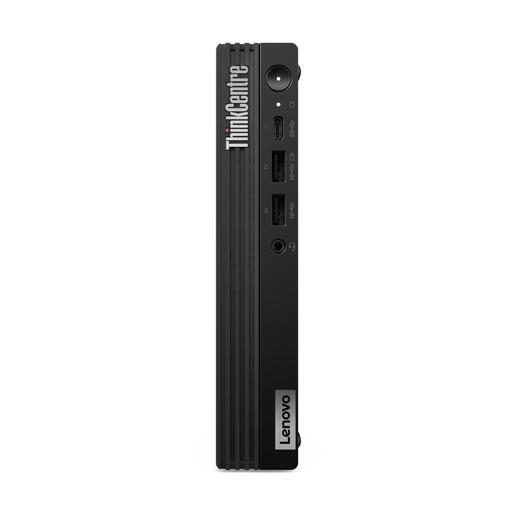
Lenovo ThinkCentre M70q Gen 5

Lenovo ThinkCentre M70q Gen 5, Intel Core i7-14700T, 16GB DDR5, 512GB SSD

Its stated 1-litre case makes this model worth comparing if space at your shared desk is limited; check Linux support for this configuration.

The product name lists 16GB DDR5 and a 512GB SSD. The description mentions DisplayPort, HDMI, USB-A, USB-C, gigabit Ethernet and VESA mounting options. The power adapter isn’t included and must be purchased separately.

View at Joybuy

Frequently asked questions

Can I check whether Ubuntu works before installing it?

Yes, you can try Ubuntu first and check its features. Canonical recommends this for a device that isn’t on the certification list; back up your data before changing an existing installation.

How can I keep my files private in a shared office?

Ubuntu offers full-disk encryption. According to Canonical, this protects stored data from unauthorised access if your device is lost or stolen. Having your own account, locking the screen and following your organisation’s rules are separate considerations.

Does every Linux-compatible NUC come with Linux installed?

No, it depends on the configuration. ASUS states that the NUC 15 Pro L6 Barebone Kit is supplied without an installed operating system, so check the full configuration number and which systems are supported.

What cooling-off period and guarantee apply to an online purchase in the Netherlands?

For a distance purchase from a business by a consumer, a 14-day cooling-off period usually applies, with some exceptions. According to the Dutch government, statutory consumer rights also apply in the Netherlands, with no single fixed guarantee period for all products. If a product is faulty, the seller is the point of contact. These rules don’t necessarily apply to a business purchase for an office.

Must a desktop computer sold in the Netherlands have a CE marking?

For electronic devices sold in the EU, the Dutch government lists a CE marking as a requirement. Check the specific configuration and the electrical components supplied with it; Linux certification doesn’t replace this product safety check.
