What should you look for when choosing?
First, decide which requirement matters most for your projects: graphics features, processor performance, memory and storage, or how the desktop will fit into your workspace.
| What to consider |
What should you check? |
Who should prioritise this? |
| Graphics capabilities |
Check the exact GPU, its dedicated video memory and the graphics APIs it supports. For the recommended Windows configuration for Unreal Engine 5.8, Epic Games specifies at least 8 GB of graphics memory and a DirectX 12-compatible card. |
If I use complex 3D levels or rendering features, I want to know whether the specific GPU is up to the task. Around 36% of consumers prioritise graphics capabilities. |
| Processor for editor work and builds |
Compare the exact CPU model with your engine and build process requirements. For its recommended Unreal configuration, Epic Games specifies a quad-core processor running at 2.5 GHz or faster. Consider the CPU and GPU together. |
If my workflow involves a lot of editor work and building, I want to choose a processor suited to those tasks, rather than focusing only on the GPU. Around 29% of consumers give processor performance top priority. |
| Memory and project storage |
Check the amount of installed RAM, available memory slots and SSD capacity. Unity recommends 8 GB as a minimum for the editor and advises using a drive with high IOPS for builds containing lots of small files. |
If I work with larger projects and lots of files, I want enough memory and storage to avoid running into limits too soon. Around 21% of consumers prioritise memory and project storage. |
| Fitting into your home workspace |
Check the case dimensions, connections and which components are included. Lenovo lists the monitor, keyboard and mouse as optional extras for the ThinkStation P3 Tower Gen 2; don’t assume a particular noise level based on general cooling claims. |
If I’m combining a tower with other work in a limited home workspace, I want to know in advance whether it will fit and whether I’ll need any peripherals. Around 14% of consumers prioritise their workspace setup. |
Brands to compare
These brands and product ranges are useful starting points for comparison. Always check the full configuration, as specifications and included components vary by model.
Lenovo
The ThinkStation P3 Tower Gen 2 is a configurable workstation range, while the Legion Tower 5i is a separate gaming range.
- Lenovo lists Core Ultra processors and professional NVIDIA RTX PRO options for the P3 Tower Gen 2.
- The monitor, keyboard and mouse are optional for the P3 Tower Gen 2. The Legion Tower 5i’s graphics specifications don’t necessarily apply to other Lenovo ranges.
HP
The Z2 Tower G1i is a professional tower range. Compare the configuration code rather than relying on the product name alone.
- HP lists an RTX 2000 Ada with 16 GB and three years of on-site support for configuration C69C6EA#ABH.
- The C69C3EA#ABH configuration we researched has integrated Intel Graphics. Service and application information is provided by HP.
Dell
The Alienware Aurora ACT1250 is a configurable gaming desktop for anyone looking to tailor a setup to their workflow.
- Dell offers several CPU, GPU and RAM options for the ACT1250.
- Dell warns that changing one option may affect other specifications. Check the final configuration carefully; claims about cooling or acoustics aren’t independent noise measurements.
MSI
The MPG Infinite Z3 X3D is an example of a ready-to-use gaming tower with a dedicated GPU.
- For configuration 9NVRR7-848EU, MSI lists a Ryzen 7 9800X3D, an RTX 5070 Ti with 16 GB, 32 GB RAM and a 1 TB SSD.
- These specifications apply to that configuration. Check the full model code when comparing other variants.
ASUS
ROG G700 is a gaming tower range. You’ll need the full configuration code to compare specifications.
- ASUS lists several G700TF configuration codes in its Dutch model overview.
- A G700 model code doesn’t confirm that every configuration has the same GPU or amount of memory.
Joybuy desktops for level design
These Joybuy desktop picks are aimed mainly at complex Unreal levels and graphics work. Compare the exact configuration with the features you need and the size of your projects.
 No image available
Gaming desktop with Ryzen 7 7800X3D and GeForce RTX 5080
This configuration is suited to complex Unreal levels. Check that the GPU is a good fit for your project’s graphics features.
Ryzen 7 7800X3D; GeForce RTX 5080; 32 GB DDR5; 1 TB NVMe SSD; Windows 11 Trial.
View at Joybuy
 No image available
ASUS ROG G700TF-07265F666W
This configuration is suited to complex Unreal levels. Check the exact GPU and memory specifications against the features you use.
Intel Core Ultra 7 265F; 32 GB DDR5; 1 TB SSD; NVIDIA GeForce RTX 5070 12 GB; Windows 11 Home; black.
View at Joybuy
No image available
ASUS ROG G700TF-05225F170W
This configuration is suited to complex Unreal levels. Check that the specific CPU and GPU setup is right for your project.
Intel Core Ultra 5 225F; 32 GB DDR5; 1 TB PCIe 4.0 SSD; NVIDIA GeForce RTX 5070 12 GB; Windows 11 Home; black.
View at Joybuy
 No image available
Lenovo Legion T5 30IAX10
This configuration is suited to complex Unreal levels. Check the GPU and storage capacity against the needs of your projects.
Intel Core Ultra 7; 32 GB DDR5; 1 TB PCIe 4.0 SSD; NVIDIA GeForce RTX 5070; Wi-Fi 7; Windows 11 Home; Eclipse Black.
View at Joybuy
 No image available
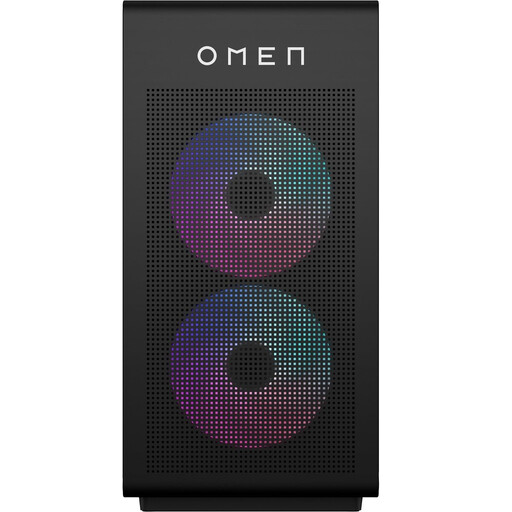
OMEN 35L Gaming Desktop GT16-0160nd C2FK7EA#ABH
This gaming tower is suited to smaller prototypes. Check the full configuration, especially the RAM and GPU, against your engine and project requirements.
View at Joybuy
Frequently asked questions
Is 8 GB RAM enough for level design in Unity?
Unity recommends 8 GB RAM as a minimum for running the editor, but that doesn’t guarantee it will be enough for every level. Larger, more complex projects may need more memory.
What should I consider when setting up in a home office?
Check the connections and available space around the case you choose, and review your engine’s driver requirements. Epic Games recommends using up-to-date drivers from the GPU manufacturer. A general claim about quiet operation is no substitute for a noise measurement of your configuration.
Do I always get exactly two years of legal protection in the Netherlands?
No. According to the Dutch government, there is no fixed statutory warranty period for consumer products in the Netherlands. What you can expect depends, among other things, on the product, its price and how it is used. The retailer is your point of contact if a product is faulty. Consumer protection does not necessarily apply to business agreements.
Should I look for a CE mark?
Check which CE rules apply to the specific device. The Netherlands Enterprise Agency explains that requirements depend on the type of product; a CE mark alone says nothing about whether a device is suitable for game development.
Can my old desktop be taken away when I buy a new one?
For consumers buying a similar new device, the Dutch take-back scheme for old-for-new purchases applies. According to the Dutch government, the retailer cannot charge you to take the old device away. The scheme does not apply to business equipment.


