
Level designer working in a quiet room
If you work for long stretches, factor in fan noise while building and testing, not just performance.


Start by considering your engine and project demands. For Unreal Engine 5 on Windows, Epic Games recommends 32 GB of RAM and at least 8 GB of graphics memory, while Unity Technologies recommends 8 GB of RAM for the Editor and notes that larger projects may need more. Assess noise levels separately: ask how loud the complete system is under a workload similar to yours. A quiet case or cooling claim doesn’t tell you how noisy the PC will be while you’re designing levels.
If you work for long stretches, factor in fan noise while building and testing, not just performance.
For Unreal Engine 5 projects, the features you use and the demands of your project matter. For Windows, Epic Games recommends 32 GB of RAM and at least 8 GB of graphics memory as a starting point.
Unity Technologies recommends 8 GB of RAM for the Editor, but the amount you need also depends on the size and complexity of your project.
| Key consideration | What should you check? | Who should pay particular attention? |
|---|---|---|
| Noise and cooling | Ask for noise information for the complete system under load, and check the cooling and airflow too. | If you work for long periods in a quiet room, you’ll want to know how noisy the PC is while building and testing. Around 29% of consumers prioritise quiet operation. |
| Complex 3D levels | Compare the RAM, graphics memory and graphics card with the features you use. For Unreal Engine 5 on Windows, Epic Games recommends 32 GB of RAM and at least 8 GB of graphics memory. | If you create complex Unreal Engine 5 levels, you’ll want to match the system to the rendering features you use. Around 36% of consumers cite demanding 3D projects as their main concern. |
| Smaller Unity projects | Choose RAM and storage to suit the size of your project. Unity Technologies recommends 8 GB of RAM for the Editor, but this isn’t a guarantee that it will be enough for every project. | If you mainly create smaller Unity levels, you won’t want to pay automatically for a system designed for more demanding projects. Around 21% of consumers prioritise less demanding projects. |
| Upgrades and configuration | Check the full model code, the installed memory and the available options for upgrading the RAM and storage. | If you plan to upgrade later, you’ll want to know which components can be changed in your particular configuration. Around 14% of consumers cite upgradeability as their main consideration. |
Noise also depends on the processor, graphics card, cooling and workload. Information about a standalone case doesn’t measure how noisy a complete desktop will be while you’re designing levels.
Ask for noise information on the exact configuration under a workload similar to yours, and check which cooling settings were used.
A range may include different configurations. For example, Lenovo lists RTX PRO options for the ThinkStation P3 Tower Gen 2, while some individual configurations may have integrated graphics.
Check the full model code and the components actually installed in the configuration you’re choosing.
If you plan to upgrade the memory or graphics components later, check in advance which changes your specific configuration allows.
For Unreal Engine 5 on Windows, Epic Games recommends 32 GB of RAM. That doesn’t automatically make a gaming desktop suitable for the features and projects you use.
Before relying on a future upgrade, compare the exact configuration with your engine’s recommendations and the requirements of your own project.
Upgrading the memory later may mean extra costs, so check that an upgrade is possible before relying on one.
The ROG G700 range includes tower configurations with different specifications. Always compare the full model code.
The MAG Infinite S3 14th range includes gaming towers with a variety of processors and graphics cards.
The ThinkStation P3 Tower Gen 2 is a configurable workstation range for buyers weighing up different configurations and professional applications.
Dell lists Pro Max towers as a workstation option for graphics-intensive applications.
These desktop options are worth comparing for more demanding Unreal Engine 5 levels and less demanding Unity projects. The configurations listed don’t indicate how quiet a complete PC is, so ask about noise under a similar workload.
 No image available
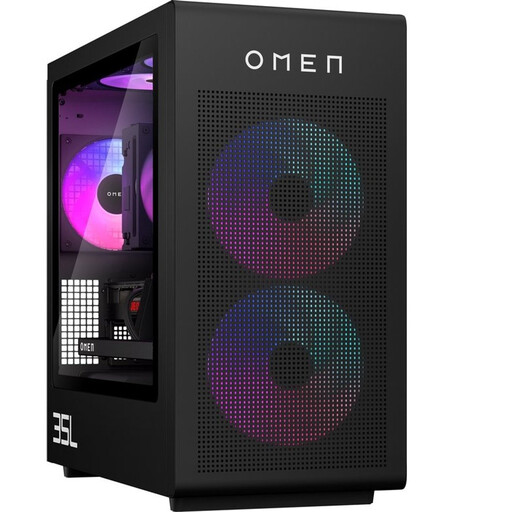
A tower worth comparing for more demanding level-design projects; assess the noise from the complete system separately.
Intel Core Ultra 7 265F, 32 GB DDR5, NVIDIA GeForce RTX 5070 with 12 GB, 1 TB SSD and Windows 11 Home.
No image available
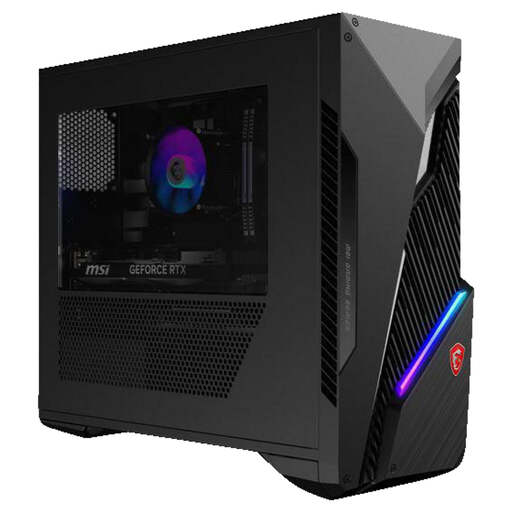
This tower is worth comparing for more demanding level-design projects. Check system noise under load before choosing it for a quiet study.
Intel Core Ultra 5 225F, 32 GB DDR5, NVIDIA GeForce RTX 5070 with 12 GB, 1 TB PCIe 4.0 SSD and Windows 11 Home.
 No image available
An option worth comparing for less demanding Unity levels. Match the configuration to the size of your projects and check noise levels under load.
 No image available
A desktop worth comparing for less demanding Unity projects. Check the full configuration and ask about noise during the kind of work you do.
Intel Core i7 processor and GeForce RTX 5060 Ti.
For Unreal Engine 5 on Windows, Epic Games recommends 32 GB of RAM. If you use this engine, check how much memory is installed in this configuration.
 No image available
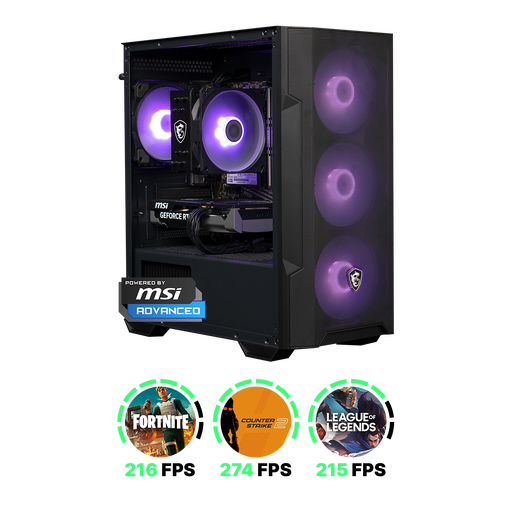
A gaming PC worth comparing for less demanding Unity projects. Check that the configuration suits the size of your projects and consider your preferred noise levels.
RTX 5060, R5, 16 GB and 500 GB storage.
For Unreal Engine 5 on Windows, Epic Games recommends 32 GB of RAM, so the listed 16 GB falls short.
No. Epic Games recommends 32 GB of RAM for Unreal Engine 5 on Windows. Unity Technologies recommends 8 GB for the Editor and notes that larger, more complex projects may need more. Choose a system to suit your engine and project.
Not necessarily. Information from be quiet! describes different options for sound dampening and airflow, but doesn’t tell you how quiet or cool a complete PC will be with your components. Ask for information about the full configuration under load.
Before installation, check the supported engine version, operating system and graphics support. During use, make sure there’s enough space for airflow and follow the maintenance instructions for your chosen desktop. Check which features are included with each model.
You don’t need a paid warranty to have statutory rights if a product is faulty. According to the Dutch Government, there’s no fixed statutory warranty period in the Netherlands. If something goes wrong, contact the seller and compare any additional cover to see what extra protection it offers.