For small Python exercises, you don’t automatically need to choose a powerful gaming desktop. Focus instead on how quiet you need it to be and which software environment you want to use. A fanless mini PC can eliminate the sound of the computer’s fan, while a compact or expandable desktop may be better suited to other software needs or future projects. For each configuration, check the operating system, included components and safety information.
Who is this choice relevant to?
Beginners who value quiet
If you’re practising small scripts in a quiet room, a fanless design can help eliminate the sound of the PC’s fan. ASUS describes the ExpertCenter PN42 as having this design; check the other components of your chosen configuration too.
Beginners who want to get started straight away
If you want to get started without extra installation, check whether an operating system is included. Microsoft says the Python extension for Visual Studio Code does not include the Python interpreter, which you’ll need to install separately.
Students planning larger projects
If you expect to need more memory or storage later, check the upgrade options for the exact model. Lenovo lists two memory slots for the ThinkCentre neo 50q Gen 5, but options vary by configuration.
What should you look for when choosing?
Fanless mini PC
Best for: a quiet study space where audible fan noise is your main concern.
Bear in mind: fanless doesn’t mean that other components or peripherals are silent; check the configuration too.
Compact desktop with macOS
Best for: anyone who wants to use macOS and is looking for a compact computer.
Bear in mind: check the connections for your screen and peripherals, as well as what’s included with the configuration.
Expandable mini desktop
Best for: anyone who expects to upgrade their memory or storage later, or is looking for a Windows or Linux environment.
Bear in mind: features listed for a product family don’t necessarily apply to every configuration; no quietness benefit has been established.
| What to consider |
What should you check? |
Who is this important for? |
| Noise while studying |
Check the design of the exact configuration and look for information about other sources of noise. |
If I work in a quiet room, I want to know how much noise the computer itself makes. Around 36% of consumers put quietness first. |
| Getting started straight away |
Check whether an operating system is included and whether you can install the Python environment you want. |
I want to start programming without first discovering that I still need to arrange an operating system or interpreter. Around 29% of consumers prioritise being able to get started straight away. |
| A complete workstation |
Check the connections for your screen and peripherals, and what’s included. |
When setting up my study space, I want to know in advance what else I’ll need besides the computer. Around 21% of consumers prioritise a complete set-up and its associated costs. |
| Upgrading later |
Check the memory slots, storage options and upgrade conditions for the exact configuration. |
I want the flexibility to adapt my computer as my projects grow. Around 14% of consumers put expandability first. |
You don’t necessarily need a gaming desktop for your first exercises. Microsoft recommends a processor of at least 1.6 GHz and 1 GB RAM for Visual Studio Code, but these are recommendations for the editor, not a guarantee of what future Python projects will require. Only compare noise information when it’s available for the exact configurations and under comparable conditions.
Common buying mistakes
-
Assuming ‘fanless’ means completely silent
ASUS describes the ExpertCenter PN42 as having a fanless design, but that doesn’t mean other components or peripherals won’t make noise.
Check noise information for the exact configuration and take the rest of your set-up into account.
-
Not checking the mini PC’s configuration
The Dutch listing described for the ASUS PN42-BBN200MV doesn’t specify an operating system and contains conflicting storage information.
Before buying, ask for confirmation of the storage and software included with the specific configuration.
If an operating system isn’t included, you may need to install one separately first.
-
Confusing the manufacturer’s warranty with your statutory rights
According to ACM ConsuWijzer, your statutory rights depend on what you could reasonably expect from the product; a manufacturer’s warranty is not the same as those statutory rights.
Check the commercial service terms and consider your statutory rights separately.
Brands to consider
ASUS
The ExpertCenter PN42 is a fanless mini PC; the PN54-S1 is a different range, with a focus on connectivity and configuration options.
- ASUS attributes lower operating noise to the PN42’s fanless design.
- This is a manufacturer’s claim, not an independent noise measurement or a conclusion about every ASUS PC. Check the exact configuration.
Apple
The Mac mini is a compact desktop with macOS, for anyone who wants to use that software environment.
- Apple lists a Mac mini with M6 configuration featuring 16 GB of unified memory and a 256 GB SSD.
- This configuration doesn’t prove that the computer is quieter than the alternatives.
Lenovo
The ThinkCentre neo 50q Gen 5 is a compact desktop range with various operating system and expansion options.
- Lenovo lists two memory slots for this product family.
- Family specifications don’t necessarily apply to every model code; no noise benefit has been established.
HP
HP positions the Pro Mini 400 G9 as a compact desktop option for small workspaces.
- Its compact size may be useful if you have limited desk space.
- The product’s positioning doesn’t prove a specific noise level or the features of every configuration.
Dell
The OptiPlex Micro is a compact desktop option if placement and mounting are important to you.
- Dell highlights its compact dimensions and mounting options.
- Configurations and support services vary; the product information doesn’t provide a comparable noise measurement.
Joybuy desktops for studying Python
These models range from compact mini PCs and a Mac mini to gaming desktops. Check the CE marking on the computer and power supply actually delivered; the product name alone doesn’t confirm that the applicable requirement has been met. Also compare the configuration with your requirements for noise, operating system and connections.
 No image available
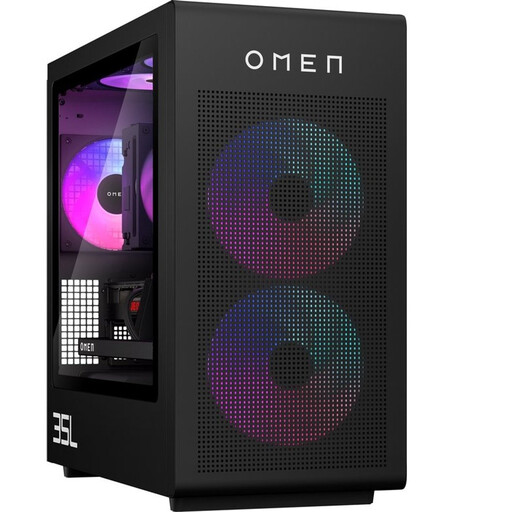
OMEN 35L Gaming Desktop GT16-0162nd D49NFEA#ABH
According to the product description, this desktop has Windows 11; check whether the configuration on offer meets your software requirements.
Intel Core i7 processor, 16 GB DDR5 memory and 1 TB SSD. The description lists a 35L case and a weight of 14.5 kg.
You don’t necessarily need a gaming desktop for your first Python exercises. Check the CE marking on the computer and power supply delivered.
View at Joybuy
 No image available
SOYO Y5Pro Mini PC, Intel Core i5 8250U/8350U, 8 GB DDR4, 256 GB SSD
The compact mini PC format may suit you if you’re looking for a smaller computer; check which of the listed processor variants will be supplied.
The product title lists Windows 11, 8 GB DDR4 memory, a 256 GB SSD, Wi-Fi 5 and Bluetooth 5.2.
Microsoft says the Python interpreter must be installed separately from the Visual Studio Code extension. Also check the CE marking on the computer and power supply delivered.
View at Joybuy
 No image available
RGB Gaming PC, RTX 5060, Ryzen 5, 16 GB, 480 GB SSD, Windows 11
The product title lists Windows 11, but also says it isn’t activated; check what this means for your installation before choosing.
The description lists a Ryzen 5 processor, 16 GB DDR4 memory, a 480 GB SSD and four cooling fans.
The fans are worth considering if you want a quiet study space; no comparable noise measurement is available. Also check the CE marking on the computer and power supply delivered.
View at Joybuy
 No image available
Panoramic Gaming PC, AMD Ryzen 7 5700X, GeForce RTX 5060 Ti 8 GB, 16 GB DDR4, 480 GB NVMe SSD
The product title lists Windows 11 Home, but also says it isn’t activated; check what this means for your intended use.
The description lists a Ryzen 7 processor, 16 GB memory, an RTX 5060 Ti and a 480 GB NVMe SSD. It also mentions three case fans and a CPU cooler.
For a quiet study space, check the noise information for the exact configuration. Also check the CE marking on the computer and power supply delivered.
View at Joybuy
 No image available
Mac mini with Apple M6 chip, 12-core CPU and 12-core GPU, 16 GB, 256 GB SSD
This compact desktop with macOS is a good fit if you want to use that software environment; check that your screen and peripherals are compatible.
The product title lists 16 GB memory and a 256 GB SSD. The description lists macOS and an M6 chip with a 12-core CPU.
Microsoft says you need to install the Python interpreter separately from the Visual Studio Code extension. Also check the CE marking on the computer and power supply delivered.
View at Joybuy
Frequently asked questions
Do I need a powerful gaming PC to learn Python?
Not for your first exercises, based solely on the editor’s requirements. Microsoft recommends a processor of at least 1.6 GHz and 1 GB RAM for Visual Studio Code; these aren’t guaranteed requirements for all your future Python projects.
Is Python installed when I install Visual Studio Code?
No. According to the Visual Studio Code documentation, the Python extension doesn’t include the interpreter; install it separately and select it in your development environment.
Is a fanless PC completely silent?
Not necessarily: a fanless design eliminates the sound of a fan inside the PC, but doesn’t tell you how much noise other components or peripherals make. ASUS describes the ExpertCenter PN42 as having this design; only compare noise information for specific configurations and under comparable conditions.
Which safety marking should I check on a PC for use in the Netherlands?
Check the CE marking on the computer and power supply actually delivered. The Dutch government says electronic devices placed on the market in the EU must have a CE marking; the product name alone doesn’t confirm this.
Do I have a cooling-off period and statutory rights when I buy a desktop online?
ACM ConsuWijzer says that online product purchases generally come with a statutory 14-day cooling-off period from delivery, subject to exceptions that you should check for your purchase. Your statutory rights depend on what you can reasonably expect from the product under normal use; a manufacturer’s warranty doesn’t replace those rights.


