
Illustrators working to a presentation deadline
You want to finish the scene in your own software and show the final file to a client without any surprises. Match your desktop to your software and test the output in advance.


Choose a desktop based on the requirements of your illustration software, the size of your files and the screen you use to assess detail and colour. You don’t automatically need a dedicated graphics card or tower for 2D illustration. If you already have a suitable screen, a compact desktop could be a good fit. If you want to buy the computer and screen together, compare all-in-one models and check the delivery date.
You want to finish the scene in your own software and show the final file to a client without any surprises. Match your desktop to your software and test the output in advance.
You work with lots of shapes, artboards or image layers and want to keep your files and revisions organised. So check the memory and storage on the exact configuration you’re considering.
You pay close attention to lines, detail and colour as you work, and want to choose between using your own screen and a desktop with a built-in display.
A good fit if: you use Windows software or existing Windows peripherals and want to choose your own screen. Lenovo lists 16 GB of memory and a 512 GB SSD for the ThinkCentre M75q Gen 5 configuration 12RQ003QEZ.
Bear in mind: you’ll need to arrange the screen and any peripherals separately. Also check the ports and the full configuration.
A good fit if: your software and plug-ins run on macOS and you want to use your own screen. Apple lists 16 GB of unified memory and a 256 GB SSD for the base Mac mini M6 configuration.
Bear in mind: consider whether the storage capacity will suit your files, and check which connections your screen needs.
A good fit if: you want to buy the computer and screen together. Apple says the iMac M6 has a built-in 24-inch 4.5K display.
Bear in mind: your screen choice is fixed. Apple says the iMac M6 will be available in stores from 6 November 2026, so it isn’t a confirmed option for a presentation before then.
A good fit if: you do demonstrably more demanding work alongside illustration, or want to add components. HP highlights 3D work and upgrade options for the Z2 Tower G1i range.
Bear in mind: according to HP, the C69C1EA#ABH configuration reviewed has integrated Intel Graphics and was listed as unavailable by HP. You’ll need to assess the screen and graphics configuration separately.
| What to consider | What should you check? | Who should pay particular attention? |
|---|---|---|
| Software and workflow | Check the operating system, your software’s requirements and the installed specifications of the full configuration. | If I want to use my illustration software and files smoothly, I start with the software requirements and configuration. Around 36% of consumers put software compatibility and workflow first. |
| Screen, detail and colour | Check the screen size, resolution and connections for the complete setup; assess colour within your own working and output workflow. | To assess fine lines and colour, I want to know which screen I’ll use every day. A built-in display and a screen I choose myself call for different considerations. Screen and colour are the top priority for around 29% of consumers. |
| Files and presentation confidence | Compare the SSD capacity with the size of your files and revisions, and check that you can open your final output. Make sure you also have a restorable backup. | I want to be able to find previous revisions and reopen the final scene before the meeting, so I look at local storage and a working backup. File storage and presentation confidence come first for around 21% of consumers. |
| Expandability and workstation setup | Check the ports, included components and specific upgrade options for the exact model. | If I want to change components later or keep using my existing peripherals, I check the connections and upgrade options. Around 14% of consumers prioritise expandability and the complete workstation setup. |
A compact desktop needs a suitable external screen setup, while an all-in-one has a built-in display. As a result, the complete workstation setup may work out differently from what the computer alone suggests.
First check whether you already have a suitable screen, then compare all the components you’ll need.
With a compact desktop, you’ll need to arrange a suitable screen and any required peripherals separately.
According to HP, the HP Z2 Tower G1i configuration reviewed, C69C1EA#ABH, has integrated Intel Graphics. So the product range name doesn’t confirm which graphics configuration this specific model has.
Check the graphics specification for the full product code, and only consider additional graphics hardware if it’s needed for a specific task.
Apple says the iMac M6 will be available in stores from 6 November 2026. That doesn’t make it a confirmed option for an earlier client presentation.
Check your presentation date against a confirmed delivery date before relying on this model.
For an earlier meeting, you may need another workstation setup that’s available in time.
According to the Dutch government, there’s no fixed term for the statutory guarantee in the Netherlands. If a product is faulty, the seller must provide a solution.
Check any additional warranty cover separately, and distinguish between a personal and a business purchase.
Mac mini for a screen you choose yourself, or iMac for a desktop with a built-in display, provided your illustration software runs on macOS.
The ThinkCentre M75q Gen 5 Tiny is a compact Windows desktop that uses a separate screen.
The Pro Micro QCM1250 is a compact Windows desktop with a screen you choose separately.
HP positions the Z2 Tower G1i range for tasks including 3D work and highlights its upgrade options.
The Joybuy selection below includes an all-in-one and gaming desktops. Check each model against your illustration software’s requirements and the full configuration; a gaming label alone doesn’t prove that you need extra graphics capacity for 2D illustration.
 Image unavailable
An option if you want to buy the computer and screen together. Check whether 8 GB of onboard memory is enough for your software and work files.
23.8-inch FHD IPS display; Ryzen 5 7520U; 8 GB onboard memory; 512 GB SSD. According to the product description, the memory isn’t upgradeable.
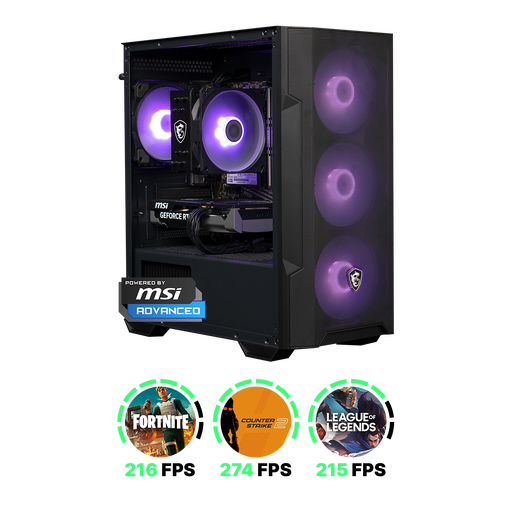 Image unavailable
An option if you’re looking for a Windows desktop. Assess the configuration against your own illustration software and tasks.
Ryzen 5 5500; GeForce RTX 5060 with 8 GB graphics memory; Windows 11 Home; 16 GB DDR4; 500 GB NVMe SSD.
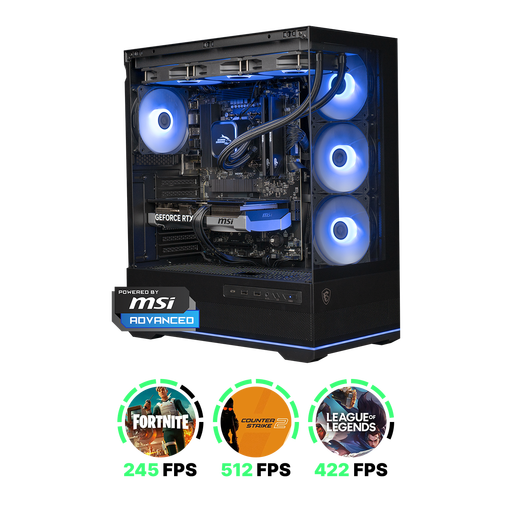 Image unavailable
Compare this desktop with your software’s requirements and decide whether the listed configuration suits your work.
Ryzen 7 7800X3D; GeForce RTX 5070 with 12 GB graphics memory; Windows 11 Home; 16 GB DDR5; 1 TB NVMe SSD.
 Image unavailable
Check whether this Windows desktop and its configuration meet the software requirements for the scene you’re working on.
Ryzen 5 5500; GeForce RTX 5060 with 8 GB graphics memory; 16 GB DDR4; 480 GB SSD. The product title states that Windows 11 isn’t activated.
 Image unavailable
Consider this configuration as a possible Windows desktop and check its components against your own illustration and output workflow.
GeForce RTX 5060 Ti with 8 GB graphics memory; 16 GB DDR4; 480 GB NVMe SSD. The product title states that Windows 11 Home isn’t activated.
No, not as a general requirement for all illustration software. Adobe lists 8 GB as the minimum and 16 GB or more as the recommended amount for Photoshop version 27.x and later. Check the requirements for the programme and version you actually use.
Not just because you’re creating an illustration. Distinguish between vector illustration, image editing and any 3D work, then check your software’s requirements for the task. According to HP, the HP Z2 Tower G1i configuration reviewed, C69C1EA#ABH, has integrated Intel Graphics.
Save a clearly labelled final version and check that it opens. On a Windows PC, File History can help you restore earlier file versions once you’ve set it up with an external drive or network location.
For online purchases made as a consumer from a business, a statutory 14-day cooling-off period after delivery applies in many cases, according to the Dutch government. You’re also entitled to a product that works as it should; there’s no fixed statutory warranty period in the Netherlands, and the seller is your point of contact if something is wrong. According to Ondernemersplein, the statutory cooling-off period for consumers doesn’t automatically apply to business purchases.