Who is this buying guide for?

Family archive manager

You want to be able to find letters, scans and their provenance later. A consistent folder structure and restorable copies matter more than maximum computing power. The Noord-Hollands Archief advises organising digital files and keeping them accessible over time; Gramps warns that moving media files can break links to an index.

Frequent indexer

You work with an index, scans and several windows at once, so you need a suitable combination of memory and storage. The Nederlandse Genealogische Vereniging explains how genealogy programmes help organise research data and its provenance.

Small home-office user

You’re looking for a desktop that takes up little space but works with your scanner, monitor and storage devices. Before setting up your workspace, check the ports and included accessories for the exact model configuration.

What should you look for when buying?

Compact Windows mini PC

Best for: a small workspace where you mainly maintain an index and view scans. Lenovo lists 16 GB of memory and a 512 GB SSD for the ThinkCentre neo 50q Gen 4 configuration 12LM006LEZ.

Bear in mind: the monitor and keyboard are sold separately with this Lenovo configuration. Also check that the ports are suitable for your scanner and monitor.

Expandable Windows tower

Best for: a workspace where room for upgrades or an optional optical drive matters more than a compact case. Dell lists 16 GB of memory and a 512 GB SSD for the Pro Tower QCT1255 configuration reviewed.

Bear in mind: the standard configuration shown doesn’t include an optical drive; options may vary by configuration.

Mac mini

Best for: using macOS, provided your indexing programme and peripherals are compatible. Gramps offers an Apple Silicon version.

Bear in mind: check the exact storage configuration and make sure your other genealogy and scanning software is compatible too; the availability of Gramps alone doesn’t confirm this.

What to consider What should you check? Who is this important for?
Source files and links Choose where to store your files and test whether links still work after copying and restoring them. If I move or restore scans, I want the index to keep finding them. Around 36% of consumers prioritise keeping source files and links intact.
Using the index and scans together Check the requirements of your own programme and review the memory and SSD configuration of the exact model. If I use the index, scans and several windows side by side, I want a configuration that works well for me. Around 29% of consumers prioritise indexing multiple items at once.
Connections for your equipment Compare the connectors on your scanner, monitor and back-up drive with the ports on the configuration you’ve chosen. I want to connect my existing equipment without having to plan a new set-up first. Around 21% of consumers prioritise connections for a scanner, monitor and back-up.
Space and included accessories Check the size of the case and what comes with the computer. With limited desk space, I want to know whether the computer and the equipment I need will fit together. Around 14% of consumers prioritise a compact, complete workspace.

Buying pitfalls

  • Assuming indexing software stores the scans itself

    An index may contain links to media files. If you move the files, those links may no longer point to the right location. Gramps explains this risk for its media files.

    First, create a consistent folder structure and test that a back-up includes both the index and scans, and that you can restore them.

    After moving files, you may need to spend time fixing broken links.

  • Mistaking a mini PC kit for a ready-to-use computer

    For the NUC 14 Pro, ASUS distinguishes between a Mini PC and a Kit, which doesn’t come with a pre-installed operating system, memory or storage.

    Check the full model configuration and what’s in the box, not just the product range name.

    With a Kit, you may need to buy and install memory, an SSD and an operating system separately.

  • Comparing only the computer

    The monitor and keyboard are sold separately with the Lenovo ThinkCentre neo 50q Gen 4 configuration reviewed.

    Before buying, compare the accessories you already have with what you still need, and check that the connections are compatible.

Brands to consider

Lenovo

The ThinkCentre neo 50q Gen 4 is a compact Windows desktop range; the specifications listed apply to configuration 12LM006LEZ.

  • Lenovo lists 16 GB of memory and a 512 GB SSD for 12LM006LEZ.
  • The monitor and keyboard are sold separately with this configuration; also check the connections for your own equipment.

Dell

The Pro Tower QCT1255 is a tower option for anyone who wants to tailor the configuration to their workspace.

  • Dell lists 16 GB of memory and a 512 GB SSD for the configuration reviewed.
  • The standard configuration doesn’t include an optical drive; check which options are available with the configuration you choose.

Apple

The Mac mini is a compact macOS option, provided your existing software and peripherals work with it.

  • Apple lists several memory and storage configurations for the Mac mini with M6.
  • The availability of Gramps for Apple Silicon doesn’t confirm that other software you need or your scanners are compatible.

ASUS

The NUC 14 Pro is a mini PC range for anyone who wants to check the exact configuration and connections carefully.

  • ASUS offers both a Mini PC and a Kit configuration.
  • The Kit doesn’t come with an operating system, memory or storage pre-installed; also check which power cable is included.

HP

The OmniDesk Slim is a desktop range for everyday use.

  • Memory, storage and port layouts vary by model; check the details for the exact configuration you’re considering.

Desktop options at Joybuy

This selection includes compact desktops and mini PCs for working with an index, scans and peripherals. For each configuration, check that the software, storage and connections suit your archive.

Mac mini with Apple M6 chip, 16 GB and 512 GB SSD

Mac mini with Apple M6 chip, 16 GB, 512 GB SSD

Could suit a compact workspace if your genealogy and scanning software is compatible with macOS and Apple Silicon.

Listed specifications: Apple M6 chip with 12-core CPU and 12-core GPU, 16 GB of memory and 512 GB SSD.

The listed connections include Thunderbolt 4, USB-C and HDMI; check they’re suitable for your scanner and monitor.

View at Joybuy
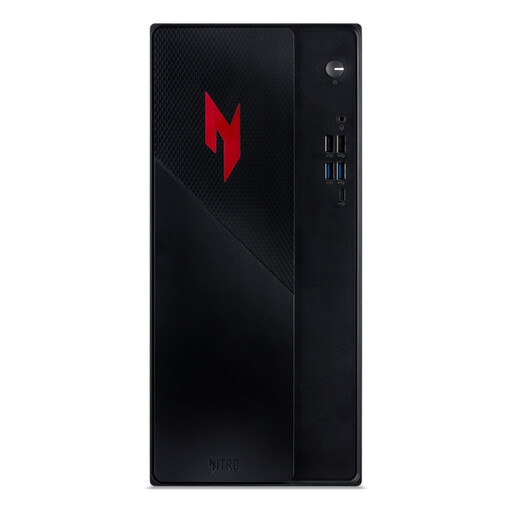
Acer Nitro 20 N20-101 desktop PC with 16 GB RAM and 1 TB SSD

Acer Nitro 20 N20-101

A desktop option to consider if you use scans and other windows alongside your index; check that this configuration suits your software.

Listed specifications: Intel Core 5 210H, RTX 5050, 16 GB RAM, 1 TB SSD and Windows 11 Home.

The description lists nine USB ports and HDMI and DisplayPort outputs; compare these with the connections on your equipment.

View at Joybuy

Lenovo Yoga Mini 01IPH11 Copilot+ PC with 16 GB and 512 GB SSD

Lenovo Yoga Mini 01IPH11 Copilot+ PC

Could suit a compact Windows workspace if the connections are right for your scanner and monitor.

Listed specifications: Intel Core Ultra 5 325, 16 GB LPDDR5X, 512 GB PCIe 4.0 SSD and Windows 11 Home.

The description lists HDMI, USB-A, USB-C and two Thunderbolt 4 ports. Check which ones your equipment needs.

View at Joybuy

SOYO M5 mini PC with Ryzen 4300U, 16 GB and 512 GB SSD

SOYO M5 mini PC

A compact Windows 11 Pro option to consider if the listed storage and connections meet your needs.

Listed specifications: AMD Ryzen 4300U, 16 GB LPDDR4 and 512 GB SSD.

The description lists six USB 3.0 ports and HDMI, DisplayPort and Type-C video outputs; check that they’re compatible with your scanner and monitor.

View at Joybuy

FIREBAT R3 mini PC with Ryzen 5 7430U, 16 GB and 512 GB SSD

FIREBAT R3 mini PC

Could be suitable if you’re looking for a compact PC for home or office and the listed configuration works with your software and collection.

Listed specifications: AMD Ryzen 5 7430U, 16 GB RAM and 512 GB SSD.

The product name mentions support for three 4K screens, Wi-Fi 6 and Bluetooth 5.2; check which connections your own equipment needs.

View at Joybuy

Frequently asked questions

Does the index need to be on the same drive as the scanned letters?

Not necessarily, but the links must still point to the right files after you move or restore them. Gramps uses links to media files; if you move a folder, those links may break. Test this with a small sample collection and include the source files in your back-up.

Is the desktop’s internal drive enough for a back-up?

No. A copy on the same computer isn’t a substitute for a separate back-up. The Noord-Hollands Archief advises managing digital files carefully; the Library of Congress recommends keeping copies on at least two different storage media and in separate physical locations.

Am I automatically entitled to a two-year legal guarantee on a desktop in the Netherlands?

No. According to the Rijksoverheid, there’s no fixed statutory guarantee period in the Netherlands. However, when you buy as a consumer, you’re entitled to a product that meets the standard you can reasonably expect. This depends on factors including the product, its price and the information provided by the seller.

Can I put my index and scans containing relatives’ personal data online?

That depends on the purpose and who can see the information. According to the Autoriteit Persoonsgegevens, the exception for purely personal or household use applies only under certain conditions, including sharing with a limited group and not making the information publicly searchable. If your publication falls outside this exception, the GDPR applies; in most cases, you need permission to publish other people’s personal data online.

Is an older Windows 10 PC still a sensible choice for a family archive?

Most importantly, check whether the operating system still receives security updates. Microsoft ended regular support for Windows 10 on 14 October 2025. The computer will keep working, but Microsoft says it will no longer receive the usual security updates. If you’re buying a second-hand PC, check which operating system it has and whether it’s still supported.
