
Student creating photo prints
You’re creating a still market portrait to print and want to assess how it looks on screen. Adobe points out that monitor calibration, ambient light and paper all affect how you judge colour.


Choose a desktop based on your photo files, editing software and the screen you already have. A compact setup may be enough for a modest photo workflow, while larger files or several apps running at once call for more memory and storage. For an exhibition print, screen settings, lighting and paper matter too. If you’re considering a mini PC, check whether a screen and peripherals are included.
You’re creating a still market portrait to print and want to assess how it looks on screen. Adobe points out that monitor calibration, ambient light and paper all affect how you judge colour.
You import larger batches of photos or work with several apps. Adobe recommends allowing enough space for Photoshop’s working files and keeping backups of your photos and catalogue on a different drive from your working files.
You’re looking for a compact desktop computer and want to know whether your existing screen and peripherals will connect. Lenovo states that a screen, keyboard and mouse are sold separately for the ThinkCentre configuration reviewed.
A good fit if: you use Windows, have limited desk space and already own a suitable screen.
Consider: check which peripherals are included and which ports are available on the exact configuration.
A good fit if: you store larger photo files locally or use several editing apps.
Consider: more memory and storage give you greater capacity, but don’t guarantee a particular speed in your software or with your files.
A good fit if: you want to use macOS with an external screen.
Consider: check that the SSD capacity suits your photo library, and factor the screen and ports into your workspace choice.
| What to consider | What to look for | Best suited to |
|---|---|---|
| Screen and colour | Check the display connection, your screen’s adjustability and the requirements for your exhibition print. | If I want to judge print colours carefully, I also consider screen settings, lighting and paper. Around 29% of consumers put colour and printing first. |
| Memory and storage | Compare software requirements and file sizes; allow for free SSD space and a separate backup. | For larger batches of photos or several apps, I want room for files and temporary work. Around 29% of consumers prioritise editing capacity. |
| Complete workspace | Factor in a screen, keyboard, mouse and any storage you still need. | If I still need to buy parts for my workspace, I want to compare the complete setup, not just the computer. Around 21% of consumers prioritise their workspace budget. |
| Size and connections | Compare the dimensions and ports of the exact configuration with your screen and file-transfer equipment. | With limited desk space, I want to know whether the computer will fit alongside my existing equipment. Around 21% of consumers prioritise a compact setup and connectivity. |
The percentages given are estimates for the priorities in this specific buying guide, not a measured breakdown of the market. If your market portrait is a video rather than a still image, assess the requirements of your editing software, source files and export format separately. Lenovo describes video editing as a more demanding workflow.
A computer with more memory won’t fix inaccurate colour judgement. Adobe highlights how monitor calibration, ambient light and paper all play a part in colour printing.
Budget for the complete workspace and assess a proof print against the exhibition requirements.
For the Lenovo ThinkCentre 13B9007CEZ reviewed, Lenovo says that the screen, keyboard and mouse are optional and sold separately.
Check what’s included and which connections are available on the exact configuration you’re considering.
Photoshop uses temporary disk space, and having too little free space can cause problems. Adobe also recommends keeping backups of photos and your catalogue on a different drive from your working files.
Allow space for your working files as well as a separate copy of your project.
The ThinkCentre neo 50q Gen 5 reviewed is a compact Windows option; the Dutch configuration is 13B9007CEZ.
The HP OmniDesk 16L configurations reviewed offer different combinations of memory and storage.
The Mac mini with M6 chip is a compact macOS option for use with an external screen.
The Dell Pro Slim QCS1255 is a configurable Dutch Windows desktop to compare with other options.
This selection includes Windows desktops with extra memory and storage, as well as Mac mini configurations for a compact Mac setup. Compare the exact model with your files, software and screen; product specifications alone don’t predict editing speed.
 No image available
If you store photos locally, you can compare the stated memory and SSD capacity with your files and software requirements.
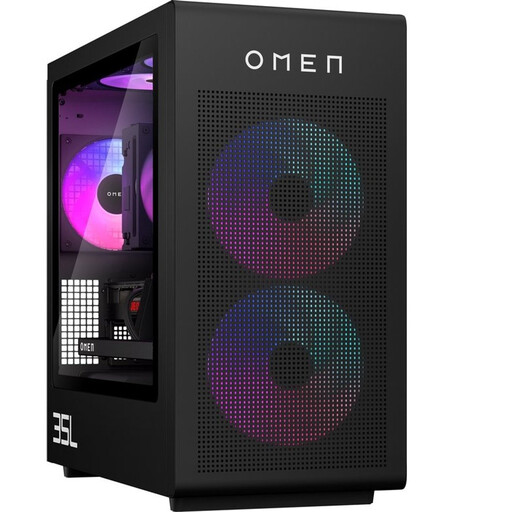
16 GB DDR5 memory; 1 TB PCIe Gen4 NVMe SSD; NVIDIA GeForce RTX 5060 with 8 GB memory; Windows 11 Home. These specifications aren’t an editing test.
 No image available
This compact Mac desktop is an option to compare if you want to use macOS with an external screen.
Apple M6 chip with 12-core CPU and 12-core GPU; 16 GB memory; 512 GB SSD. Check that the storage suits your photo library and that your screen will connect.
No image available
Compare this configuration if you’re looking for a compact Mac desktop and want to factor in more memory when making your choice.
Apple M6 chip with 12-core CPU and 12-core GPU; 24 GB memory; 512 GB SSD. Check your software requirements, screen connection and storage needs.
 No image available
If you store larger photo files locally, memory and SSD capacity are worth comparing with your software requirements.
32 GB DDR5 memory; 1 TB SSD; NVIDIA GeForce RTX 5070 with 12 GB memory; Windows 11 Home. The listed components alone don’t predict how well your editing software will perform.
No image available
This Windows desktop has the same stated memory and SSD capacity as the other ASUS configuration in this selection. Check which model suits your software.
Intel Core Ultra 5 225F; 32 GB DDR5 memory; 1 TB PCIe 4.0 SSD; NVIDIA GeForce RTX 5070 with 12 GB memory; Windows 11 Home.
Assess both separately. Adobe says monitor calibration, ambient light and paper all affect how closely the screen matches the print. Extra computer memory won’t correct a screen that’s set up incorrectly.
Keep enough free space on the drive you work from, and store a separate backup of your source material and project files. Adobe explains that Photoshop uses temporary disk space and that running short of space can cause problems.
You can’t tell from photo workflow scenarios alone. Check the requirements of your editing software, source files and intended export. Lenovo describes video editing as a more demanding workflow than photo editing.
Not automatically. The Dutch Data Protection Authority distinguishes between private use and wider publication; the rules that apply depend, among other things, on who publishes the image and how it’s shown. For images of identifiable pupils or staff that a school creates and publishes, the authority specifies particular consent rules.
Check the usage rights first. According to the Dutch government, you need the creator’s permission to use other people’s copyright-protected photos. Personal use doesn’t automatically mean you can display the photo publicly.