
Design reviewer
You mainly review images and presentations. A suitable display and the right connections matter more than maximum CAD processing power.


For viewing and discussing images and presentations, a compact desktop with suitable connections and a suitable screen is often a more sensible starting point than a powerful CAD workstation. If you edit large 3D designs, choose based on the requirements of the specific software and the full configuration; also check whether a screen and input devices are included.
You mainly review images and presentations. A suitable display and the right connections matter more than maximum CAD processing power.
You open or edit larger models during the workshop. Make sure the full PC configuration meets the requirements of the CAD software you use.
You’re setting up a temporary workstation and want to check in advance that a monitor, input devices, connectivity and files will be available on site.
Best for: You mainly discuss images, documents and presentations, and choose a separate monitor.
Consider: A small case saves space, but don’t expect the same graphics options or upgradeability as a larger workstation configuration.
Best for: You edit large 3D designs, or the software you use has specific requirements for Windows, memory or graphics cards.
Consider: You may not need extra memory or a professional graphics card just to review images; check the exact configuration.
Best for: You use macOS and have confirmed that the workshop software supports your chosen Apple chip.
Consider: You’ll need a separate monitor and input devices. SOLIDWORKS lists Windows 11 for its client products.
| Concern | What to look for when buying | Who this matters to |
|---|---|---|
| Reviewing design images accurately | Check that the video output is compatible with the monitor available. Assess the screen and colour profile separately from the PC’s performance; Adobe warns that an incorrect monitor profile can display colours misleadingly. | When I’m discussing shapes, materials and colours, I want the screen to display images well without paying for processing power I won’t use. Around 33% of consumers say image review is their main buying concern. |
| Setting up the workstation on site | Check the ports and what’s included in the exact offer, such as a monitor, keyboard and mouse. Prepare any files you need in advance if the internet connection is uncertain. | For a temporary workshop space, I want to know in advance whether the monitor, input devices and files will be ready. Around 25% of consumers prioritise setup and connectivity. |
| Opening 3D files in the right software | Check the operating system, software version and model size. Autodesk Support recommends 32 GB or more of RAM and a dedicated GPU with at least 8 GB of graphics memory for larger or more complex Fusion designs. SOLIDWORKS lists Windows 11 for its client products. | When I open or edit larger models during a workshop, I want to be sure my software and configuration are a good match. Around 25% of consumers prioritise software and 3D compatibility. |
| Running demanding visualisations | First establish whether local rendering is needed; then compare the GPU and memory configuration of the exact model. | When I want to create demanding visualisations locally during a workshop, I want the graphics configuration to suit the task. Around 17% of consumers say rendering is their main buying concern. |
Discussing existing images alone doesn’t mean you also need to edit or render models. Autodesk distinguishes between basic use and larger, more demanding Fusion models.
First decide whether you’ll only discuss images or also edit large models. Then compare the requirements of the software you’ll use during the workshop.
For the ThinkStation P3 Tiny Gen 2 model reviewed, Lenovo states that the monitor, keyboard and mouse are sold separately.
Check what’s included in the exact offer and the available connections before taking the PC to the workshop.
You may still need a separate monitor, keyboard or mouse for your workstation.
Dell lists the Pro Max Slim FCS1250 with both integrated graphics and 16 GB of RAM, and another configuration with an NVIDIA RTX A1000 and 32 GB of RAM.
Compare the full configuration, including the GPU and RAM, rather than looking at the model range alone.
Adobe explains that an incorrect monitor profile can make displayed colours misleading.
Assess the screen and colour settings separately from the desktop’s processing performance.
Colour-critical work also calls for careful screen setup.
The Pro Max Slim FCS1250 is worth considering if you’re looking at a compact desktop and want to choose a configuration for image review or more demanding 3D work.
The Z2 Mini G1i is a compact workstation range; model C69BVEA#ABH is an option if 3D work is part of the workshop.
The ThinkStation P3 Tiny Gen 2 is a compact workstation option for a space-saving setup.
The Mac mini is a compact macOS option if the workshop software you need supports your chosen model.
This Joybuy selection features Windows desktops with dedicated graphics cards, for anyone who also wants to open or edit 3D files during a workshop. Choose a configuration that suits your software and model size; exact specifications vary.
 No image available
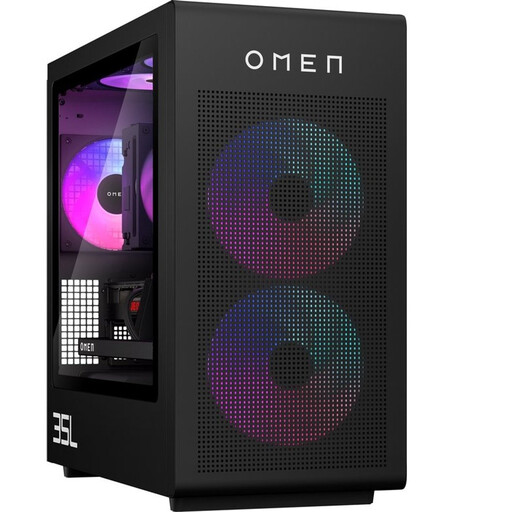
A specific Windows configuration to consider if larger Fusion designs are part of the workshop.
Listed: 32 GB DDR5, 1 TB NVMe SSD and RTX 5080 with 16 GB of graphics memory. Autodesk Support recommends 32 GB or more of RAM and a GPU with at least 8 GB of graphics memory for larger or more complex Fusion designs.
The product name lists Windows 11 Trial; check which Windows licence and software access you’ll need before the workshop.
 No image available
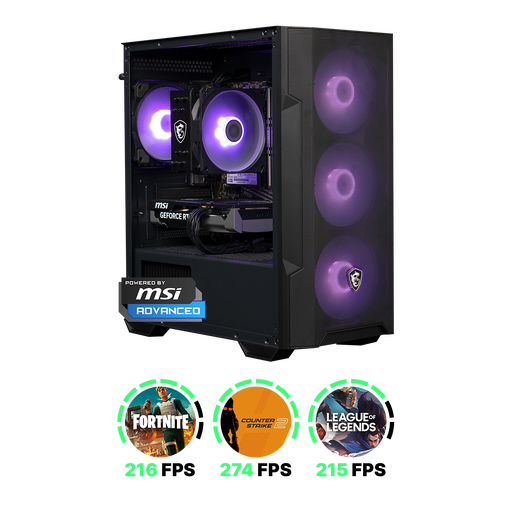
A Windows desktop to consider if you want to open 3D files as well as discuss images.
Listed: Windows 11 Home, 16 GB of RAM and an RTX 5060 with 8 GB of graphics memory. Autodesk Support recommends 32 GB or more of RAM for larger or more complex Fusion designs; this configuration lists 16 GB.
 No image available
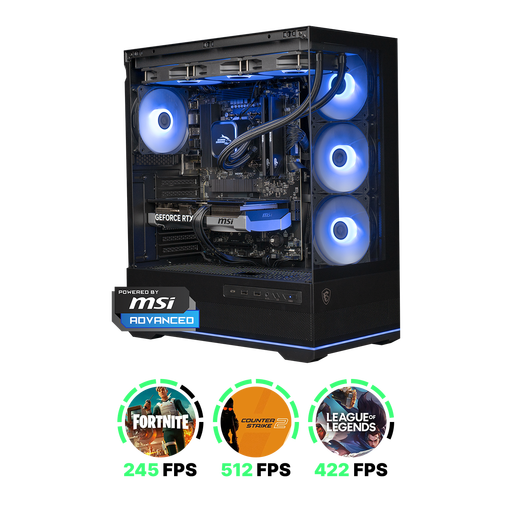
This Windows configuration is one option to compare, alongside the requirements for your 3D files, with a focus on the exact memory setup.
Listed: Ryzen 5 5500, RTX 5060 with 8 GB of graphics memory, 16 GB of RAM and 500 GB of storage. Autodesk Support recommends 32 GB or more of RAM for larger or more complex Fusion designs.
 No image available
A Windows desktop to compare if your workshop might also involve larger 3D files.
Listed: Ryzen 7 7800X3D, RTX 5070 with 12 GB of graphics memory, 16 GB of RAM and 1 TB of storage. Autodesk Support recommends 32 GB or more of RAM for larger or more complex Fusion designs.
 No image available
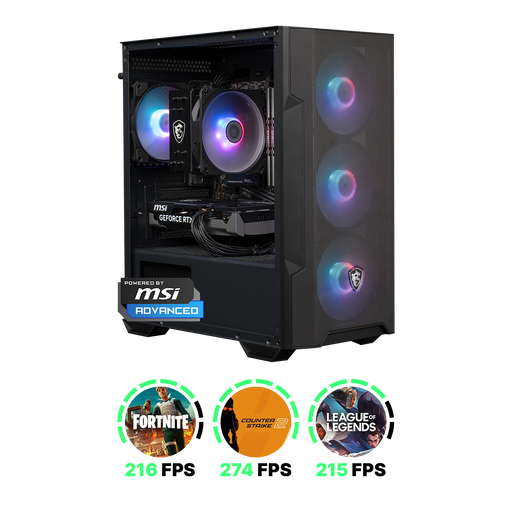
This Windows configuration is a specific option to weigh up if storage space matters alongside the files you’ll use in the workshop.
Listed: Ryzen 5 5500, RTX 5060 with 8 GB of graphics memory, 16 GB of RAM and 1 TB of storage. Autodesk Support recommends 32 GB or more of RAM for larger or more complex Fusion designs.
No, not just because you’re discussing existing images. If you edit large CAD models, check the requirements of the specific software: SOLIDWORKS lists certified cards and drivers, while Autodesk recommends a GPU with at least 8 GB of graphics memory for larger or more complex Fusion designs.
Check your connection in advance and cache the designs you need. Autodesk says you can manually cache designs, folders and projects to open them offline; check that your workflow will work without a connection.
For colour-critical work, use a properly set-up screen and monitor profile. Adobe recommends calibration and profiling, as an incorrect profile can lead to misleading colour reproduction; this doesn’t guarantee that any two screens will look the same.
For a consumer purchase, the Dutch government states that you’re entitled to a product that works as it should, and the retailer is your point of contact if there’s a problem. The Netherlands doesn’t have a fixed statutory warranty period of two years; a manufacturer’s warranty or an additional warranty comes on top of your statutory rights.
For an applicable distance purchase from a business, the Dutch government says you usually have a 14-day cooling-off period. Check the terms of your purchase; for example, a purchase from a private seller isn’t covered by the government’s guidance on distance selling.