
Design reviewer with limited plug sockets
You review designs in a fixed location and want to know how many connections the computer, screen and rest of your set-up need altogether.


With limited plug sockets, an all-in-one PC can simplify your set-up, while a mini PC needs a separate screen. A compact workstation set-up is mainly relevant if you edit models locally. Choose according to the software and tasks you use, and count the connections needed for your entire workspace. Connect devices safely and keep the computer’s ventilation clear.
You review designs in a fixed location and want to know how many connections the computer, screen and rest of your set-up need altogether.
You open and modify models on the computer itself. In that case, the requirements of your BIM or drawing software may matter more than the size of the case.
You want to view drawings and presentations clearly, and weigh up whether a built-in screen or a separately chosen one is better for your workspace.
First, decide whether a built-in screen or a separate one is better for your workspace. Then compare the exact computer configuration with your software’s requirements, and count all the connections you’ll need.
Suitable if: you mainly review designs in a fixed location and want to combine the computer and screen in one device.
Trade-off: you have less freedom to choose the screen independently of the computer, so check the screen specifications and graphics configuration.
Suitable if: you already have a suitable screen or want to choose one yourself, and have limited desk space.
Trade-off: the screen needs its own space and power connection, so a small computer doesn’t automatically mean fewer connections for your whole workspace.
Suitable if: you edit Windows-based BIM or 3D models locally, and the configuration you choose meets your software’s requirements.
Trade-off: memory and graphics hardware can vary considerably between configurations, so don’t rely on the product range name alone.
| Consideration | What to check before buying | Who should consider this? |
|---|---|---|
| Connections and workspace | Count the computer, screen and other equipment. Use undamaged extension leads and don’t connect them to one another, as advised by the Dutch Fire Service. | I want to know in advance whether my complete fixed set-up will fit the available sockets; around 36% of consumers put connections and workspace layout first. |
| Design software | Check the software version, operating system, and memory and graphics card requirements. Autodesk says that 16 GB RAM is generally sufficient for a typical Revit 2026 editing session with one model up to around 300 MB on disk. | If I edit models locally, I want to match the exact configuration to my software and files; around 29% of consumers say software compatibility is their top buying priority. |
| Screen and detail | Compare screen size, resolution and available connections. If you choose a separate screen, also check that the computer has the connection you need. | I want to review drawings and presentations on a suitable screen, and weigh up whether to choose a built-in or separate screen; around 21% of consumers prioritise screen choice and detail. |
| Complete configuration | Check what’s included with the exact configuration and which memory, storage and connection options are actually available. Include any separate screen in your set-up. | If I want to assess the whole workspace, I look beyond the computer to the parts I need and any potential upgrades; around 14% of consumers say the complete configuration is their top priority. |
A mini desktop needs a separate screen. The computer itself may be small, but the complete set-up still includes several devices.
Before buying, list the computer, screen and any other devices that need power, then compare this with the sockets available.
Memory and graphics hardware can differ even within a single compact workstation range. The product range name alone therefore doesn’t tell you whether a configuration is suitable for your software.
Compare the full configuration with the requirements of the software you use and the work you do.
The Dutch Fire Service warns against connecting extension leads to one another and advises using approved, undamaged extension leads. You should also make sure heat can escape from the computer.
Plan the connections for your entire workspace and keep the computer’s ventilation openings clear.
These examples show different types of desktop set-up. Configurations and suitability vary by model; a brand mention is not a recommendation for every product range or software task.
The Dell Pro 24 all-in-one range may suit you if a built-in screen would make your fixed workspace simpler. Dell says that the processor and memory depend on the configuration you choose.
The Mac mini is a desktop computer for use with a separate screen, while the iMac is the all-in-one option. Apple Netherlands lists M6 configurations and says the iMac will be available from 6 November 2026.
The ThinkStation P3 Tiny Gen 2 is a compact workstation range worth comparing by configuration.
The Z2 Mini G1i is a compact Windows workstation option for use with a separate screen. For the Dutch configuration reviewed, HP lists 32 GB RAM and an NVIDIA RTX 2000 Ada with 16 GB.
The selection below includes all-in-one PCs with built-in screens and a mini PC for use with a separate screen. Compare the specific configuration and any additional components with your workspace and software.
 No image available
The computer and screen are combined in one device for a fixed space where you can review designs.
23.8-inch FHD IPS screen; AMD Ryzen 5 7520U; 8 GB memory; 512 GB SSD. The power adapter must be purchased separately.
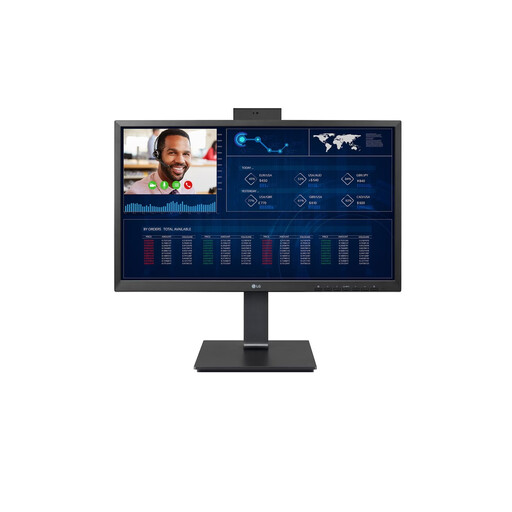 No image available
The built-in screen suits a fixed set-up; check in advance that your IT environment and chosen design software will work with this thin client.
24-inch FHD IPS screen. This is a thin client for cloud and VDI applications; the operating system may depend on your IT environment.
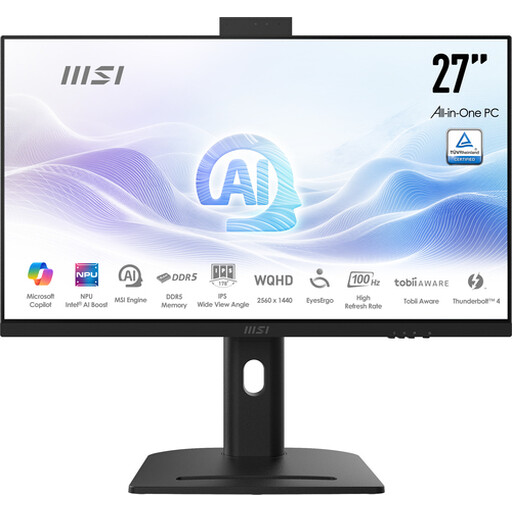 No image available
The computer and screen are combined in one device for a fixed space where you can review designs.
27-inch WQHD IPS screen; Intel Core Ultra 5 125H; 16 GB DDR5 memory; 1 TB SSD.
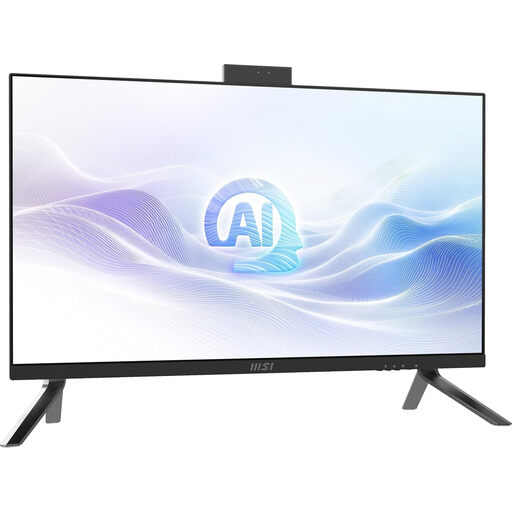 No image available
The computer and screen form a single device for a fixed workspace; check the configuration against your software and tasks.
27-inch WQHD IPS screen; Intel Core Ultra 7 155H; 32 GB DDR5 memory; 1 TB SSD; Windows 11 Pro; Wi-Fi 6E.
 No image available
A compact computer for a workspace with limited desk space, provided you also allow for a suitable separate screen.
16 GB RAM; 512 GB SSD; Wi-Fi 6; Bluetooth 5.2. The product title says it supports display on three 4K screens.
Not necessarily: a mini PC uses a separate screen. Count the connections for your whole workspace before choosing; with an all-in-one PC, the computer and screen are in the same device.
The Dutch Fire Service advises using approved, undamaged extension leads and not connecting them to one another. Also make sure heat can escape from the computer.
No. Compare the components in the exact configuration with the requirements of your software version and tasks. Autodesk says that 16 GB RAM is generally sufficient for a typical Revit 2026 editing session with one model up to around 300 MB on disk; SketchUp specifies a discrete graphics card for Windows.
For applicable distance sales to consumers, you generally have a 14-day cooling-off period, according to the Dutch government. You’re also entitled to a legal guarantee that the product is in good working order; there is no fixed statutory guarantee period in the Netherlands. Check that you’re buying as a consumer and who the seller is.
Electrical and electronic equipment placed on the EU market must comply with the applicable product rules, including those for electromagnetic compatibility. CE marking is required where the applicable harmonised EU rules say so; check the documentation for the specific configuration.