
Student working with local datasets
You work with Python, notebooks and datasets on your own computer, and want to know how much memory your assignments require. pandas explains why larger datasets processed in memory need extra consideration.


Choose a desktop for data science work based on the software and datasets you use. Memory and storage matter for local analysis, while a dedicated GPU is mainly needed if your course requires one. Then choose between a compact computer and a tower based on your workspace, and check which components and ports are included in the exact configuration. The Arboportaal advises positioning your line of sight parallel to the window, so finding the right screen position can be just as important as choosing a desktop.
You work with Python, notebooks and datasets on your own computer, and want to know how much memory your assignments require. pandas explains why larger datasets processed in memory need extra consideration.
You want to train models locally or complete assignments for which your course specifies a particular GPU environment. PyTorch also describes an installation without GPU support for systems that don’t need it.
You study in a fixed spot beside a bright window and want to position your screen to suit the light. The Arboportaal advises positioning your line of sight parallel to the window.
Start with the requirements of your assignments and datasets, then consider the computer’s form factor and your complete screen setup. pandas explains that datasets and intermediate operations use memory; PyTorch distinguishes between environments that do and don’t need GPU support.
| What to consider | What should you check? | Who is this important for? |
|---|---|---|
| Memory and datasets | Compare the memory requirements of your course and datasets with the exact configuration; also check whether it can be upgraded. | If I work with datasets locally, I want a computer that suits the scale of my assignments. Around 33% of consumers give memory and local datasets top priority. |
| Screen beside a window | Check whether you can position the screen so your line of sight is parallel to the window and whether you need blinds; check the screen connections too. | In a bright workspace, I want to be able to position the screen to reduce glare from daylight. Around 27% of consumers prioritise readability in daylight. |
| GPU requirements | Find out which software, computing environment and GPU support your course actually requires, and compare these with the exact configuration. | If my assignments require local GPU processing, I want to know whether the configuration I choose meets the software requirements. Around 20% of consumers give required GPU processing top priority. |
| Space and complete setup | Check the dimensions, connections and included components; also factor in the separate screen and any peripherals you’ll need. | With limited desk space, I want to choose a computer that fits my entire study setup, including the screen. Around 20% of consumers prioritise a compact, complete setup. |
Not every data science assignment requires GPU support. PyTorch also describes a CPU installation for systems without a suitable GPU or that don’t need GPU support.
Before choosing, check which software and GPU environment your course actually specifies.
A desktop may need a separate screen. What’s included also varies by configuration; for example, Lenovo lists no keyboard or mouse with the ThinkCentre configuration reviewed.
For each configuration, check what’s in the box, the screen connections and which peripherals you already have.
Screen position and light are separate considerations. Changing the computer’s configuration won’t, by itself, change how daylight falls on the screen.
Plan your screen position first and see whether you need blinds; the Arboportaal advises positioning your line of sight parallel to the window.
HP describes the OmniDesk 16L M03-0610nd as a desktop with a specific configuration that you can compare with your assignments.
The Dell Pro Tower QCT1255 reviewed is a tower configuration whose listed components you can compare with your course requirements.
The ThinkCentre M70t Gen 5 12U6CTO1WWNL3 is a tower configuration with specific memory and storage specifications.
The Mac mini is a compact desktop used with a separate screen. Apple lists several memory and storage configurations.
This selection includes compact Mac mini configurations and desktop PCs for a data science study setup. Check that each configuration and its included components suit your assignments.
 No image available
A desktop PC to compare if your course specifies local GPU-based assignments; check that the exact configuration suits the required software environment.
AMD Ryzen 7 5700X; GeForce RTX 5060 Ti 8GB; 16GB DDR4 RAM; 480GB NVMe PCIe SSD.
The description lists Windows 11 (Evaluation Version); check which edition of Windows comes with this configuration and what your course requires.
 No image available
A compact option for a study space with a separate screen, if your course software environment is compatible with macOS.
Apple M6 chip; 12-core CPU; 12-core GPU; 16GB memory; 256GB SSD.
You’ll need an external monitor for your workspace.
No image available
A compact option to consider if you want to use a separate screen and your course supports macOS.
Apple M6 chip; 12-core CPU; 12-core GPU; 16GB memory; 512GB SSD; supports up to three external displays.
You’ll need an external monitor for your workspace.
No image available
A compact Mac mini configuration to compare with the memory and storage needs of your local assignments.
Apple M6 chip; 12-core CPU; 12-core GPU; 24GB memory; 512GB SSD; supports up to three external displays.
You’ll need an external monitor for your workspace.
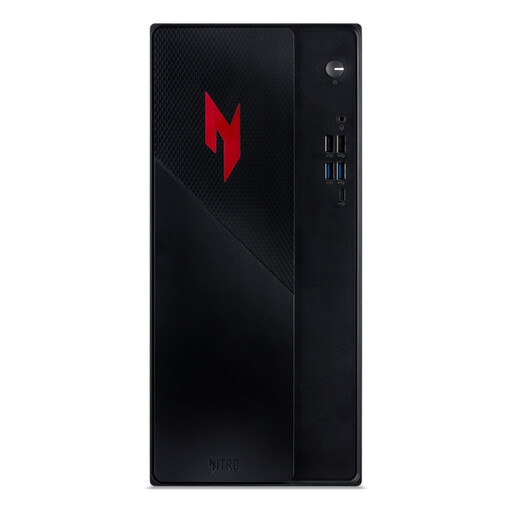 No image available
A desktop PC to include in your comparison if your course requires local GPU support; check the requirements of the software you’ll use.
Intel Core 5 210H; RTX 5050; 16GB RAM; 1TB SSD; Windows 11 Home.
No, not for every assignment. PyTorch also describes a CPU installation for when you don’t have a suitable GPU or don’t need GPU support. For assignments that require specific acceleration, follow your course’s software requirements.
For screen-based work, the Arboportaal advises positioning your line of sight parallel to the window and using suitable blinds when daylight causes reflections. Adjust your screen position to suit the light in your workspace.
Before buying, check the connections on your chosen screen and what’s included with the exact computer configuration. For example, Lenovo lists no keyboard or mouse with the ThinkCentre configuration reviewed.
According to ACM ConsuWijzer, products bought online generally come with a statutory cooling-off period that ends 14 days after delivery; exceptions may apply. You’re also covered by the legal guarantee based on what you could reasonably expect from the product under normal use—it isn’t automatically a fixed two-year period.
No. The legal obligations described by the Arboportaal apply to employers. Its advice on lighting and screen positioning may still be useful for a study space, but it doesn’t create a separate legal obligation for every student.