
Student with a permanent dual-monitor setup
You write code while viewing assignments, documentation or results. Check in advance that the exact desktop works with both your monitors.


First, check that the exact desktop configuration supports both your monitors at the same time and is suitable for your course software. A dedicated GPU isn’t automatically necessary for standard statistics assignments; only choose one if your projects require local GPU computing. A compact PC saves desk space, while a larger desktop may offer more room for upgrades.
You write code while viewing assignments, documentation or results. Check in advance that the exact desktop works with both your monitors.
You expect memory and storage to become more important, so you compare the configuration and upgrade options rather than just the processor name.
You have a specific assignment or project environment that uses a GPU. Check that the software, operating system and graphics card are compatible with one another.
First, decide whether your projects require local GPU computing. Then choose between a compact size and more room for upgrades, and in either case check the full dual-monitor connection setup.
| What to consider | What should you check? | Who is this important for? |
|---|---|---|
| Connecting two monitors | Compare the outputs on the exact desktop with the inputs on both monitors, and check that they’re supported simultaneously. | If I want to work with two monitors at once, I check that the connections and supported combination suit my monitors. Around 27% of consumers prioritise this compatibility. |
| Standard study assignments | Check the requirements for your own course. Tilburg University recommends an i5 or equivalent, 16 GB of RAM and a 256 GB SSD for statistical software on a new laptop; this isn’t a general desktop standard. | If you mainly use code and statistical software for study assignments, you’ll want to match the configuration to your course requirements. Around 27% of consumers give standard study performance top priority. |
| Local GPU projects | Check the project requirements and installation instructions for the combination of GPU, operating system and software. TensorFlow lists WSL2 as the route to GPU support for recent versions on Windows. | If my project needs local GPU computing, I want the entire software environment to work with it, not just a graphics card that looks suitable. Around 20% of consumers put GPU projects first. |
| Size and upgrades | Check the dimensions and upgrade options for the exact model, such as memory slots and storage capacity. | If you have limited desk space or want to add components later, base your choice on the specific model. Around 13% of consumers give the most weight to size and upgradeability. |
| Complete workstation | Check what’s included with the desktop and whether you already have suitable monitors and cables. If the connections don’t match, you may need a suitable cable or adapter. | If I want to put together a complete dual-monitor workstation, I also take into account the monitors and connection accessories I already own. Around 13% of consumers first consider the cost of the complete workstation. |
Ports and configurations can vary between models. The PC’s outputs must also match the inputs on both monitors.
Check the connections and support for the exact model, and look at the connections on each monitor separately.
Depending on your current monitors and cables, you may need suitable cables or adapters.
A graphics card alone won’t make a GPU project work. TensorFlow says that GPU support for recent versions on Windows runs through WSL2, rather than the usual native Windows installation.
Compare the project requirements and installation instructions with the GPU and operating system in your chosen desktop.
Tilburg University’s recommendation for statistical software is aimed at a new laptop. The same page also mentions a separate laptop provision for students on the Joint Bachelor Data Science course.
Use general specifications only as a starting point and check the current requirements for your own course.
HP offers both compact desktops and models for a permanent workstation; compare the configuration rather than just the brand name.
The ThinkCentre neo 50s Gen 5 is a desktop range worth considering if memory or storage upgrades are important to you.
The ExpertCenter PN64 is a mini PC range to compare if you have limited desk space.
The OptiPlex Micro range is a compact alternative for a permanent workstation.
A configurable desktop may suit you if you want to match components to specific project requirements.
These Joybuy products are desktops with a dedicated GPU. They’re most relevant if you need a specific local GPU workflow; before buying, also check that the exact model supports both your monitors.
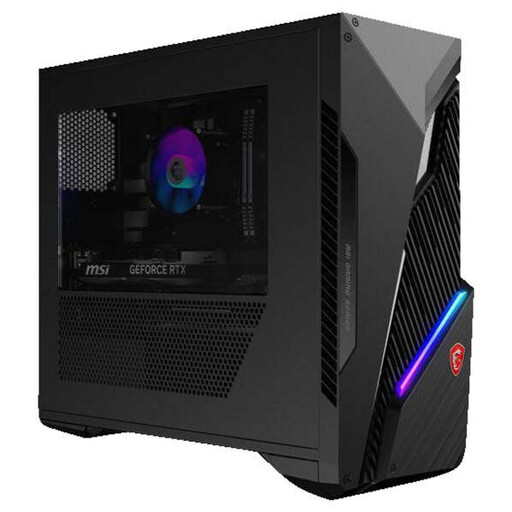 No image available
Suitable for a local GPU workflow if the software and installation environment are compatible with the configuration.
The configuration lists a Core i5, 16 GB of memory, a 1 TB SSD and Windows 11 Home.
For recent TensorFlow GPU support on Windows, TensorFlow lists WSL2 as the route; configure your installation accordingly.
 No image available
A desktop with a dedicated GPU to compare for a project that requires local GPU computing.
The product description lists a Ryzen 5 5500, 16 GB of memory, a 500 GB NVMe SSD and Windows 11 Home.
For TensorFlow GPU use on Windows, check the installation instructions; TensorFlow lists WSL2 for recent support.
 No image available
Worth considering if you’re looking for a desktop with a dedicated GPU for a local project environment; check software compatibility.
The configuration lists a Ryzen 5 5500, 16 GB of memory and a 480 GB SSD.
For recent TensorFlow GPU support on Windows, TensorFlow lists WSL2 as the route.
 No image available
An option to consider for local GPU projects; check beforehand that the software environment suits the configuration.
The configuration lists 16 GB of DDR4 RAM and a 480 GB NVMe SSD.
The product specifications list Windows 11 as an evaluation version. For recent TensorFlow GPU support on Windows, TensorFlow lists WSL2 as the route.
 No image available
The listed model specifications state support for up to four independent monitors, making this configuration relevant for a dual-monitor setup.
The configuration lists 32 GB of memory, a 1 TB SSD and an RTX 5070. The memory is expandable to 64 GB, and storage upgrades are also listed.
For recent TensorFlow GPU support on Windows, TensorFlow lists WSL2 as the route.
No, not just because of your course. First check which software and assignments you’ll run locally. For TensorFlow GPU use, the installation environment must also be right: TensorFlow specifies WSL2 for recent GPU support on Windows, rather than the usual native Windows installation.
Connect both monitors and arrange them in the display settings to match their positions on your desk. If a connected monitor doesn’t appear, you can use the option there to detect displays.
With normal use, you may be covered by your statutory rights if the product doesn’t meet the standards you’re entitled to expect. According to ACM ConsuWijzer, the seller is then responsible for providing a suitable free solution; a limited manufacturer’s warranty doesn’t replace those statutory rights.
For a standard online consumer purchase, you generally have a statutory cooling-off period of up to 14 days after delivery. ACM ConsuWijzer lists some exceptions, including products made to order. Before placing your order, check whether that exception applies to a custom-built PC.