
Developer with a crowded desk
You want to compile locally without assuming you have the space or connections for a large computer. Count your monitor and other devices too before choosing a compact model.


Choose a compact PC if it suits your development environment and build workload; opt for an expandable tower if future upgrades matter more than a small case. GNU make and CMake can run builds in parallel, but how useful this is depends on your project and the tasks you configure. Count the connections needed for your entire workspace: an adapter’s power rating does not measure electricity use during compilation. Before you buy, also check the CE marking and applicable safety information for the exact model.
You want to compile locally without assuming you have the space or connections for a large computer. Count your monitor and other devices too before choosing a compact model.
You work on larger projects or often run several build tasks at once. Match the processor and memory to your project and the tasks you actually run in parallel. GNU make and CMake document options for configuring parallel tasks.
Start by considering the development environment you need. Check that your project and tools work with macOS or with the Windows or Linux configuration of the exact model.
| What to consider | What to look for when buying | Who is this important for? |
|---|---|---|
| Connections required | Count the plugs needed for your PC, monitor and peripherals. Check the supplied power adapter and mains cable, and follow safety advice if you use an extension lead. | If I have few power sockets, I want to know in advance whether I can connect my entire workspace. Connections are the primary reason for buying for around 33% of consumers. |
| Build capacity | Check the processor and installed memory in the exact configuration. Also consider whether you run build tasks in parallel. | If my projects regularly require builds to run at the same time, I want to choose a configuration to suit. Around 27% of consumers cite compilation capacity as their primary reason for buying. |
| Development environment | Check your project’s requirements and whether the operating system on the specific model is compatible with your software. | If my toolchain requires a specific environment, I want to avoid choosing a compact PC that isn’t compatible. Compatibility is the primary reason for buying for around 20% of consumers. |
| Upgrades and maintenance | Check the memory modules, available slots and storage bays on the exact model. | I want the option to upgrade the memory or storage later if my projects change. Around 20% of consumers cite upgradeability as their primary reason for buying. |
A monitor and other powered devices are also part of your workspace and need their own connections.
Count all your devices and the plugs they need before you buy. Brandweer Nederland advises using approved, undamaged extension leads and not connecting extension leads to one another.
An adapter’s stated power rating does not measure how much electricity your PC uses during your builds, let alone the consumption of your entire workspace.
Lenovo lists a 65 W adapter for ThinkCentre M75q Gen 5 model 12RQ0040IX. Only compare power consumption figures when they have been measured on a comparable, like-for-like basis.
Components and features can vary between models. A product range name alone won’t tell you which processor, memory capacity or storage you’ll get.
Check the full model number, the included components and the upgrade options for the model being offered.
Mac mini models are worth considering if macOS and a compact desktop suit your development environment.
The ThinkCentre Tiny range is worth comparing if you’re looking for a compact workspace and want to tailor the configuration to your needs.
The Elite Mini range is a compact business desktop worth comparing with other models.
NUC mini PCs may be worth considering if a small system suits your workspace and development environment.
This selection includes compact mini PCs and a tower for a development workspace. Check that your toolchain is compatible with the model you choose, and review the CE marking and applicable safety information for that exact model before buying.
 No image available
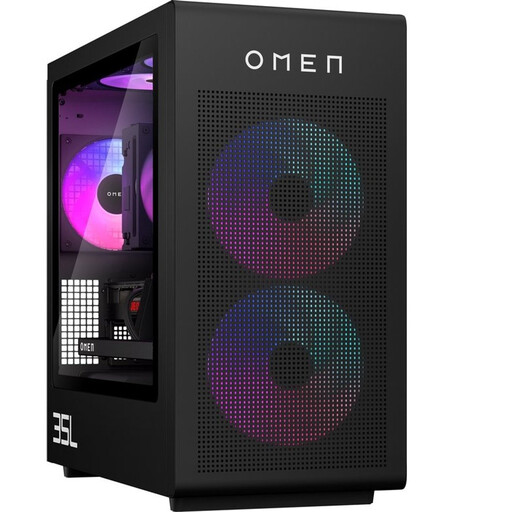
A tower option if you’re looking for a desktop in this form factor and want to tailor the configuration to compilation work.
Intel Core i7-14700F, 16 GB DDR5 memory and a 1 TB SSD. The product description states that the memory is upgradeable to 128 GB.
 No image available
A compact Windows 11 option. Check which processor variant is included with the model on offer and whether it supports your development tools.
The product title lists 8 GB of DDR4 memory, a 256 GB SATA SSD, Bluetooth 5.2 and Wi-Fi 5.
 No image available
A compact macOS desktop for projects where the development environment and tools work with macOS.
M6 chip, 12-core CPU, 12-core GPU, 16 GB of memory and a 256 GB SSD.
No image available
A compact macOS desktop for projects where the development environment and tools work with macOS.
M6 chip, 12-core CPU, 12-core GPU, 16 GB of memory and a 512 GB SSD.
No image available
A compact macOS desktop for projects where the development environment and tools work with macOS.
M6 chip, 12-core CPU, 12-core GPU, 24 GB of memory and a 512 GB SSD.
Start with how your project is built. GNU make can run several tasks at once using the -j option; with CMake, you can set the level of parallelism. Then compare the processor and memory configuration of the exact model, without trying to infer compilation time from the number of processor cores alone.
Don’t rely on this as your standard solution. Brandweer Nederland advises using approved, undamaged extension leads and not connecting them to one another. First, count the devices in your workspace and check the load on the connection you choose.
No. Lenovo lists 65 W as the adapter specification for ThinkCentre M75q Gen 5 model 12RQ0040IX; this does not measure the power used by the PC, monitor or entire workspace during a build.
According to the Dutch Government, consumers are entitled to a product that is fit for purpose, and there is no fixed statutory warranty period in the Netherlands. A manufacturer’s warranty does not replace this statutory right. For distance purchases from a business, a 14-day cooling-off period also applies in many cases; check which terms apply to your purchase.
Electrical and electronic equipment covered by the applicable EU rules must have a CE marking. The marking indicates that the manufacturer declares the product meets the relevant requirements. Check the marking and product information for the exact model.