Start with your screen setup: choose a mini PC if you already have a suitable screen or want to choose your screens separately, an all-in-one if you want a PC with a built-in screen, and a tower if you want to compare configurations and storage options by model. Windows lets you snap windows side by side, but check that your records, photos and references remain readable on your screen and at your chosen scaling setting. For each model, also compare the connections, storage and included accessories.
Who is this desktop setup for coin catalogues suited to?
Collector working with lots of record fields
You compare coin data, detailed photos and references, and want to keep windows or software panels clearly readable side by side. Microsoft Support explains how to snap Windows side by side; OpenNumismat describes records containing data and photos.
Collector with lots of coin photos
You store descriptions and photos locally and want to choose enough storage for your collection. OpenNumismat describes a catalogue with detailed coin data and photos; work out how much space you need based on your own files.
Collector with a small desk
You want to know whether your existing screen is compatible with a mini PC, or whether an all-in-one with a built-in screen would suit your desk better. Lenovo PSREF describes the connections on the IdeaCentre Mini 01IRH10R model family; Acer Store Netherlands lists a built-in screen for the Aspire S24 S24B-GMTL-U.
What should you look for in a desktop for coin records and photos?
Mini PC with a separate screen
Choose this if: you already have a suitable screen or want to choose the computer and screen separately.
Consider: check whether a screen, keyboard and mouse are included; the Lenovo model family does not list a keyboard or mouse as included.
All-in-one
Choose this if: you don’t have a screen yet and want to put together a single, fixed desk setup.
Consider: you choose the built-in screen as part of the PC, so check that your records and photos are readable side by side on it.
Tower or compact tower PC
Choose this if: you want to choose the screen separately and compare configurations by model.
Consider: a standalone desktop doesn’t automatically include a screen; also check which input devices are included and what expansion options are available for the exact model.
| What to consider |
What should you check? |
Who is this important for? |
| Readable window layout |
Try the software with your scaling setting and window layout; if you’re using multiple screens, check the outputs on the exact PC and the inputs on the screens. |
If I want to view a coin record, photo and reference at the same time, readability comes first; around 33% of consumers give split record views top priority. |
| Space for records and photos |
Compare the model’s SSD capacity with your files and decide how you’ll keep a separate copy of your collection. |
If I store lots of coin photos and catalogue data locally, I want to know how much space my files need; around 27% of consumers prioritise storage for records and photos. |
| Screen and desk layout |
Check that your existing screen can connect and what’s included with the PC; an all-in-one has a built-in screen. |
If I have limited desk space, I want to know in advance which screen setup will fit; around 20% of consumers give the desk and screen layout top priority. |
| Complete setup |
For each model, check whether a screen, keyboard and mouse are included and what else you’ll need. |
If I want to assess the cost of a complete, usable setup, I factor in any missing accessories; around 20% of consumers prioritise the total cost of the setup. |
What buying pitfalls should you avoid when choosing a desktop for coin catalogues?
-
Comparing only the computer case with an all-in-one
An all-in-one has a built-in screen, while a standalone mini PC or tower may need a separate screen. Lenovo doesn’t list a keyboard or mouse as included with the IdeaCentre Mini model family reviewed; Acer says they’re not included with the XC-1860 model mentioned.
Compare what you’ll need for a complete desk setup and check what’s included with the exact offer.
You’ll need to arrange a missing screen, keyboard, mouse or required cable separately.
-
Assuming video outputs will automatically give you a usable screen setup
The computer’s connections need to match your screens’ inputs; the number of outputs alone doesn’t tell you whether you can connect the combination you want.
Before buying, check the ports on both the PC and the screens, along with the connection options for the exact configuration.
You may need a suitable cable or adaptor if the connections don’t match.
-
Treating SSD capacity as protection for your collection
An SSD has a stated storage capacity, but it isn’t the same as keeping a separate copy of your collection data and photos.
Alongside having enough local space, plan to keep a separate copy that you can restore.
You may need a separate storage solution for that additional copy.
Brands to consider for desktop setups
Lenovo
The IdeaCentre Mini 01IRH10R is a compact PC for anyone who wants to choose their screen separately.
- Lenovo PSREF lists HDMI, DisplayPort and Thunderbolt 4 for this model family, with support for up to three independent screens.
- These are stated model specifications, not the results of a practical test; check the processor and included accessories for the exact model. Lenovo doesn’t list a keyboard or mouse as included.
Acer
Among the models reviewed, Acer offers both an Aspire S24 all-in-one and an Aspire XC-1860 desktop for use with a separately chosen screen.
- Acer Store Netherlands lists a 60.5 cm (23.8-inch) Full HD screen, 16 GB RAM and a 512 GB SSD for the Aspire S24 S24B-GMTL-U; for the XC-1860 model mentioned, Acer lists 16 GB RAM and a 1 TB SSD.
- These are stated specifications for those models, not a performance comparison. The XC-1860 model mentioned doesn’t include a keyboard or mouse.
HP
The Pro Mini 400 G9 is a compact business desktop to consider if business features are relevant to your setup.
- The Official HP Store Netherlands lists Windows 11 Pro, 16 GB RAM and a 512 GB SSD for model 9H6Z2ET#ABH.
- Security statements are HP’s claims and aren’t an independent assessment of their effectiveness.
Dell
The Pro Slim QCS1250 is a slim desktop used with a separate screen; its configuration may be worth comparing if you’re interested in management options.
- Dell Netherlands lists Windows 11 Pro, 16 GB DDR5 and a 512 GB SSD for one QCS1250 configuration.
- The manufacturer’s claims about suitability for demanding tasks don’t demonstrate any specific benefit for coin cataloguing.
Desktops and mini PCs at Joybuy
The selection below includes desktops and mini PCs for a screen setup you put together yourself. Compare the stated storage, memory and screen connections with your own collection and screens.
 No image available
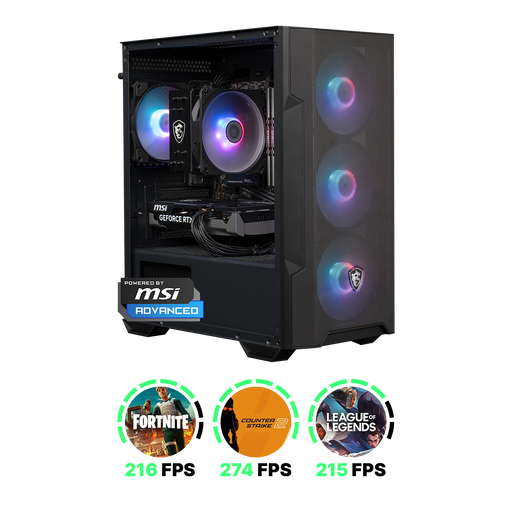
Shark Max Bite R501 Gaming PC, RTX 5060, Ryzen 5, 16 GB, 1 TB SSD
A desktop with a stated SSD capacity of 1 TB to consider if local storage for collection data and photos is important.
The product information lists a Ryzen 5 5500, 16 GB memory and 1 TB NVMe storage.
View at Joybuy
 No image available
Lenovo Yoga Mini 01IPH11 Copilot+ PC, Intel Core Ultra 5 325, 16 GB, 512 GB SSD
This mini PC is worth considering if you want to choose your screens separately; check that the ports are compatible with your screens.
The product information lists 16 GB LPDDR5X, a 512 GB PCIe 4.0 SSD, HDMI 2.1 and two Thunderbolt 4 ports. The description states that it supports up to four independent screens.
View at Joybuy
 No image available
Lenovo IdeaCentre Mini 01IRH10R, Core 5 210H, 16 GB, 512 GB SSD
A compact PC to consider if you want to put together your own screen setup; check that the connections match your screen.
The Joybuy product information lists an Intel Core 5 210H, 16 GB memory, a 512 GB PCIe 4.0 NVMe SSD and support for up to three independent screens.
View at Joybuy
 No image available
NVIDIA DGX Spark Founders Edition, 128 GB RAM, 4 TB SSD
Compare this mini PC with your own software and screen requirements before choosing this configuration for a coin catalogue.
The product name lists 128 GB RAM and a 4 TB SSD. The product information mentions HDMI and USB-C video outputs.
View at Joybuy
 No image available
SOYO M5 Mini PC, AMD Ryzen 4300U, 16 GB, 512 GB SSD
This mini PC is worth considering if you’re looking for a compact computer with screens you choose separately.
The product name lists 16 GB LPDDR4, a 512 GB SSD and support for three screens via HDMI 2.0, Type-C and DisplayPort 1.4. The stated display output is 4K at 60 Hz.
View at Joybuy
Frequently asked questions about desktops for coin catalogues
Can I view coin data and reference photos side by side?
Yes. In Windows, you can snap separate windows side by side. OpenNumismat also describes a coin table, photo panel and information panel in its own interface. Try the layout on the screen you plan to use; readability also depends on the content and your scaling setting.
Do I need two monitors for this task?
Not necessarily: you can also place windows side by side on a single screen in Windows. If you want to use two screens, check the outputs on the exact desktop, the inputs on both screens and the cables you’ll need.
How can I make sure my catalogue data isn’t stored only on my new PC?
Keep a separate copy of your collection data and photos, and check that you can restore it. The steps for copying or exporting depend on the catalogue software and setup you use.
What are my rights when buying a desktop online in the Netherlands?
According to ACM ConsuWijzer, online consumer purchases generally come with a statutory 14-day cooling-off period after delivery, although you should check whether any exceptions apply to your order. You’re also entitled to a product that meets what you could reasonably expect; if a product is faulty, the seller is responsible for putting things right. A manufacturer’s warranty doesn’t replace these statutory rights.


