
Coder working with side-by-side windows
You want to organise your code, puzzle output and error messages clearly. Microsoft Visual Studio Code supports side-by-side editors, so first check whether your current screen gives you the layout you want.


Start by choosing a screen layout that lets you see your code, puzzle output and test results clearly. Split editors don’t, in themselves, require a second monitor or a powerful graphics card. Then compare the exact desktop configuration for memory, storage, display outputs and support for your development tools. A compact PC saves desk space, while a larger case may be worth considering if future upgrades matter to you.
You want to organise your code, puzzle output and error messages clearly. Microsoft Visual Studio Code supports side-by-side editors, so first check whether your current screen gives you the layout you want.
You may use tests or containers alongside your editor, so you’ll want to match the memory and storage configuration to the requirements of your own software. Microsoft sets out the requirements for Visual Studio Code, while Docker has separate installation requirements for Docker Desktop.
You’re looking for a compact desktop and want to know in advance which screens and input devices you’ll still need. Lenovo and Apple describe compact desktop options with their own ports and configurations.
Start with your screen layout, then check that your software, configuration and available desk space are a good match.
Best for: a small workspace, Windows tools and choosing your own screens and peripherals.
Bear in mind: check the ports and upgrade options on the exact compact model; accessories may be sold separately.
Best for: a compact computer if your development tools run on macOS and you want to choose your screens separately.
Bear in mind: check compatibility with your own toolchain and the storage configuration. Support for external displays depends on the connection requirements.
Best for: anyone who values room for potential upgrades over the smallest possible case.
Bear in mind: check the actual upgrade options and ports for each model; a larger case takes up more desk space.
| What to consider | What to check before buying | Who should prioritise this? |
|---|---|---|
| Clear view when using split editors | Try the layout on your current screen first. If you’re considering an extra screen, compare the display outputs on the exact desktop with your screen’s ports and resolution. | If you want to view code and puzzle output at the same time without switching between them, a clear screen layout comes first. Around 36% of consumers say this is their main buying priority. |
| Editor and simultaneous testing tools | List the tests, browser windows and any containers you’ll run at the same time. Then compare the memory and SSD in your chosen model with the requirements of that software. | If you use tests and other development tools alongside your editor, you’ll want to know whether the configuration can handle that combination. Around 29% of consumers give simultaneous tools top priority. |
| Operating system and tool compatibility | Check that the project tools you actually use run on Windows or macOS. If you use containers, also check the installation requirements and processor platform required by your software. | If you work with specific languages, packages or a particular testing environment, compatibility is crucial. Around 21% of consumers choose mainly according to whether the development tools they need are supported. |
| Workspace and upgrade options | Check the dimensions, which components can be upgraded, and which screens and input devices are included with the model. | If you have limited desk space or want the option to upgrade components later, the case may influence your choice. Around 14% of consumers prioritise space or future upgrade options. |
Microsoft says that you can open editors side by side, horizontally or vertically, in one Visual Studio Code window. So the editor itself doesn’t require an extra monitor.
Try the layout you want on your current screen first. If you still decide to get an extra screen, check that your desktop has the right display output.
An extra screen may also need a suitable cable and enough desk space.
Lenovo states that a monitor, keyboard and mouse are optional and sold separately with the ThinkCentre neo 50q Gen 5.
Check what’s included with the exact model against the screens and input devices you already have.
The memory recommendation for Visual Studio Code applies to the editor; additional tests, containers and other software have their own requirements.
Make a note of the tools you actually use and compare their requirements with the configuration before choosing a desktop.
If your own workflow needs more than your chosen model offers, you may need to upgrade the memory or storage later.
The Government of the Netherlands distinguishes between statutory guarantees, manufacturer’s warranties and paid-for extended warranties. If there’s a problem with a product, the seller is responsible for providing a solution, according to the Government of the Netherlands.
Check what any extra cover includes and keep your purchase details.
The ThinkCentre neo 50q Gen 5 is a compact Windows option that lets you choose your own screens and input devices.
The Mac mini with M6 chip is a compact macOS option for anyone choosing their screens separately.
The OmniDesk 16L and Pro Tower 400 G9 show the different case styles available across HP desktops.
The Dell Pro Slim QCS1255 is a configurable Windows desktop with different models to compare.
These products include desktop options for a compact workspace, a multi-screen setup or an integrated display. For each model, check that the ports and configuration suit your software and workspace.
 No image available
This mini PC is an option if you’re looking for a compact Windows workspace; check that the configuration suits your additional development tools.
The product name lists Windows 11, 8 GB DDR4 and a 256 GB SSD. The description mentions two HDMI video outputs and one Type-C video output; check your screens’ connections.
 No image available
This compact macOS desktop could suit a workspace with separately chosen screens if your development tools run on macOS.
The product name lists a 12-core CPU, 12-core GPU, 24 GB of memory and a 512 GB SSD. The description mentions HDMI and Thunderbolt 4; check the display requirements for your setup.
 No image available
The compact design is useful if you have limited desk space; support for multiple screens isn’t required for split editors.
The product name lists 16 GB RAM, a 512 GB SSD and output for three 4K screens. The description mentions Wi-Fi 6 and Bluetooth 5.2.
 No image available
This compact model could be worth considering if you want to use several development tools and add more screen outputs; check the requirements of your own software.
The product name lists 24 GB LPDDR5 memory, a 512 GB PCIe 4.0 SSD and support for 4K output to three screens. USB 4.0 and HDMI 2.1 are also mentioned.
 No image available
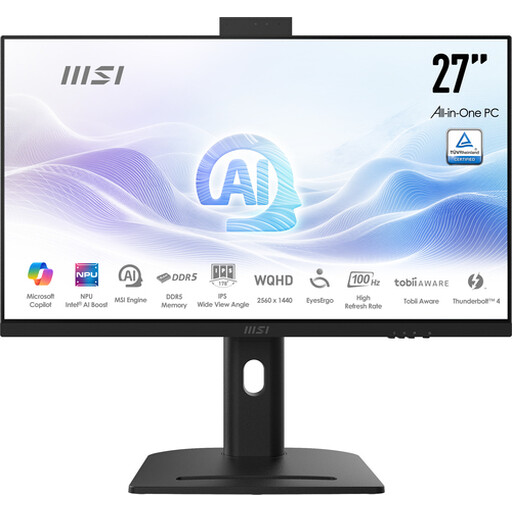
An all-in-one is an option if you want to view code and output on the built-in screen without choosing a separate monitor.
The product description lists a built-in 27-inch WQHD screen, 16 GB of memory, a 1 TB SSD and Windows 11 Pro.
No. Visual Studio Code can open editors side by side, horizontally or vertically, in one window. A second monitor is a way to get more screen space; if you choose one, check that its connections are compatible with your desktop.
Microsoft recommends 1 GB RAM for Visual Studio Code itself, not as a requirement for running all your tests, browser windows and additional development tools together. Compare the requirements of that software with the memory configuration of the desktop you’re considering.
First check whether your project needs Docker, then review the installation requirements for your version of Windows and chosen backend. Docker documents requirements for WSL 2, among other things; you don’t automatically need Docker to run a puzzle generator.
According to the Government of the Netherlands, you’re entitled to a product that works properly, and the seller must provide a solution if there’s a problem. A manufacturer’s warranty or paid-for extended warranty doesn’t replace that statutory right; check what any extra cover includes.
According to the Government of the Netherlands, you’ll often have 14 days to change your mind when buying at a distance. Before placing your order, check whether the rules apply to your purchase and what conditions are in place. For example, according to the Government of the Netherlands, an online purchase from a private seller isn’t covered by distance-selling rules.