Choose a desktop to suit your editing software, the size of your photo files and the screen you use to assess shadows and skin tones. A compact desktop works well on a small desk when paired with a suitable separate screen; an all-in-one combines the computer and screen, while a configurable Windows desktop lets you choose your memory and storage. If you also assess prints, screen calibration and stable lighting are important too.
Who is this choice relevant to?
Portrait editor who prints their work
If you assess subtle tonal differences on screen and compare them with prints, it’s worth paying attention to screen calibration and stable ambient lighting. Adobe describes these as part of achieving a reliable comparison between screen and print.
Editor working with large portrait files
If you work with large files or run several edits at once, you can choose memory and working storage to suit your software. For Photoshop version 27.x, Adobe lists 8 GB RAM as the minimum and recommends 16 GB or more.
Editor with a small desk
If desk space is limited, consider whether you already have a suitable screen or whether an all-in-one computer would work better in your setup. Apple Netherlands describes both the Mac mini with external screens and the iMac with its built-in screen.
What should you look for when buying?
Compact desktop with a separate screen
A good fit if: you already have a suitable screen or want to choose one yourself, for example because you have limited desk space.
Bear in mind: the screen is a separate part of your setup. Also check that the storage in your chosen configuration is suitable for your archive.
All-in-one computer
A good fit if: you want the computer and screen in one device, and the fixed screen size suits your desk.
Bear in mind: you have less freedom to choose the screen separately. Apple lists different configurations with varying memory, storage and port options.
Configurable Windows desktop
A good fit if: you use Windows software or want to choose memory and storage to suit your files and programmes.
Bear in mind: you choose the screen separately, and the specifications of one configuration don’t automatically apply to others.
| What to consider |
What to look for when buying |
Who should pay particular attention? |
| Assessing tones on screen and in print |
Check whether the screen can be calibrated and whether you can work under stable lighting. Adobe lists calibration and ambient light as part of a print-workflow setup. |
I want to compare light and dark details on screen with my prints; around 33% of consumers put tone assessment first. |
| Editing large files |
Compare the memory and storage configuration with your software’s requirements. For Photoshop version 27.x, Adobe lists 8 GB RAM as the minimum and recommends 16 GB or more. |
I work with large portrait files and want to choose a configuration that suits my software; around 25% of consumers prioritise editing requirements. |
| Photo archive and backup |
Compare the SSD capacity of the exact configuration with your archive, and plan for a separate backup solution. |
I want to know how much space my photo archive needs and how to keep a separate copy; around 25% of consumers put storage and backup first. |
| Desk space and setup |
Check whether a screen is included, which connections you need and how much space the complete setup will take up. |
I want to fit my computer and screen neatly on my home desk and know whether I already have a suitable screen; around 17% of consumers choose mainly based on the setup. |
Common buying pitfalls
-
Comparing only the computer and overlooking the screen
For assessing prints, Adobe lists screen calibration and ambient light as part of the workspace. A compact desktop doesn’t automatically come with a built-in screen.
Before buying, decide which screen you’ll use or want to buy, and how you’ll set it up for your print workflow.
-
Assuming a configuration name means one fixed set of specifications
The Apple and Dell configurations reviewed offer different memory and storage options. A product family name alone doesn’t tell you which configuration you’re actually choosing.
When buying, check the full model name and the selected memory and storage configuration.
-
Confusing internal storage with a backup
A larger SSD gives you more internal storage, but it isn’t the same as keeping a separate copy of your photos and editing files.
As well as choosing the SSD capacity you need, plan a separate backup solution for your photos and work files.
Brands to compare
Apple
In this comparison, Apple offers both a compact desktop with a separate screen and an all-in-one computer.
- For the Mac mini M6 reviewed, Apple Netherlands lists 16 GB memory, 256 GB SSD in the base configuration and support for external screens.
- According to Apple Netherlands, the iMac M4 reviewed combines the computer with a 24-inch 4.5K screen.
- Apple lists different configurations, so check the memory, storage and port options for the specific model.
Lenovo
The ThinkCentre M75q Gen 5 Tiny is a compact Windows desktop for which you choose your own screen.
- For configuration 12RQ003QEZ, Lenovo Netherlands lists a Ryzen 7 PRO 8700GE, 16 GB RAM and a 512 GB SSD.
- These specifications apply to the configuration listed and not automatically to other ThinkCentre configurations.
Dell
The Pro Micro QCM1255 is a compact Windows desktop with a separate screen and a choice of configurations.
- Dell Netherlands lists 16 GB RAM and a 512 GB SSD for the configuration shown.
- Dell also offers other memory and storage options, so compare the specifications of the configuration you choose.
HP
The Elite Mini 800 G9 is a compact desktop to compare with other setups using a separate computer and screen.
- For configuration 622W3ET#ABH, HP lists 16 GB RAM and a 512 GB SSD.
- Check that your chosen configuration is available and that its specifications match the model you’re considering.
Joybuy products for choosing a desktop
This selection includes compact desktops with a separate screen and an all-in-one computer for a home workspace.
 No image available
Apple Mac mini M6, 12-core CPU, 12-core GPU, 16 GB, 256 GB SSD
Well suited to a compact setup with a separately chosen screen.
The product name lists 16 GB memory and a 256 GB SSD; remember that the screen is chosen separately.
Joybuy
No image available
Apple Mac mini M6, 12-core CPU, 12-core GPU, 16 GB, 512 GB SSD
Well suited to a compact setup with a separately chosen screen.
The product name lists 16 GB memory and a 512 GB SSD; remember that the screen is chosen separately.
Joybuy
No image available
Apple Mac mini M6, 12-core CPU, 12-core GPU, 24 GB, 512 GB SSD
Well suited to a compact setup with a separately chosen screen.
The product name lists 24 GB memory and a 512 GB SSD; remember that the screen is chosen separately.
Joybuy
 No image available
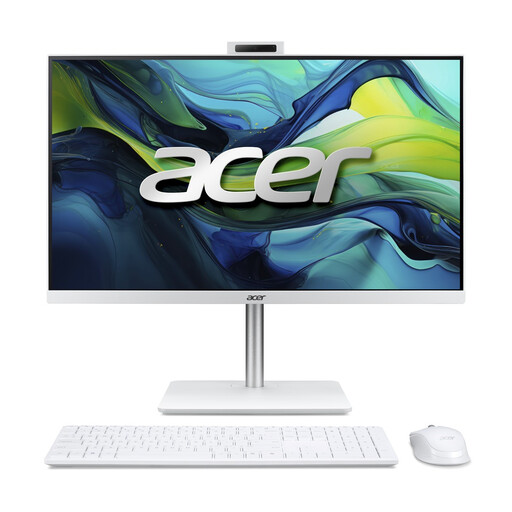
Acer Aspire C24-A WI5418 NL All-in-One, 23.8-inch Full HD IPS, 16 GB DDR5, 1 TB PCIe NVMe SSD
Well suited to a setup that combines the computer and screen in one device.
The product information lists a 23.8-inch Full HD IPS screen, 16 GB DDR5 and a 1 TB PCIe NVMe SSD.
Joybuy
 No image available
NVIDIA DGX Spark Founders Edition, NVIDIA GB10, 128 GB RAM, 4 TB SSD, NVIDIA DGX OS
The mini PC format may suit a compact setup with a separate screen. Check that NVIDIA DGX OS is compatible with your editing software and workflow.
The product name lists 128 GB RAM, a 4 TB SSD and NVIDIA DGX OS. The product description mentions HDMI and USB-C video outputs.
Joybuy
Frequently asked questions
Is 16 GB RAM essential for editing black-and-white portraits?
No. 16 GB RAM isn’t a universal requirement for every desktop used for this purpose. For Photoshop version 27.x, Adobe lists 8 GB as the minimum and recommends 16 GB or more. Check the requirements of the software you use too.
How should I set up my workspace if I also print portraits?
Take screen calibration and stable lighting into account when planning your workspace. Adobe describes both as factors in achieving a reliable comparison between screen and print.
What else should I consider besides the computer?
If you choose a compact desktop without a built-in screen, you’ll also need a separate screen if you don’t already have one. Also consider the software you use, enough storage for your archive and a separate backup solution for your setup.


