First, choose a desktop that runs your DAW, plug-ins and audio interface. Then work out how much processing power, memory and storage your own sessions need. A compact Mac, a Windows desktop or a custom-built audio PC could all fit the bill, but they differ in software compatibility, configuration and what you’ll need for your complete setup.
Who is this choice relevant to?
Mixer with a client presentation coming up
You want to mix an existing recital recording without playback problems and make sure the result is safely stored in time. Steinberg explains how the buffer setting affects latency and the demands placed on your computer; Microsoft explains how to back up files.
User with an existing DAW setup
You already have a DAW, plug-ins or audio interface, and want to avoid disrupting your workflow by switching computer or operating system. PCSpecialist discusses tailoring configurations to software and audio equipment; Focusrite provides software and drivers for specific interface versions.
Mixer with growing sessions
You’re expecting more tracks or longer recordings, so you’re comparing memory, storage and upgrade options for each configuration. Steinberg explains how memory usage in Cubase Pro can increase with recording length and the number of tracks; manufacturers list the memory and storage options available for each model.
What should you look for when buying?
Start by checking compatibility with your existing audio workflow. Then consider the demands of your sessions, project storage, operating noise and anything else you’ll need for the presentation.
Compact Mac desktop
Choose this option if: you’ve confirmed that your DAW, plug-ins and interface work with the macOS version you plan to use, and you’re looking for a compact desktop setup.
What to consider: check the exact memory and storage configuration, along with the connections you need. The listed specifications don’t prove better mixing performance or quieter operation.
Configurable Windows desktop
Choose this option if: you want to keep using your existing Windows DAW, drivers and plug-ins, or need a specific combination of memory and storage.
What to consider: the listed configurations apply only to those exact versions. Check the model number, processor, memory and storage separately.
Custom-built audio PC
Choose this option if: you want your DAW, audio interface and other equipment to be considered together when the system is configured.
What to consider: PCSpecialist describes this as a configuration option. Ask them to confirm that your specific components are supported, and compare what’s included in the complete setup.
| What to consider |
What to look for |
Who it matters most to |
| Reliable mix playback |
Assess the processor using your own session and test the buffer setting. Steinberg notes that a smaller buffer reduces latency but can put more strain on the computer. |
If I want to mix my recital without dropouts, I need to know how my own session performs. Around 25% of consumers prioritise reliable playback. |
| Compatibility |
Check the requirements for your DAW, plug-ins, drivers and audio interface against the exact computer and operating system version. |
If you want to continue your existing audio workflow without interruption, you need to make sure your software and equipment work together. Around 25% of consumers put compatibility first. |
| Project space and backup |
Compare RAM and SSD capacity separately, and plan to keep a recoverable copy outside your working storage. Steinberg explains that Cubase Pro uses more memory for longer recordings and sessions with more tracks. |
If I’m preparing larger sessions and want to be able to restore my project before the presentation, I need to consider both working space and a separate copy. Around 20% of consumers prioritise this. |
| Operating noise |
A compact case or a description of the cooling system doesn’t prove how loud a particular configuration is. Ask for comparable measurements or assess the noise under a suitable workload. |
If I’m also recording acoustically in the same room, I need to be able to assess operating noise. Around 15% of consumers prioritise a quiet workspace. |
| Complete setup |
Check which components are included with your chosen configuration and whether your display, interface and other equipment can be connected. |
If you want to use your desktop for both mixing and presenting, it helps to have a clear overview of everything you’ll need. Around 15% of consumers focus mainly on the complete setup. |
Buying pitfalls
-
Assuming a small audio buffer proves a computer is better for mixing
A buffer that’s too small can cause clicks, pops or other playback problems. The right setting also depends on what you’re doing at the time.
Test your own session with a suitable buffer, and assess recording and mixing separately.
-
Treating RAM, SSD space and backup as one and the same
Longer recordings and more tracks can increase memory usage; extra internal SSD space is not, by itself, a separate backup.
Check the RAM and storage for each configuration, and keep a copy of your project folder outside your working storage.
-
Assuming every model in a product range matches the configuration you’ve chosen
Models within the same product range can have different processors, memory or storage configurations.
Check the full model or product number, the selected specifications and what’s included with your order.
Brands to consider
Apple
The Mac mini range is a compact option if you’re looking for a macOS desktop.
- Apple lists several memory and SSD configurations for the Mac mini M6, along with Thunderbolt and HDMI connections.
- Check the connections and compatibility with your equipment; these specifications are not independent measurements of mixing performance or operating noise.
Lenovo
The ThinkCentre Neo 50s Gen 5 is a range of Windows desktops available in various configurations.
- Lenovo lists 32 GB RAM and a 512 GB SSD for one specific Dutch configuration.
- That configuration doesn’t automatically apply to other ThinkCentre models; a description of the cooling system isn’t an independent noise measurement.
HP
The OmniDesk 16L is a range of Windows desktops; one listed configuration combines local SSD storage with support for two monitors.
- HP lists 16 GB RAM and a 1 TB SSD for the M03-0612nd configuration.
- The specifications for this configuration don’t show that the computer mixes faster or more quietly than other options.
Dell
The Dell Pro Slim QCS1250 is a configurable range of Windows desktops.
- Dell lists several processor options; the configurations mentioned have 16 GB RAM and a 512 GB SSD.
- Check the selected processor and exact configuration, as a product page may show several configurations. Descriptions of suitability for demanding workloads are not independent DAW tests.
PCSpecialist
An option for a custom-built audio PC, made to order with your DAW, interface and peripherals considered together.
- PCSpecialist says it takes external components and your chosen software into account during configuration.
- This is information from the supplier, not independent proof that every configuration is compatible or quiet. Ask them to confirm your parts list.
Joybuy product picks
The Joybuy products below are desktops you can assess for mixing a recital, configuration by configuration. Before buying, check the operating system version, compatibility, connections you need and configuration.
 No image available
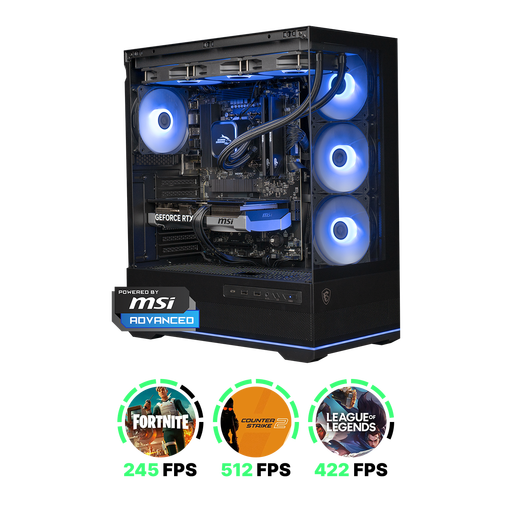
Shark Ultimator R700 Gaming PC RTX5070/R7/16GB/1TB, Powered by MSI
A desktop option to consider if you’re looking for a mixing computer; check that the configuration suits your DAW and sessions.
The description lists a Ryzen 7 7800X3D, 16 GB DDR5 and 1 TB NVMe storage. Windows 11 is listed as an Evaluation Version.
View at Joybuy
 No image available
Mac mini M6, 12-core CPU, 12-core GPU, 16 GB, 256 GB SSD
A good fit for a compact Mac desktop setup if your DAW, plug-ins and audio interface are compatible with the macOS version you plan to use.
This configuration lists an M6 chip with a 12-core CPU and 12-core GPU, 16 GB memory and a 256 GB SSD.
View at Joybuy
No image available
Mac mini M6, 12-core CPU, 12-core GPU, 16 GB, 512 GB SSD
A good fit for a compact Mac desktop setup if your DAW, plug-ins and audio interface are compatible with the macOS version you plan to use.
This configuration lists an M6 chip with a 12-core CPU and 12-core GPU, 16 GB memory and a 512 GB SSD.
View at Joybuy
No image available
Mac mini M6, 12-core CPU, 12-core GPU, 24 GB, 512 GB SSD
A good fit for a compact Mac desktop setup if your DAW, plug-ins and audio interface are compatible with the macOS version you plan to use.
This configuration lists an M6 chip with a 12-core CPU and 12-core GPU, 24 GB memory and a 512 GB SSD.
View at Joybuy
 No image available
Gaming Desktop PC Ryzen 7 7800X3D, GeForce RTX 5080, 32 GB DDR5, 1 TB NVMe SSD, Windows 11 Trial
A desktop to consider for sessions where you need the listed memory and storage configuration; check that it’s suitable for your software.
This configuration lists a Ryzen 7 7800X3D, 32 GB DDR5 and a 1 TB NVMe SSD. Windows 11 is listed as a Trial.
View at Joybuy
Frequently asked questions
Should I use the same low buffer for mixing as I do when recording live?
Not necessarily. A smaller buffer reduces latency, but puts more strain on your computer and can cause playback problems if it’s set too low. Try a larger buffer when mixing, and adjust it when you’re ready to record live again.
How should I prepare my files for the client presentation?
Check the exported file and keep a separate copy of your project files. On Windows, File History can save selected libraries to an external drive or network location; check that your project folder is actually included.
Is an audio interface included, or do I need one for my existing equipment?
Don’t assume an audio interface is included. Make a list of your monitors, headphones and any recording inputs you need, then check the connections and driver support for your chosen desktop. For example, Focusrite publishes separate software and Windows drivers for specific Scarlett versions.
In the Netherlands, am I always entitled to exactly two years’ legal guarantee on a desktop bought for personal use?
No. According to the Dutch government, there’s no fixed statutory guarantee period in the Netherlands. When you buy as a consumer, you’re entitled to a product that works properly for a period that depends on what you can reasonably expect. If there’s a problem, contact the seller. Check separately which terms apply if you’re buying for your business.


