Start with the DAW, plug-ins and video files for your animation score, then choose a desktop whose exact configuration can handle your software and support two screens at once. A Mac mini could be a good fit if your equipment and software work with macOS; a Windows mini PC or larger Windows desktop may make more sense if you use existing Windows software or need specific connections. No case size or processor name alone can guarantee a smooth mix.
Who is this desktop guide for?
Student working with lots of audio tracks
You mix with multiple tracks, instruments or effects and want to know what your DAW project demands from your computer. The Steinberg Help Center explains how project features such as tracks and plug-ins affect the computing power you need.
Student using two screens
You want to keep the animation or a second DAW window visible while you mix. Check both your software layout and the display capabilities of the specific desktop you’re considering. Ableton explains how to use two monitors, and Apple Netherlands lists support for external displays on the Mac mini.
Student with existing production software
You want to keep using your current DAW, plug-ins or audio interface. Check that they work with the computer’s operating system and drivers; Ableton provides advice on ASIO drivers for Live on Windows.
What should you look for?
Mac mini with macOS
A good fit if: your DAW, plug-ins and audio interface work with the version of macOS you choose, and you want to use two separate screens.
The trade-off: the base configuration listed has 16 GB of memory and a 256 GB SSD. Check that the storage is enough for your samples and video files.
Windows mini PC
A good fit if: your existing software requires Windows and you want a compact desktop for your desk.
The trade-off: ports and configurations vary by model. If you use Ableton Live, also check whether there’s a suitable ASIO driver for your interface.
Larger Windows desktop
A good fit if: you need specific connections or expansion options and have space for a larger case.
The trade-off: a larger case doesn’t prove that the configuration is expandable or can handle your project. Check the components and ports on the exact model.
The workload depends on factors such as the number of tracks and plug-ins, as well as the video in your project; the Steinberg Help Center explains how this varies by project. Ableton explains how a second monitor can show different DAW views.
| What to consider |
What should you check? |
Who should pay extra attention? |
| Mixing workload |
Compare the requirements of your DAW and project with the processor, memory and storage in the exact configuration. |
If I use lots of tracks, instruments or effects, I want to know what my project demands from the computer. Around 31% of consumers prioritise mixing workload. |
| Two displays |
Check simultaneous display support, video outputs and the connections on both monitors. |
I want to keep the animation or a second DAW window open alongside my mix; around 25% of consumers prioritise two screens. |
| Existing software |
Check the requirements of your DAW and plug-ins, as well as the driver for your audio interface. |
If I want to keep using my existing DAW, plug-ins or interface, I check the operating system and drivers first. Around 19% of consumers prioritise this compatibility. |
| Complete setup |
Make a list of the monitors, cables and other equipment you already have and what else you need. |
I want to know in advance which parts of my setup I already have and which are still missing. Around 13% of consumers prioritise the total purchase. |
| Audio interface |
Check the physical connection and driver for your interface; Ableton recommends an ASIO driver for Live on Windows. |
If I also record instruments or vocals, I want to be able to connect my interface and check the driver. Around 12% of consumers prioritise the audio interface. |
Common buying mistakes
-
Assuming a second screen means there’s a suitable second output
Your software may support a second window, but the desktop’s outputs also need to match your monitors’ inputs.
Before you buy, check that the exact computer supports two screens at once and find out which ports, resolutions and cables you’ll need.
-
Assuming a fast processor guarantees smooth mixing
The workload also depends on factors such as tracks, plug-ins and video. The Steinberg Help Center notes that a larger video window at a higher resolution can put extra load on the processor.
Compare your own project’s requirements with the full configuration, and check that your DAW and equipment will work with it.
-
Thinking the desktop is a complete setup
A computer doesn’t automatically replace a missing monitor, cable or audio interface.
First, make a list of the screens and audio equipment you already have, then check which connections your new desktop offers for them.
Brands to consider
Apple
The Mac mini M6 is a compact desktop running macOS. Apple Netherlands lists support for external displays.
- Apple lists 16 GB of memory and a 256 GB SSD for the base configuration.
- Check that your software works with the version of macOS you choose and that the storage is sufficient for your projects.
Dell
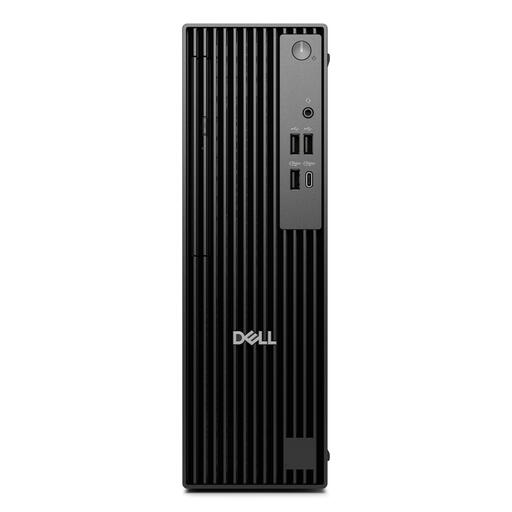
The Pro Slim QCS1250 is a larger range of Windows desktops available in several configurations.
- Dell lists a configuration with an Intel Core Ultra 5 235, 16 GB of memory and a 512 GB SSD.
- Specifications vary by model; check the display ports and expansion options on the one you choose.
Lenovo
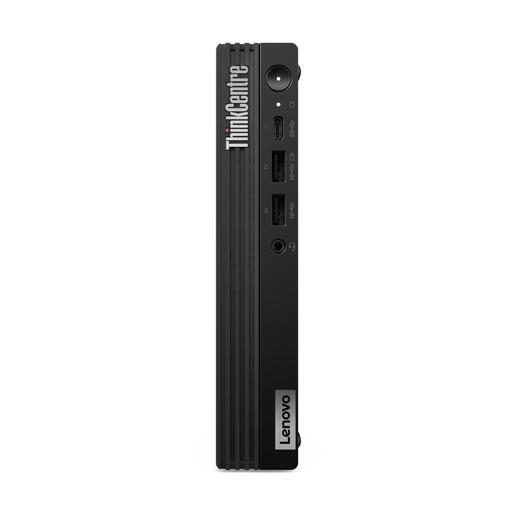
The ThinkCentre Neo 50q Gen 5 is a compact range of Windows desktops.
- For configuration 13B9CTO1WWNL1, Lenovo lists a Core 5 210H, 24 GB of memory and a 512 GB SSD.
- Check the ports and what’s included in the exact configuration; these specifications alone don’t indicate how well it will handle mixing.
HP
The Pro Mini 400 G9 is a small range of Windows desktops.
- For configuration 6D494EA#ABH, HP lists a Core i5-12500T, 16 GB of RAM and a 512 GB SSD.
- Check the availability and specifications of the configuration before considering it as a purchase option.
GEEKOM
The A6 is a Windows mini PC for which GEEKOM publishes specifications for display and peripheral connections.
- GEEKOM lists two HDMI 2.0 ports, DDR5 memory and storage slots for the A6.
- Check the specifications of the configuration on sale; the connections listed don’t prove that every model will work with your screens or project.
Joybuy product picks
These product picks focus on Windows desktops for mixing an animation score, with a second screen in mind.
 No image available
Dell Pro QCS1250, Core Ultra 5 235, 16 GB DDR5, 512 GB SSD, Windows 11 Pro
A Windows desktop to compare with your DAW’s requirements and the connections on your two screens.
The configuration listed has an Intel Core Ultra 5 235, 16 GB of DDR5 memory, a 512 GB SSD, HDMI and DisplayPort. The power adapter must be purchased separately.
Joybuy
 No image available
Lenovo ThinkCentre M70q Gen 5, Core i7-14700T, 16 GB DDR5, 512 GB SSD, Windows 11 Pro
A compact Windows mini PC to compare with your DAW’s requirements and the space available on your desk.
The configuration listed has an Intel Core i7-14700T, 16 GB of DDR5 memory and a 512 GB SSD. The power adapter must be purchased separately.
Joybuy
Frequently asked questions
Can I view the animation and my mix on separate screens?
It depends on both your software and the exact desktop. Ableton Live supports using two monitors to show different DAW views. Cubase Pro 15 has a separate video player window, and a larger or sharper video image puts more load on the processor. Also check that the computer supports both screens at once and has the right outputs.
How do I connect an existing audio interface to a Windows PC?
Check the physical connection and the driver for your interface and version of Windows. Ableton recommends an ASIO driver for Live; follow the instructions from Ableton and your interface manufacturer to set it up.
How much storage do I need for my DAW and animation files?
It depends on your DAW, plug-ins, samples and video files, so compare the capacity with the needs of your own projects. Ableton says that Live needs additional free space on the system drive beyond the minimum installation requirement.
What are my rights when buying a desktop online from a business in the Netherlands?
According to the Rijksoverheid, distance purchases often come with a 14-day cooling-off period, although there are exceptions. You’re also entitled to a product that is fit for purpose; in the Netherlands, there’s no fixed statutory warranty period of two years. If there’s a problem with a product, contact the seller.


