
Vandaag of morgen in huis

Kwaliteit gegarandeerd

Welkomstaanbiedingen ontgrendelen: GRATIS bezorging | Tot 80% korting | Gratis 30 dagen JoyPlus-proefperiode
Download de app
A desk with storage can make a small home office, student room or office much more practical. Yet many buyers focus mainly on its appearance and the number of drawers. As a result, they overlook important details such as the working depth, weight capacity, assembly and how much space a drawer unit actually takes up.
Before you buy, look out for these three common pitfalls:
First, measure the space where you plan to put the desk. Consider not only the width, but also:
For example, a compact computer desk measuring 102 x 50 x 76 cm is easier to fit into a student room than a corner desk measuring 150 x 110 x 75 cm. A corner desk, on the other hand, gives you more workspace for two screens or several devices.
Not every storage solution is suitable for the same things. Consider the differences between:
Also check the internal dimensions. A drawer may look spacious from the outside, but rails and sides can reduce the usable space.
Desks made from engineered wood, particleboard or MDF vary in finish and load capacity. Check the stated materials, maximum load and assembly instructions. A steel drawer unit may be suitable for heavier documents, while a wooden desk organiser is mainly intended for lightweight everyday essentials.
For products with wheels, lockable castors are useful when you need the cabinet to stay stable during use. If the product needs to be fixed to a wall, check that the fixings supplied are suitable for your type of wall. Always follow the manufacturer’s safety instructions.
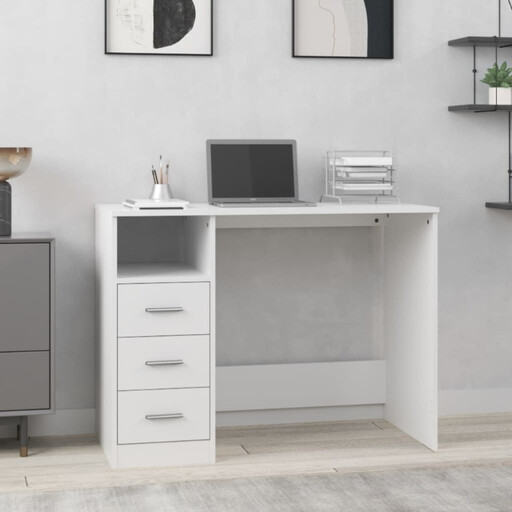
Why it suits this profile: At 102 cm wide and 50 cm deep, this desk is a good fit for a compact workspace. Its white finish suits a range of interior styles, and the open shelf provides space for books or folders.
The dimensions are clearly stated. Before buying, check the conflicting information about the drawers in the product title and specifications. According to the description, the desk must be fixed to the wall to prevent it from tipping over.
102 x 50 x 76 cm, white engineered wood, one open storage shelf and a surface described in the product information as moisture-resistant.
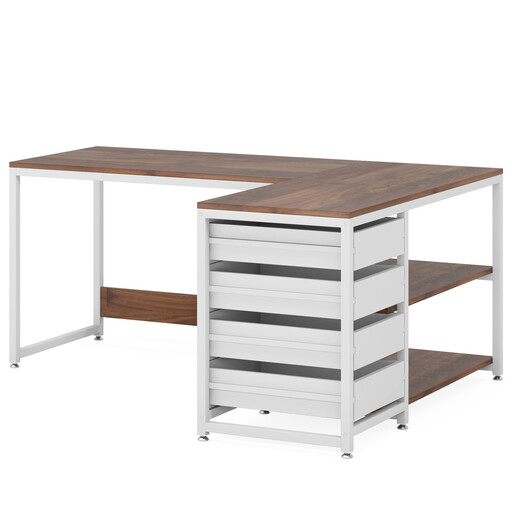
Why it suits this profile: This corner desk is designed for anyone who wants to use several devices, documents and accessories in one workspace. Its reversible layout lets you position the drawers on the left or right.
The L-shaped design makes use of a corner, so additional drawer units take up less floor space. Measure the available area beforehand to make sure 150 x 110 cm will fit, and check which orientation works best in your room.
150 x 110 x 75 cm, four drawers, two open shelves and a metal frame with adjustable feet.
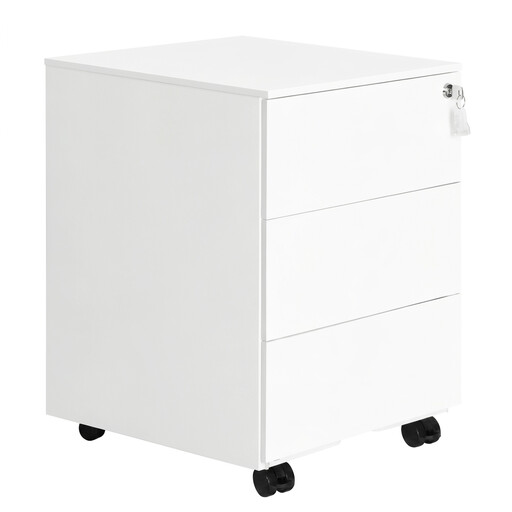
Why it suits this profile: This mobile drawer unit fits beside a desk and is suitable for documents, office supplies and items you occasionally need to move to another workspace.
The cabinet comes assembled and has four wheels, two of which have brakes, so there’s no need for complicated assembly. The lock provides extra security for your documents.
45 x 39 x 55 cm, three drawers, steel frame, lock and a stated weight capacity of 15 kg per drawer.
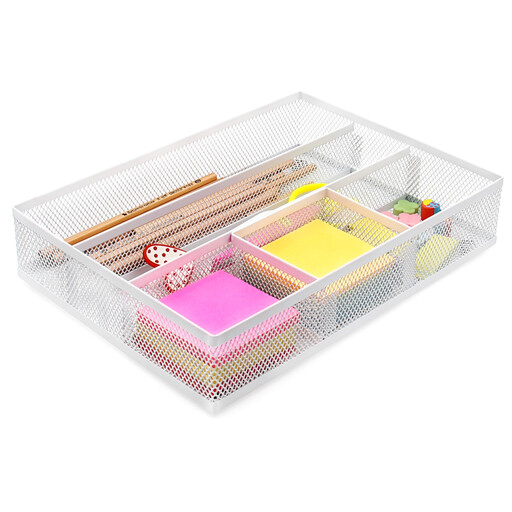
Why it suits this profile: If you already have a desk but want to tidy away stray pens, paperclips and notes, a compact desk organiser is a good place to start.
The five compartments make it easy to keep small accessories organised. Its dimensions of 30 x 21,5 x 7 cm make it easy to check whether the organiser will fit in your drawer.
Metal construction, five compartments and non-slip feet for use on a flat desk surface.
We’ve put together a complete, up-to-date list of products that meet these strict selection criteria and the applicable European safety regulations.
Use the top drawer for everyday items such as pens, cables and notepads. Keep documents in a deeper drawer or a separate drawer unit. Store frequently used items within easy reach and keep the desktop as clear as possible.
Measure the two walls or sides where you plan to put the corner desk. For a model measuring 150 x 110 cm, allow extra room for your chair, cables and opening the drawers. Also check that radiators, doors and windows won’t be blocked.
It can be practical if you regularly move documents or materials around. Choose a model with brakes on the wheels and check the weight capacity of each drawer. For heavy folders, a steel model is often a better choice than a lightweight desk organiser.
