
Vandaag of morgen in huis

Kwaliteit gegarandeerd

Welkomstaanbiedingen ontgrendelen: GRATIS bezorging | Tot 80% korting | Gratis 30 dagen JoyPlus-proefperiode
Download de app
A cluttered desk is often caused not by a lack of discipline, but by a lack of suitable desk organisers. Pens disappear beneath documents, cables take up valuable workspace and confidential papers are left unattended. The right solution depends on the space available, the items you need to store and the way you work.
When buying, don’t focus on appearance alone. A desk organiser that’s too small, a drawer that’s fitted incorrectly or a mobile pedestal that isn’t stable enough can quickly become impractical. Use these checks to help avoid a poor purchase.
An organiser with lots of compartments may look useful, but its layout needs to suit the items you’ll store. Narrow compartments work well for pens and rulers, but not for a stapler or a stack of notepads. Always check the internal dimensions, not just the overall size.
A desk drawer, under-desk drawer or filing cabinet needs to fit without getting in the way of legroom, cables or desk movement. Measure the space in three places:
When fitting a drawer beneath your desk, also take into account the thickness of the desktop and the position of any cable trays.
A large drawer may look suitable for documents, but that doesn’t automatically mean it can take a heavy load. Check the maximum load per drawer and distribute heavy items evenly. If you choose lockable storage, remember that the lock may be intended for privacy and organisation, not necessarily to protect against break-ins.
A compact desk organiser is handy for small office essentials. For example, a model measuring 30 x 21.5 x 7 cm can sit on a desk or fit inside a spacious desk drawer. Check that the compartments suit the way you’ll use it, too. Three small compartments and two long ones are useful for a mix of paper clips, sticky notes, pens, pencils and scissors.
For documents, deeper drawers or a mobile pedestal make more sense. Check the dimensions of your folders and A4 paper. If a filing cabinet isn’t deep enough, paper may crease or need to be stored at an angle.
Metal with a coated finish can be suitable for everyday use and is easy to wipe clean. A metal frame also offers a different level of stability from a lightweight plastic organiser. For a desk drawer, pay attention to the fixing points and check that all the screws are secure after installation.
Non-slip feet help stop an organiser sliding across your desktop. They may also help protect the surface from scratches, but always place the product on a clean, level surface.
A mobile pedestal is useful if you want to use storage alongside different workspaces. Castors make it easier to move; brakes on the castors help keep the cabinet in place. For a heavy model, an extra support castor can help improve stability.
If you share documents or personal belongings with housemates or colleagues, you may prefer lockable storage. Check whether the drawers extend fully, how much weight they can hold and whether the cabinet arrives assembled or requires assembly. These details affect both installation and the overall experience of using it.
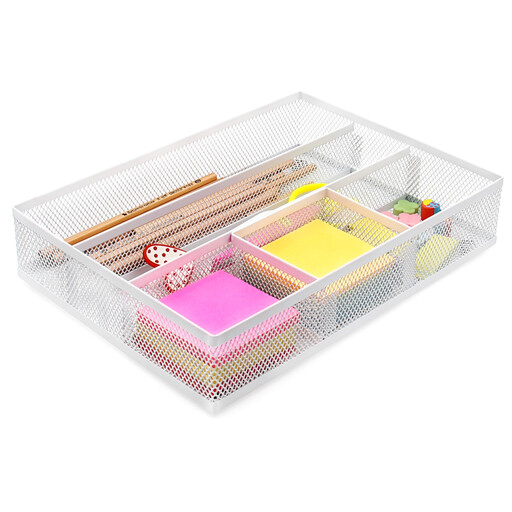
Why it suits this type of user: This compact desk organiser requires no assembly, making it a good choice for students, home workers and anyone with a small desk and loose office supplies.
The five fixed compartments make the layout clear from the outset. Four non-slip feet help prevent it sliding around on your desk.
Metal construction, coated finish, five compartments and dimensions of 30 x 21.5 x 7 cm.
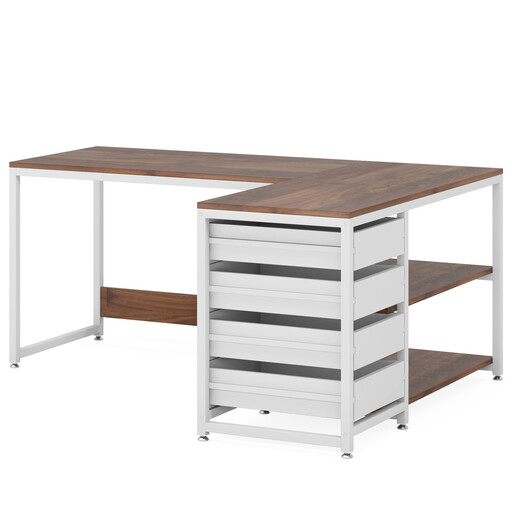
Why it suits this type of user: If you’re looking for a complete workspace with a desk and office storage, this L-shaped desk comes with drawers and open shelves.
The four drawers and two shelves provide more separate storage than a single standalone organiser. You can position the drawers on either the left or right.
Measures 150 x 110 x 75 cm, with a reversible L-shaped layout and a metal frame with E1 particleboard, according to the product description.
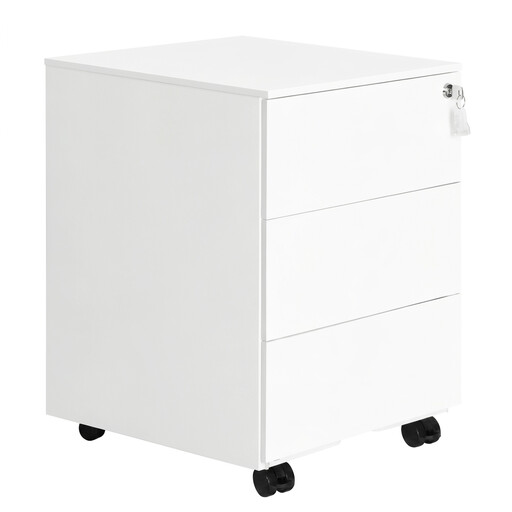
Why it suits this type of user: This mobile pedestal is ideal for offices and home offices where you need to store documents, office supplies and personal belongings beside your desk.
The cabinet arrives assembled and has three lockable drawers. Four castors, two with brakes, make it easier to move and position.
Steel frame, dimensions of 45 x 39 x 55 cm and a stated maximum load of 15 kg per drawer.
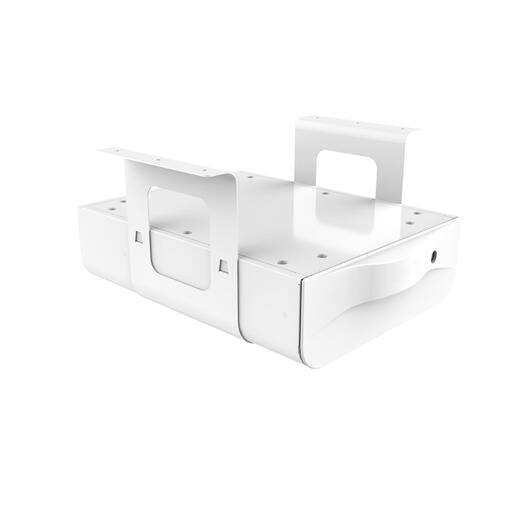
Why it suits this type of user: This under-desk drawer makes use of the space beneath your desktop and keeps small personal items out of sight.
The inner drawer measures 319 x 244 x 63 mm, so you can check in advance whether your items will fit. Secure installation is essential.
Measures 369 x 292 x 189 mm, with a lock for security and a stated maximum load of 5 kg.
We’ve put together a complete, up-to-date list of products that meet these strict selection criteria and the applicable European safety regulations.
Start with the items you use every day. Keep pens, cables and stationery close to hand in a desk organiser or top drawer. Documents you need less often can go in a deeper drawer or filing cabinet. Put heavy items at the bottom of a mobile cabinet and apply the brakes when it’s beside your desk.
After assembly, check that the drawers open smoothly, the desk remains stable and there’s enough legroom. Clean metal surfaces with a soft cloth and avoid using too much moisture. Follow the instructions supplied with each product and don’t exceed its stated load capacity.
A compact desk organiser or an under-desk drawer takes up little desktop space. Measure the available width, depth and height first. For an under-desk drawer, also check the legroom and the position of the fixing screws.
Use the fixings supplied, mark the fixing points carefully and check that your desktop is suitable. Don’t fully tighten the drawer until it’s properly aligned. Then test it with light items and check the screws regularly to make sure they’re still secure.
Its lifespan depends on the load, assembly, floor surface and maintenance. A steel frame and drawers with a stated load capacity give you specifications you can check, but you should still distribute the weight evenly. Use the castors as intended and avoid pulling an overloaded cabinet.
