
Regular desk worker
You spend most of your time in one spot and want warmth at your desk, rather than heating your whole home. Milieu Centraal recommends infrared heating for localised supplementary heating.


If you want to warm yourself briefly in one fixed spot, a targeted infrared panel may suit your needs. If you mainly want to warm the air in the room, compare a fan heater, convector heater or oil-filled radiator. When choosing, consider how long you’ll use it, fan noise, safe positioning and actual electricity consumption.
You spend most of your time in one spot and want warmth at your desk, rather than heating your whole home. Milieu Centraal recommends infrared heating for localised supplementary heating.
You want extra warmth when you sit down at your desk and are comparing how quickly different types of heater warm up. Praxis describes oil-filled radiators as slow to heat up.
You work for longer stretches and want quiet, even heat in a small room. Praxis describes oil-filled radiators as slow to heat up and as giving off heat evenly; also consider how much floor space you’ll need.
Suitable if: you work at a fixed desk and can position the panel to direct heat towards you, following the instructions. Milieu Centraal recommends infrared heating for localised supplementary heating.
Bear in mind: the heat is focused on a particular area; check whether wall mounting or a suitable freestanding position is possible.
Suitable if: you want to warm the air around your workspace relatively quickly and don’t mind fan noise.
Bear in mind: the fan may be audible; a high rated power can mean greater electricity use if the heater is on for long periods.
Suitable if: you want to gradually warm the air in a small room without using a fan.
Bear in mind: Praxis says convector heaters and oil-filled radiators warm up less quickly than fan heaters; check that the model’s power is suitable for the room.
Suitable if: quiet, even heat during a longer work session matters more to you than a quick warm-up. Praxis describes oil-filled radiators as slow to heat up and as giving off heat for a long time.
Bear in mind: the heater takes up floor space and may still be hot after you switch it off; check its dimensions and find a safe place to position it.
| What to consider | What should you check? | Who should pay extra attention? |
|---|---|---|
| Targeted heat | Check that you can safely direct the panel towards your seat and position it according to the model-specific instructions. | If I spend most of my time at one desk, I want warmth there without having to heat the whole room first. Around 26% of consumers prioritise targeted heat where they sit. |
| Electricity consumption | Compare the power in watts with the actual time the heater is switched on; the number of kWh depends on both. | For regular work sessions, I want to know how much electricity the heater actually uses. Around 21% of consumers prioritise electricity consumption during use. |
| Quick warm-up | Check the heat settings and consider whether fan noise is acceptable in your working environment. | If I’m only at my desk for a short time, I don’t want to wait long for warmth. Around 21% of consumers prioritise quick heat for a short work session. |
| Quiet warmth in the room | Check whether the model has a fan, how it is controlled and whether it will fit in the available space. | For longer work sessions, I want quiet, even heat without fan noise. Around 16% of consumers prioritise quiet, even warmth in the room. |
| Safe positioning | Check the dimensions, required clearance and model-specific connection instructions. The Netherlands Fire Service recommends plugging electric heaters directly into a wall socket wherever possible, rather than using a cable reel or extension block. | In a small flat, I want to be sure the heater can be positioned or mounted according to the instructions. Around 16% of consumers prioritise safe positioning in the available space. |
Infrared heating doesn’t guarantee low electricity consumption. A panel may be particularly suitable for briefly warming one fixed spot, but that doesn’t automatically mean it will use little energy when heating a whole room.
Check whether you want to use the heater for one fixed seat and consider how many hours it’s likely to be switched on.
Actual electricity consumption also depends on how long the heating element is switched on. A lower rated power on its own doesn’t tell you how much electricity a longer session will use.
Compare the actual power used while heating with the expected time the heater will be on, and calculate consumption in kWh on the same basis.
Even a small heater needs space to give off heat and must be connected according to the model-specific instructions.
Check the clearance and positioning instructions. The Netherlands Fire Service recommends plugging high-power appliances, including electric heaters, directly into a wall socket.
The supplied parts and permitted installation options can vary between panel models.
Check what’s included with the exact version and how it can be mounted or positioned.
For the Eurom Mon Soleil 350 wifi, the stand for freestanding use is sold separately. Welltherm says thermostats are not included as standard with its panels.
Eurom offers models in several categories, including a wall-mounted infrared panel, a ceramic plug-in heater, a convector heater and oil-filled radiators.
The Mini Excel Eco Safe SO9266 is a compact ceramic heater to consider if you’re comparing adjustable fan heaters.
The Gentle Air Oil Filled Radiator 1000W is an oil-filled option to compare for longer heating sessions.
This selection includes ceramic fan heaters and a freestanding infrared heater for extra warmth at your desk. Check which product requirements apply to the exact version and whether it meets them.
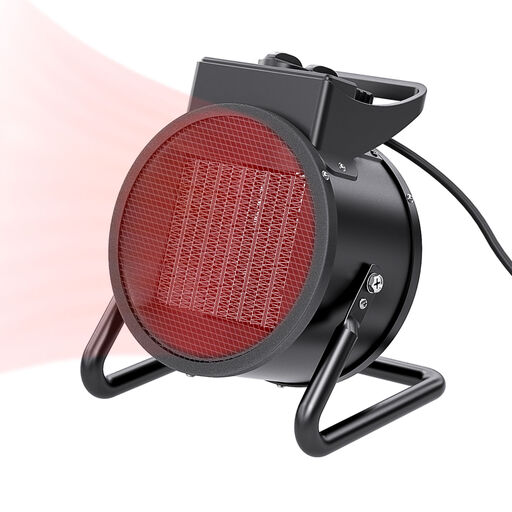 No image available
An option if you’re looking for an adjustable ceramic fan heater for your desk.
2 kW; PTC heating element; thermostat; 3 heat settings.
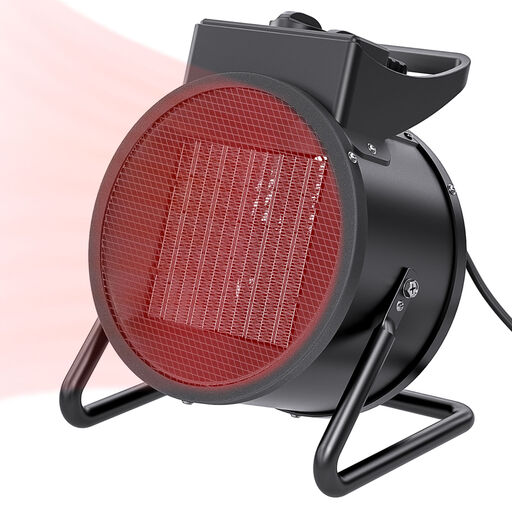 No image available
An option if you’re looking for an adjustable ceramic fan heater for your desk.
3 kW; PTC heating element; thermostat; 3 heat settings.
 No image available
A compact ceramic heater for anyone looking for adjustable warmth at their desk.
600 W; PTC ceramic heating; 45° oscillation; adjustable thermostat; tip-over and overheat protection. Do not use the heater near water or in damp rooms.
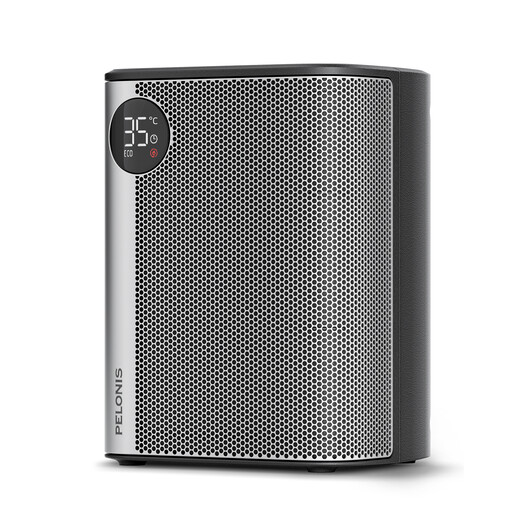 No image available
An option if you want to compare different heat settings and a timer for working at your desk.
2000 W; ECO mode; 24-hour timer; thermostat; 5 heat settings; overheat and tip-over protection. Keep the air vents clear during use.
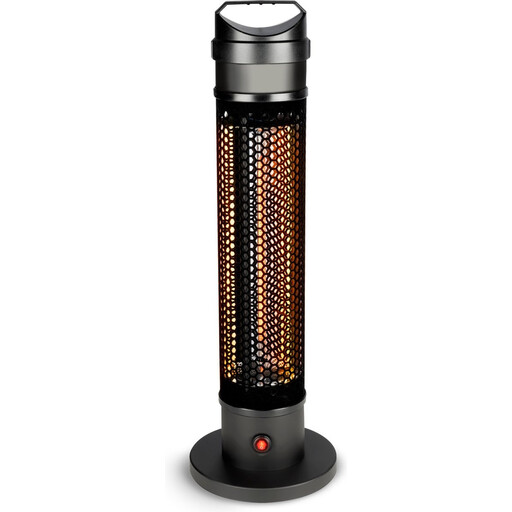 No image available
A freestanding infrared option to compare if you want warmth in one fixed spot.
800 W; carbon infrared heating. Place the heater on a stable surface.
Don’t assume so when choosing a heater for your desk. Milieu Centraal describes infrared panels primarily as supplementary heating for one spot; whether one is suitable as your main heating depends on factors including the home itself.
Follow the instructions for the specific model and leave the recommended space around it for heat to escape. The Netherlands Fire Service recommends plugging high-power appliances, including electric heaters, directly into a wall socket wherever possible, rather than using a cable reel or extension block.
Multiply the power in kilowatts by the number of hours the heating element is actually on; the result is the consumption in kWh. A thermostat can affect how long it stays on, so the rated power alone won’t tell you how much electricity your session uses.
Contact the seller. According to ACM ConsuWijzer, the seller must offer an appropriate solution free of charge if the product breaks sooner than you could reasonably expect under normal use; a manufacturer’s warranty does not replace this right.
Electrical products covered by the rules must meet the relevant CE requirements. Local electric space heaters within the scope of the rules are also subject to EU ecodesign requirements; the revised provisions of Regulation (EU) 2024/1103 have applied since 1 July 2025. The Government of the Netherlands and the European Commission explain these rules, but you’ll need to check whether they apply to, and are met by, the specific version.