
Vandaag of morgen in huis

Kwaliteit gegarandeerd

Welkomstaanbiedingen ontgrendelen: GRATIS bezorging | Tot 80% korting | Gratis 30 dagen JoyPlus-proefperiode
Download de app
A desk for working from home needs to do more than hold a laptop. It should suit your room, working posture and equipment. If you focus only on colour or price, you may not discover until after assembly that the desktop is too small, cables get in the way or the frame wobbles.
These aren’t isolated cases. When buying a desk, these three pitfalls are particularly common:
For a compact home office, student room or bedroom, a computer desk measuring 80 x 50 cm may be enough for a laptop or a single screen. If you need space for two screens, a printer or plenty of room to write, look for a large desk that’s 140 to 160 cm wide.
Consider the depth too:
Also measure the available space around the desk and check that drawers, doors and your office chair can move freely.
A desk with a metal frame typically has a straightforward construction: a metal base with a desktop made from MDF, chipboard or composite wood. That doesn’t automatically mean every model is equally stable. Check the joints, adjustable feet and any additional crossbars.
An MDF or chipboard desktop is practical and relatively easy to clean. Don’t place hot items directly on the surface, and avoid abrasive cleaning products. Also, check the difference between:
Assemble the desk on a level surface and make sure all the joints are firmly tightened. Check them again after using the desk.
A height-adjustable desk or sit-stand desk can be useful if several people share the same workspace or you want to alternate between sitting and standing. Check the adjustment range, maximum load and the space behind the desk. An electric model mustn’t hit a wall or cupboard as it moves.
A memory function makes it easier to save your preferred heights. A desk with cable management also helps stop power and monitor cables from hanging over the edge. Check what’s actually included, though: cable holes, an organiser and hooks aren’t the same as a complete cable tray system.
According to the manufacturers’ own product descriptions, some models feature a quiet motor, memory settings or a USB-C connection. Treat these as practical product features, not a guarantee of a particular working experience.
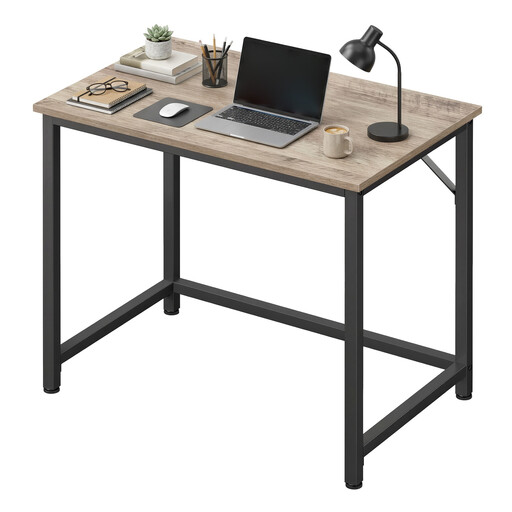
Why it suits this profile: Its compact size makes it a good fit for a bedroom, student room or small home workspace. The desk is suitable for working, studying and light gaming.
The stated dimensions are clear: 80 x 50 x 75.5 cm. Adjustable feet help keep the desk stable on a floor that isn’t completely level.
Chipboard desktop with a steel frame, a stated maximum static load of 50 kg and adjustable feet.
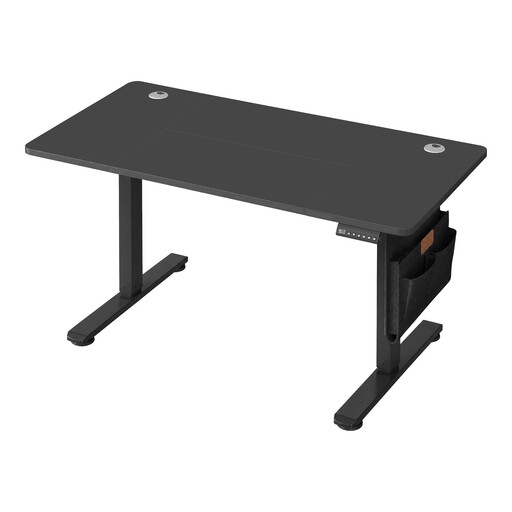
Why it suits this profile: The spacious work surface has room for multiple screens, a laptop and documents. The electric height adjustment makes it suitable for a home office used by one or more people.
The specifications state an adjustment range of 72 to 120 cm, two cable holes and an organiser. This means you can check the dimensions, adjustability and cable management in advance.
160 x 70 cm, steel frame, memory function, USB-C port and a stated maximum static load of 70 kg.
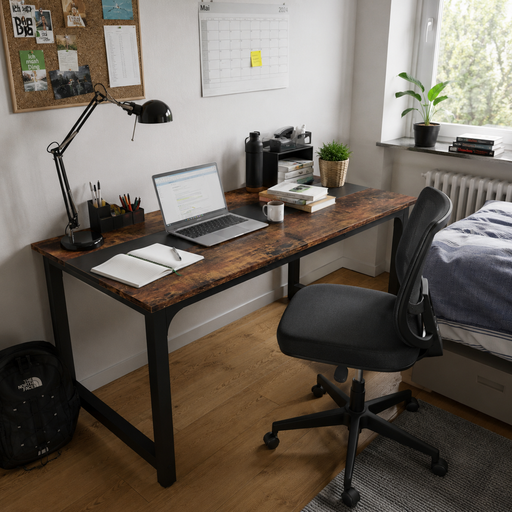
Why it suits this profile: This spacious desk is designed for a large workstation, multiple devices or a workspace that can also double as a meeting table.
The construction includes a metal frame, extra steel supports and adjustable feet. Its dimensions of 160 x 80 x 75 cm make the space it requires clear in advance.
Spacious MDF or composite wood desktop, steel base, adjustable feet and a stated weight capacity of 400 kg according to the product description.
We’ve put together a complete, up-to-date list of products that meet these strict selection criteria and the applicable European safety regulations.
For a laptop, 80 x 50 cm is often enough. A 120 x 60 cm desk is more practical if you use a monitor, keyboard and documents. If you use multiple screens, a printer or need plenty of room to write, it’s better to choose a desk that’s 140 to 160 cm wide.
An electric sit-stand desk only uses power when you adjust its height and, potentially, to run a control panel or USB connection. Actual energy use depends on how often you adjust it and which features you use. Unplug it if you won’t be using the desk for an extended period.
Its lifespan depends on the material, assembly, load and maintenance. Place the desk on a level surface, don’t exceed the stated maximum static load and check the screws from time to time. Protect an MDF or chipboard desktop from prolonged exposure to moisture and hot items. Keep liquids away from the motor, controller and connections on an electric desk.
