
Your usual spot on the sofa
You want to direct the airflow from a side table towards your seat, without bringing in a larger floor-standing model. The Consumentenbond describes a desk fan as being mainly intended for one person.


If you usually sit in one spot, a desk fan with a tilting head makes it easy to direct the airflow where you want it. If you share the sofa, an oscillating function can spread the air across more seats. Compare the noise level at the setting you plan to use, and check that the fan will sit securely on your side table. The Consumentenbond describes a desk fan as being mainly suitable for one person; Milieu Centraal points out that a fan does not replace room ventilation.
You want to direct the airflow from a side table towards your seat, without bringing in a larger floor-standing model. The Consumentenbond describes a desk fan as being mainly intended for one person.
You use the fan while doing something that requires concentration. So pay attention to how the low setting sounds and feels from where you sit.
You don’t want the airflow directed at just one person all the time. An oscillating function may be useful; also check whether you can switch it off when you want the airflow to stay in one direction.
First decide whether you want to direct the airflow towards one seat or spread it across several. Then check whether the set-up and noise level will work in your hobby room.
| What to consider | What to look for | Who is this important for? |
|---|---|---|
| Airflow towards your seat | Measure the space available on your table and check the direction in which the head can tilt, the base and the route for the cable. | If I sit in one spot, I want the airflow from the table to reach my seat. Around 33% of consumers say reaching their seat is their main priority. |
| Noise while enjoying a hobby | Compare the noise and airflow at the setting you actually plan to use; a stated minimum noise level does not automatically apply to every setting. | When I’m reading or enjoying a quiet hobby, I want a gentle breeze without distracting noise. Around 25% of consumers prioritise quiet operation. |
| Airflow across several seats | Check whether the model oscillates, how to turn this function off and whether there is enough room for it to oscillate. | If we share the sofa, I want the airflow to reach more than one seat. Around 25% of consumers say shared airflow is their main priority. |
| Table space and power use | Check the dimensions and that the fan can be placed securely; use the stated power rating for the exact model when calculating energy use. | With a small side table, I want to make sure the fan fits and stands securely; power use may also affect my choice. Around 17% of consumers say space or energy use is their main consideration. |
The airflow may pass low down, below the seated user. The Consumentenbond advises against putting a desk fan on the floor if you want to feel the airflow.
Assess the fan where you actually plan to use it, on a stable table.
Rowenta states 32 dB(A) for the minimum speed of the VU2740; this figure does not automatically apply at other speeds.
Compare the noise and airflow at the setting you expect to use beside the sofa.
Features and included accessories can vary between models. Duux, for example, states that the battery for the Whisper Flex 2 Smart is optional.
Check the full model code and what’s included in the box before you order.
Philips describes the 2000 Series CX2050/00 as a desk fan with a tilting head, three speeds, two modes and a timer.
Tristar describes the VE-5923 as a portable desk fan with two speeds and a 75-degree oscillating function.
Rowenta describes the VU2740F0 as having four speeds and automatic oscillation.
According to Duux, the Whisper Flex 2 Smart is an adjustable standing fan. It’s an alternative if you don’t have a suitable table beside the sofa.
This selection includes fans whose product name or description suggests they can provide airflow from or around a table. For models with multiple set-up options, check that the chosen configuration will fit securely and work well on your side table.
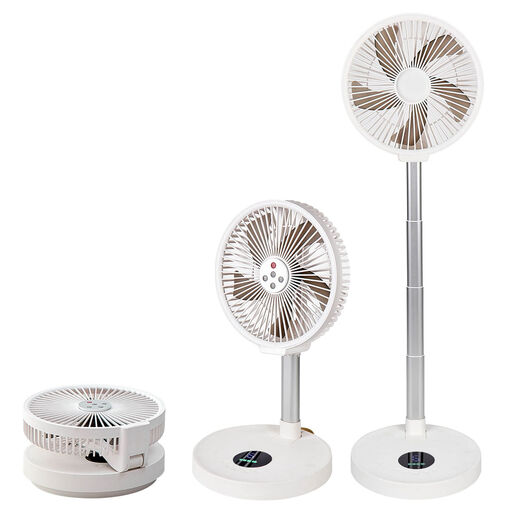 No image available
The product description mentions both table and floor use; check that your preferred set-up will work on your side table.
Foldable design, six speeds, timer, remote control and adjustable height.
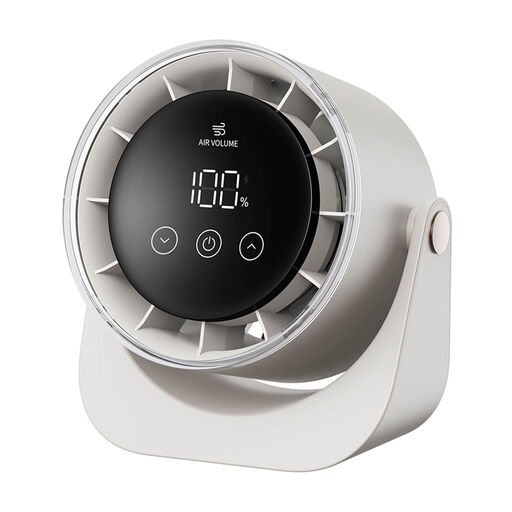 No image available
The product name describes a compact desk fan with a tilting head, making it a good fit if you want to direct the airflow from a fixed position.
Listed features: LED display, 100 speeds and 90° tilt adjustment.
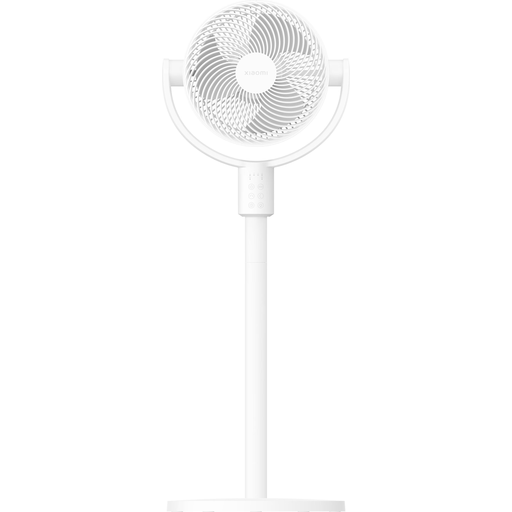 No image available
The product description mentions both table and floor use, as well as automatic oscillation, which may be useful if you want to spread the airflow across more than one seat.
The product name lists app control, 3D automatic oscillation and 100 speeds. Check which set-up will work on your table.
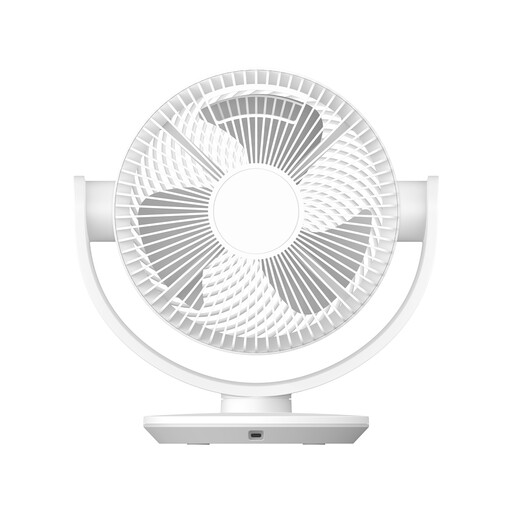 No image available
The product name identifies this as a desktop air circulation fan; check its dimensions and the space available on your side table.
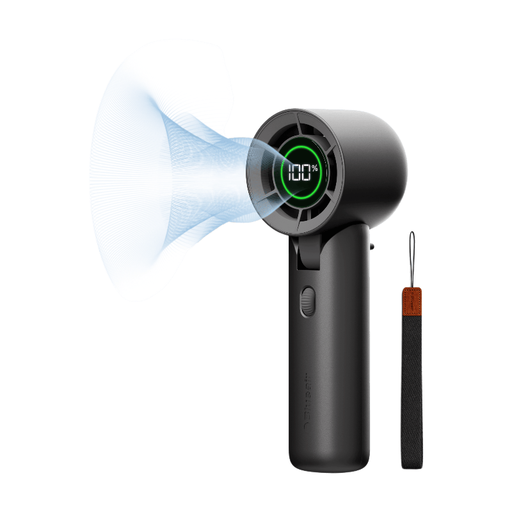 No image available
The product name mentions both handheld and table use. As it’s described as a handheld fan, it’s less suited to a permanent table set-up; check that the included version meets your needs.
The product name lists USB-C charging.
No. A fan moves air, but it doesn’t replace room ventilation. Milieu Centraal stresses that ventilation is still important for removing moisture and polluted indoor air.
Place it on a stable, level table and point the head towards your seat from that height. The Consumentenbond advises against putting a desk fan on the floor if you want to feel the airflow. Keep the air inlet and outlet clear, and follow the instructions for your model.
Switch off the fan and follow the cleaning instructions for the exact model. Before buying, check whether you can access the grille to remove dust; how the parts come apart varies between models.
For online purchases, you generally have a statutory cooling-off period of up to 14 days after delivery, although exceptions apply. Separately, a product must meet what you could reasonably expect when used normally. According to ACM ConsuWijzer, the seller is your point of contact if a product is faulty.
This depends on the rules that apply to the specific model. The NVWA states that CE marking is compulsory for electrical equipment covered by the Warenwetbesluit elektrisch materiaal, including equipment with a rated AC voltage of 50–1000 V. Other product safety rules may apply to appliances outside this directive; a CE mark is not an independent performance test.