Start by finding a stable spot where the airflow can reach your chair. Then compare the direction of adjustment, speed settings and noise level at the setting you plan to use. A compact model takes up little space, while an adjustable or oscillating head gives you different ways to direct the airflow. Cordless models are particularly useful if a cable would get in the way beside your chair. However, a fan simply moves air; it does not replace ventilation with fresh air from outside.
Who is a desk fan suitable for?
Student with one regular seat
Wants to direct airflow from a stable position towards their chair, so considers the distance from the fan and the direction in which it can be adjusted. The Consumentenbond reports airflow measurements at different distances; Tristar and Philips list adjustable heads on specific models.
Student who wants to study in peace
Uses a fan while reading, studying or sleeping and considers how noisy it is at a useful airflow setting. The Consumentenbond measures airflow at different speeds and distances; Rowenta gives the noise level at the lowest speed for a specific model.
Student with limited space
Has little room beside their chair or an awkward cable route, so compares the available space, how the fan can be positioned and whether a cordless model might be suitable. Tristar and Eurom describe specific compact models; check the dimensions and configuration of the model you are considering.
What should you look for when choosing one?
First, find a stable spot where the fan can reach your seat with its airflow. Then consider noise, how much space it takes up and the practicalities of powering it.
| What to consider |
What to look for |
Who will find this most important? |
| Airflow towards your chair |
Check the tilt direction, speed settings and whether the fan can be positioned at the distance you need. |
If I want to direct airflow towards my usual seat, I’ll focus on positioning and the direction of adjustment. Around 31% of consumers say targeted airflow is their main concern when buying. |
| Peace and quiet while studying or sleeping |
Compare the noise level at each setting and the conditions under which it was measured. Also consider the airflow at that setting. |
If you read, study or sleep with the fan on, you’ll want to keep disruptive noise to a minimum without compromising on the airflow you need. Around 23% of consumers prioritise quiet. |
| Space and stable positioning |
Compare the fan’s full dimensions and base with the space available, and check that it can stand securely. |
In a small room, I want to keep the space around my chair and desk clear and position the fan safely. Around 23% of consumers choose a fan mainly based on how much space it takes up and how it can be positioned. |
| No awkward cable |
Check the power supply, charging method and stated run time at the setting you plan to use. |
If a cable running past my chair would get in the way, being able to position the fan without it plugged in matters more. Around 15% of consumers make cable-free positioning their top priority. |
| Power consumption |
Check the stated power alongside the settings you can use. Power alone doesn’t tell you how strong the airflow will be. |
If I use a fan regularly, I want to consider its power consumption, while also making sure the airflow reaches my seat. Around 8% of consumers prioritise power consumption. |
Avoid common buying mistakes
-
Confusing a fan with ventilation
A desk fan moves air around your chair, but it doesn’t automatically remove polluted air or bring fresh air in from outside.
Keep ventilating the room, and choose a fan to provide the airflow you want at your seat. Milieu Centraal also distinguishes between moving air and ventilating a home.
-
Assuming the lowest dB figure applies at every setting
The stated figure may apply to just one specific speed. Noise and airflow also depend on the setting and distance.
Check which setting and conditions the noise level applies to. The Consumentenbond reports airflow measurements at different speeds and distances.
-
Looking only at the fan head’s diameter
The housing and base also need to fit beside your chair, and the fan must still be able to direct airflow towards your seat.
Measure the available space and check the full dimensions, stability and direction of adjustment of the exact model.
Brands to compare
Tristar
The VE-5909 and PD-3813E suit different positioning needs: one is a compact model, while the other is a desk fan with oscillation.
- Tristar says the VE-5909 has a diameter of 15 cm, two settings and a vertically adjustable head. The PD-3813E is listed with 85° oscillation.
- These features apply to the models mentioned and aren’t automatically found on other Tristar fans. Check the full dimensions of the model, too.
Philips
The CX2050/00 is a desk model worth considering if you’re looking for a tilting head and a choice of settings.
- Philips lists three speeds, two modes, a timer and a tilting head for the CX2050/00.
- These specifications don’t prove that the fan will be quiet or powerful enough at every seating distance.
Rowenta
The VU2740F0 is worth comparing if you’re looking for oscillation and a stated noise level at the lowest setting.
- According to Rowenta, the VU2740F0 has 120° automatic oscillation and a noise level of 32 dB(A) at the lowest speed.
- The noise level at the lowest speed won’t necessarily apply at other settings or in different situations.
Eurom
The Vento Cordless Fan is a small, cordless fan for anyone who wants the flexibility to position it where needed.
- Eurom describes this model as a battery-powered mini fan that can be used on a desk.
- Check the stated run time and charging method for the exact model to make sure they suit your needs.
Joybuy products for beside your chair
This selection includes portable models, desk fans and fans designed for use on a table or the floor. Check which EU rules apply to the exact product and whether it has any required CE marking.
 No image available
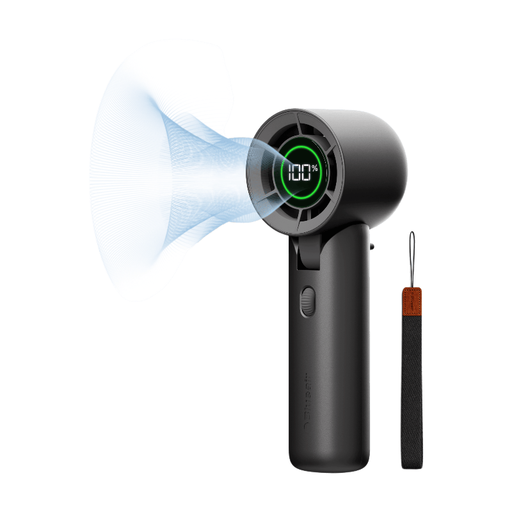
Blueair AlwaysCool Portable Handheld Fan F7
An option to consider if you want adjustable airflow beside your chair and the flexibility to position the fan without a mains cable.
The product name lists a battery life of up to 32 hours, USB-C charging and a portable design.
Joybuy
 No image available
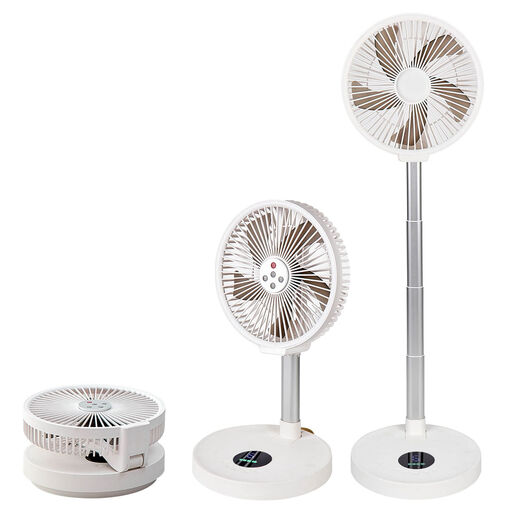
Foldable fan, 7200 mAh, white
This option suits anyone who wants to move their fan around and direct the airflow towards their seat.
The product name lists a 7200 mAh battery, a remote control, six speeds and a timer.
Joybuy
 No image available
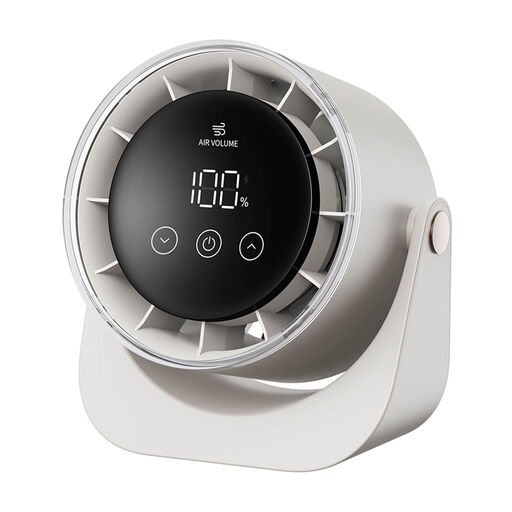
Compact cordless desk fan with LED display
A desk model to consider if you want to direct airflow towards a regular seat without using a plugged-in mains cable.
The product name lists 100 speeds and 90° tilt adjustment.
Joybuy
 No image available
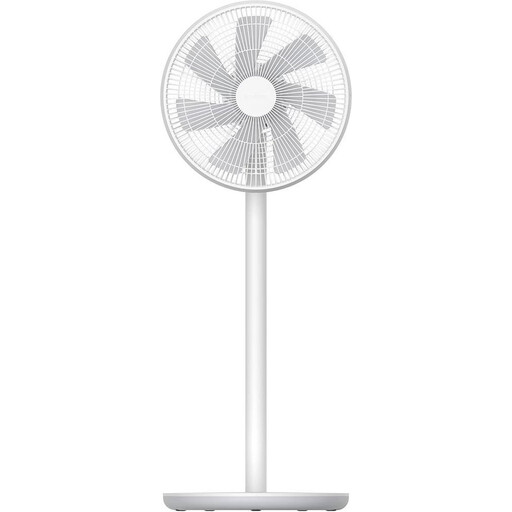
Xiaomi Smart Standing Fan 2
A model to consider if you’re looking at different positioning heights and adjustable airflow.
The product name lists app control and 100 speed levels.
Joybuy
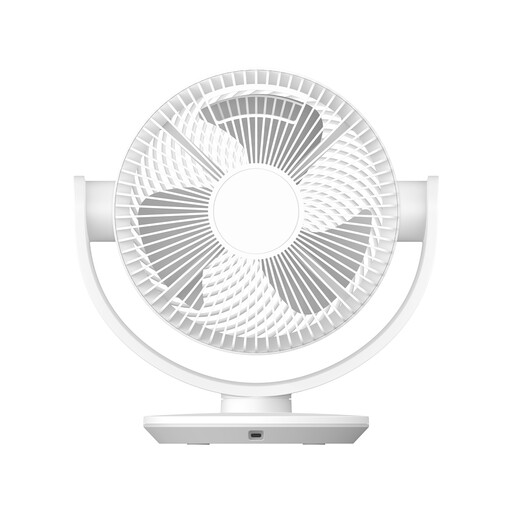 No image available
Xiaomi Smart Desktop Air Circulation Fan EU
A desk fan to compare if you want to place a model on a desk beside your chair.
Joybuy
Frequently asked questions
Does a desk fan replace ventilating my room?
No. A desk fan moves air to provide local comfort. Ventilation requires fresh air to come in and polluted air to be removed. Milieu Centraal makes the same distinction in its guidance on home ventilation.
How do I compare the stated noise level?
Check which speed and measurement conditions the figure applies to. Rowenta states that 32 dB(A) applies to the VU2740F0 at its lowest speed. The Consumentenbond reports measurements at different speeds and distances.
Where should I place the fan, and how do I keep it clean?
Place the exact model on a stable, level surface, following the instructions, and follow the manual for cleaning. The Consumentenbond includes ease of cleaning in its assessment of ease of use. If you use a cable reel, unwind the cable completely; Brandweer Nederland warns that a coiled cable can heat up.
What if a fan I bought online doesn’t fit or breaks too soon?
According to ACM ConsuWijzer, online purchases generally come with a statutory 14-day cooling-off period from delivery, although exceptions apply. This is separate from your statutory rights if a product doesn’t perform as you could reasonably expect during normal use; the seller must then offer an appropriate solution.
Does an electric desk fan in the Netherlands need CE marking?
That depends on the EU conformity rules that apply to the specific product. If those rules require CE marking, it must be present. The European Union points out that the absence of CE marking doesn’t mean the same thing for every product category, and that the presence of a mark alone is not proof of safety.


