Which type is right for you?

Desk worker looking to circulate the air

If you want air to move around your workspace without sitting directly in the breeze all the time, consider the direction of the airflow and whether the fan oscillates. Consumentenbond and Meaco Netherlands explain these factors when choosing a desk or table fan.

Light sleeper with a desk in the bedroom

If you work in the room during the day and sleep there at night, you may want to consider the noise at the setting you use, a timer and, if applicable, the display light. Consumentenbond and Duux highlight noise and speed settings as important considerations.

User with limited desk space

If you want to keep your desktop clear, consider a floor-standing model; if floor space is limited, look at the dimensions of a desk fan instead. Consumentenbond also recommends placing the fan somewhere stable.

What should you look for when buying?

Directional desk fan

A good fit if: you mainly sit in one place and want to direct the airflow yourself.

Bear in mind: according to Consumentenbond, a desk fan is mainly intended for one person; a tilting head doesn’t automatically mean the fan oscillates.

Oscillating desk fan

A good fit if: you want to circulate air around your desk and further across the bedroom.

Bear in mind: check which directions the exact model oscillates in and whether its dimensions will fit on your desk.

Pedestal or slim floor fan

A good fit if: you want to keep your desktop clear and have space for a fan on the floor.

Bear in mind: a pedestal takes up floor space; place the fan somewhere stable and out of the way.

Consideration What should you check? Who should consider this?
Air circulation and direction Check for horizontal and, if applicable, vertical oscillation, a tilting head and whether you can set a fixed direction. I want to circulate air around my desk without sitting directly in the breeze all the time; around 36% of consumers prioritise air circulation.
Noise while working and sleeping Compare noise information for each setting and, where available, measurements taken at a similar distance; a minimum figure doesn’t describe every setting. If I use the same room for work and sleep, I want a practical setting that isn’t unnecessarily disruptive; around 29% of consumers prioritise quiet operation.
Space and stable positioning Measure the available space and check the base dimensions, cable route and whether you have a flat, stable surface. With a crowded desk, I want to know in advance where the fan can be placed safely; around 21% of consumers prioritise where it will go.
Controls for use at night Check the timer duration, whether you can operate the controls from bed and whether the display light can be switched off. If I use the fan around bedtime, I want to be able to set it easily or have it switch off later; around 14% of consumers prioritise controls for night-time use.

Common mistakes

  • Assuming the minimum noise level applies to every use

    Noise can vary depending on the setting and distance. Consumentenbond describes measurements at different speeds and distances, so a figure for the lowest setting won’t necessarily tell you how loud a higher setting is.

    Compare the setting you expect to use during the day and at night, and pay attention to the measurement distance and conditions.

  • Confusing a tilting head with automatic oscillation

    A tilting head lets you direct the airflow; oscillation moves it automatically. This difference can determine whether the air stays in one spot or is circulated around more of the room.

    Check whether the exact model oscillates horizontally and, if applicable, vertically.

  • Choosing a floor fan without having a suitable place for it

    A pedestal takes up floor space and may be easier to knock over than a low-profile model.

    Measure the available space and keep the base and cable out of the way; place the fan on a stable surface.

Brands to consider

Meaco

Meaco lists the MeacoFan 1056 and Sefte 10 Table as desk fans that circulate air horizontally and vertically.

  • The brand’s website lists both directions of oscillation and the maximum airflow for these models.
  • Check the dimensions and noise information for the version you choose; these are claims made by the brand, not an independent comparison.

Philips

According to the product information, the Philips CX2050/00 is a desk fan with three speeds, two modes, a timer and a tilting head.

  • The tilting head gives you a way to adjust the direction of the airflow.
  • A tilting head doesn’t confirm automatic left-to-right oscillation; check for this feature separately if you need it.

Tristar

The Tristar VE-5722 is a desk fan with a manually adjustable angle and stated horizontal oscillation.

  • Tristar lists 30 W, a 23 cm grille diameter and 85° oscillation for this model.
  • The stated 48.65 dB isn’t linked to comparable measurement conditions for each setting, so don’t treat it as an independent bedroom noise test.

Duux

The Duux Whisper³ DXCF222 pedestal fan is an option if you want to keep your desktop clear and can place the fan on the floor.

  • Duux lists 26 speed settings and a timer of up to 12 hours.
  • The stated 13 dB is a brand claim for a specific setting and doesn’t, by itself, indicate how loud the fan is at higher settings. This floor-standing model needs a suitable spot beside your desk.

Joybuy products for this situation

This selection includes Xiaomi floor-standing models for circulating air around the room, as well as a desktop model for placing on your desk. For each model, compare the oscillation function, available space and controls with how you use the room for work and sleep.
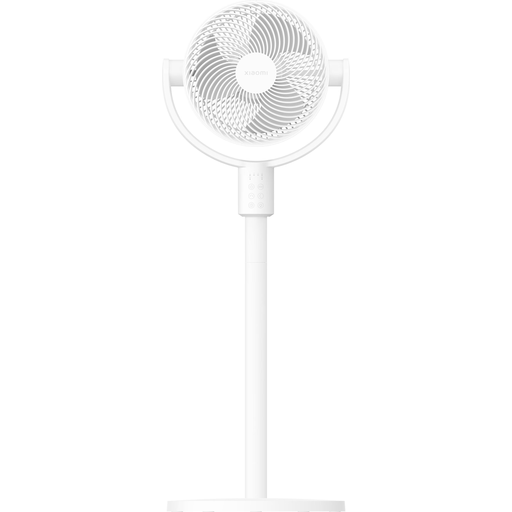
Xiaomi Smart Standing Air Circulation Fan with 3D oscillation

Xiaomi Smart Standing Air Circulation Fan

A floor-standing model for circulating air around the room if you have space on the floor.

The product name lists 3D automatic oscillation, 100 speeds, two modes and a sleep mode. It also mentions an airflow of 1440 m³/h, a range of 13 m and 28 dB in quiet sleep mode.

View at Joybuy
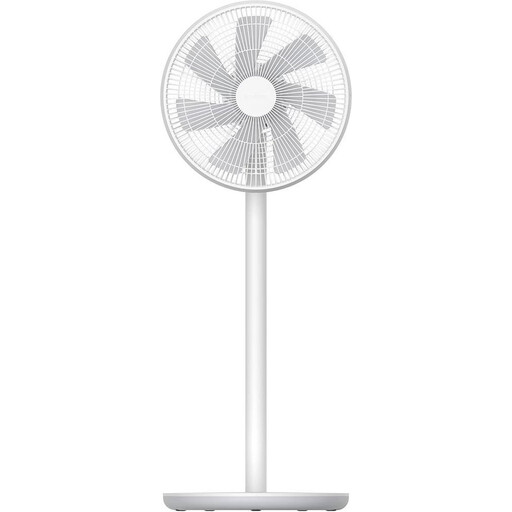
Xiaomi Smart Standing Fan 2 with 7+5 Dual Blades

Xiaomi Smart Standing Fan 2

A floor-standing model for anyone who wants to circulate air around the room without putting the fan on their desk.

The product name lists app control, 100 adjustable speeds and 7+5 Dual Blades.

View at Joybuy
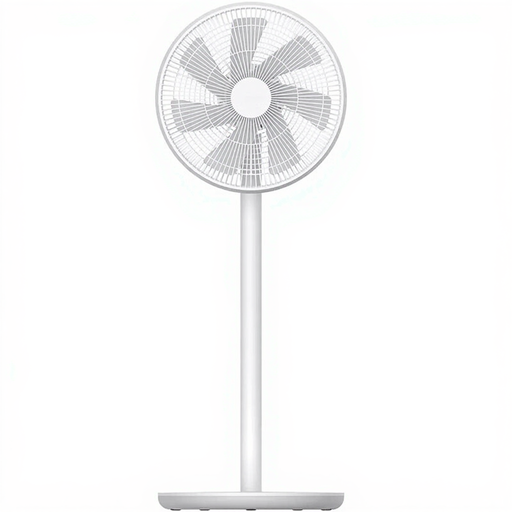
Xiaomi Smart Standing Fan 2 Lite with 90° oscillation

Xiaomi Smart Standing Fan 2 Lite

A floor-standing model to consider if you have space beside your desk and want the airflow to oscillate.

The product name lists 90° oscillation, seven blades, app control and adjustable height. It also states an airflow range of 12 m.

View at Joybuy
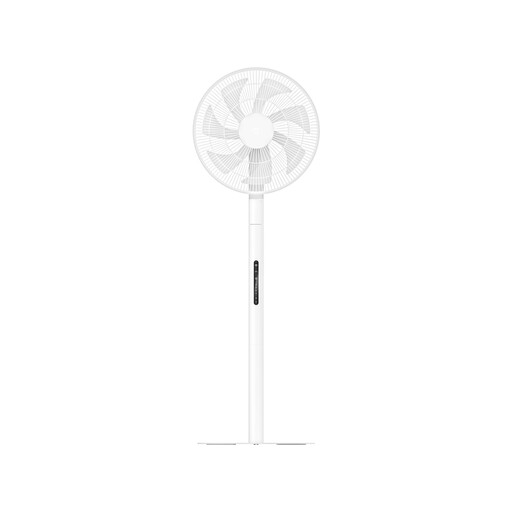
Xiaomi Mijia Smart Standing Fan Pro Slim

Xiaomi Mijia Smart Standing Fan Pro Slim

A floor-standing model that keeps your desktop clear; decide in advance where it can stand securely beside your desk.

The product name lists a DC inverter motor, app, remote and touch controls, plus support for portable charging via Type-C.

View at Joybuy
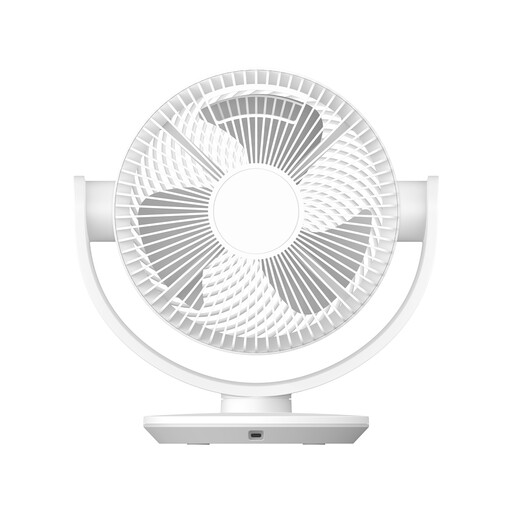
Xiaomi Smart Desktop Air Circulation Fan EU

Xiaomi Smart Desktop Air Circulation Fan EU

A desktop model to consider if you want to circulate air around your workspace and have room for it on your desk.

View at Joybuy

Frequently asked questions

Does the fan have to go on my desk?

No. According to Consumentenbond, a desk fan is mainly intended for one person; a floor-standing model keeps your desk clear. If you place a fan on the floor, check that its height and tilt let you direct the air towards your workspace, and make sure it stands securely.

How should I use the fan if I sleep in the same room later?

If needed, choose a lower setting, use the off timer if the model has one and check whether you can switch off the display light. For use at night, Consumentenbond recommends a quiet fan with multiple speeds.

How do I clean the fan safely?

Follow the instructions for the exact model and, if the manual says to, unplug it before carrying out any maintenance. Don’t remove the grille using instructions for a different model, and check that the fan is stable after cleaning.

Do I automatically get exactly two years of legal guarantee in the Netherlands?

No. According to the Dutch government, there is no fixed legal guarantee period in the Netherlands: you’re entitled to a product that meets the expectations you can reasonably have. If a product is faulty, contact the seller; any manufacturer’s guarantee is in addition to this.

Is CE marking compulsory for an electric fan?

CE marking is compulsory for electrical products covered by the applicable Dutch Electrical Equipment Decree. The NVWA explains that the manufacturer uses it to declare that the product meets the relevant requirements; CE marking doesn’t mean that every item has been independently tested. Check the marking and product information for the exact model being offered.
