
Vandaag of morgen in huis

Kwaliteit gegarandeerd

Welkomstaanbiedingen ontgrendelen: GRATIS bezorging | Tot 80% korting | Gratis 30 dagen JoyPlus-proefperiode
Download de app
A desk may seem simple to choose, until you use it every day. A worktop that is too small, wobbly legs or insufficient cable space can quickly make your workspace impractical. If you focus only on colour or a low price, you will often overlook the specifications that make all the difference.
This guide will help you compare a desk based on its dimensions, materials, stability and intended use. That way, you can find a suitable solution for a home office, student bedroom, gaming room or small meeting space.
A desk that is 80 cm wide may be suitable for a laptop, but offers little room for a monitor, keyboard and documents. For multiple screens or a printer, a large desk 160 x 80 cm is more practical. Also check the depth: 50 or 60 cm takes up little space, but limits the distance between your eyes and the screen.
A stated maximum load does not tell you everything about how the desk will perform day to day. The construction, joints and adjustable feet all help determine whether a table stands steadily. So look at the frame material, additional support bars and whether you can level the desk on an uneven floor.
A height-adjustable desk needs enough clear space to move safely up and down. Cables, a windowsill or a wall can obstruct its movement. For electric models, the controls, motor protection and maximum load are also relevant considerations. Always check the instructions and safety warnings supplied with the product.
Choose the size based on your equipment and the room available:
A study desk in a small bedroom requires different dimensions from a gaming desk with two screens. Do not measure only the floor area; also allow for drawers, chairs and walking space.
MDF and particleboard are widely used materials for affordable desks. MDF has an even surface and is easy to wipe clean. Particleboard is lightweight and practical, but check that the edges are properly finished and avoid prolonged contact with moisture.
A desk with a metal frame can offer additional strength, depending on the thickness and shape of the profiles. An industrial desk often combines a wood-effect or black top with steel legs. Pay attention to the connections between the top and frame, as this is where looseness often develops during assembly or moving.
Compare the stated maximum static load with your equipment. A monitor arm, printer or heavy desktop computer all count towards the load. Place the desk on a level surface and tighten all connections evenly. After a few weeks, check that the screws are still secure.
When it comes to load-capacity claims, use the value given in the official product information as a guide and do not exceed it. The LANTINE desk, for example, is listed with a maximum capacity of 400 kg; this value comes from the brand’s product description and should be interpreted within the stated assembly and usage conditions.
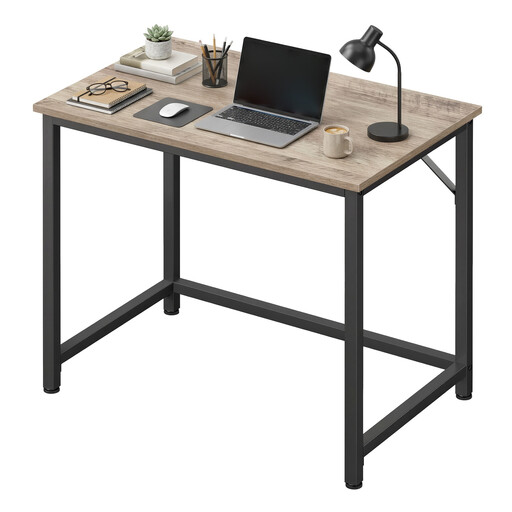
Why it suits this profile: The compact size fits in a bedroom, student room or small home workspace. The greige and black design works well for working, studying or casual gaming.
The product information lists adjustable feet, allowing you to correct small differences in the floor. The dimensions make it clear in advance how much space is required.
80 x 50 x 75.5 cm, steel frame, particleboard and a stated maximum static load of 50 kg.
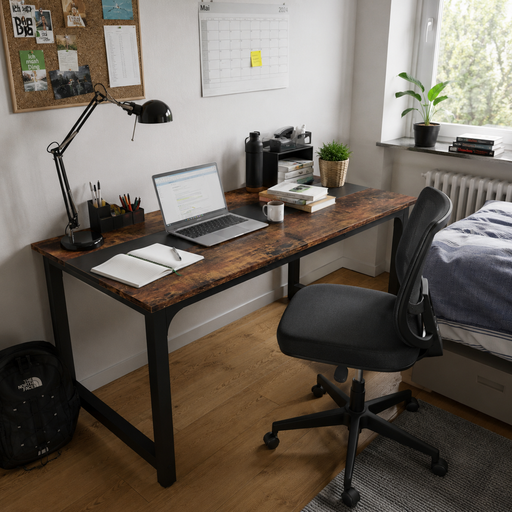
Why it suits this profile: This spacious worktop supports a multi-monitor setup, printer or shared workspace. The vintage brown/black design also works well as a meeting table in a home office.
The construction includes a metal frame, two additional supports and adjustable foot pads. This means the relevant stability details can be checked in advance.
160 x 80 x 75 cm, powder-coated steel frame and adjustable feet; according to the product information, the stated capacity is 400 kg.
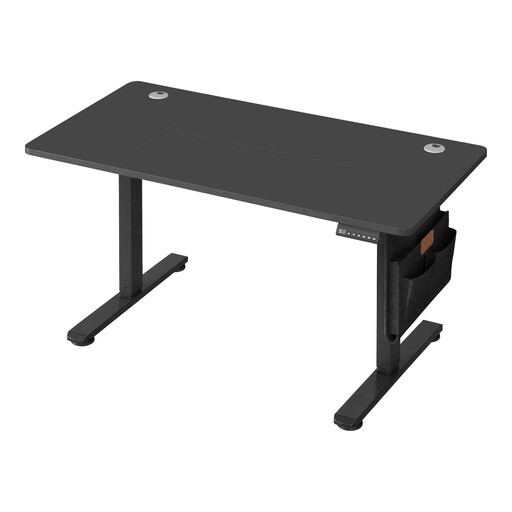
Why it suits this profile: Electric adjustment is practical if you regularly want to switch between sitting and standing. The memory function, cable grommets and USB-C port help you maintain an organised workspace.
According to the specifications, the height ranges from 72 to 120 cm. The manual warns against obstacles, liquids near electrical components and a temporary safety pause after prolonged use.
140 x 60 cm, memory function, USB-C port, two cable openings and a stated maximum static load of 70 kg.
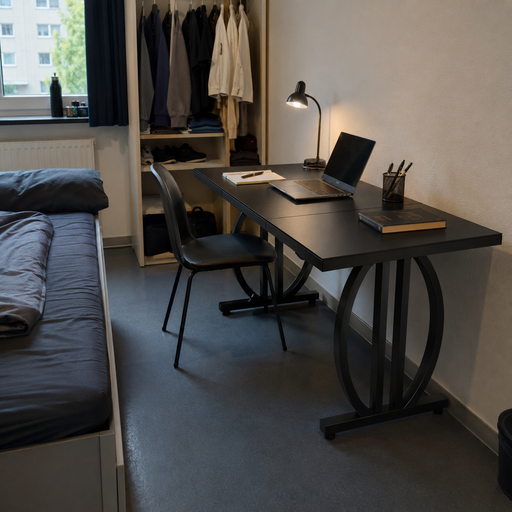
Why it suits this profile: The rectangular top is suitable for meals, meetings or working together. The black finish works as a modern black desk or as a table in an open-plan living space.
The dimensions, metal frame and assembly instructions are clearly specified. According to the product description, the top is designed to resist heat and scratches; this claim comes from the brand description.
160 x 80 x 75 cm, MDF top, metal frame, room for 4-6 people and a stated capacity of 150 kg.
We have compiled a complete, up-to-date list of products that fully meet these strict selection criteria and the applicable European safety regulations.
For a laptop, 80 x 50 cm is often sufficient. If you work with a monitor, keyboard and documents, 140 x 60 cm will usually be more suitable. A size of 160 x 80 cm provides room for several devices or two users, but does require a larger room.
Place the desk on a level surface, adjust the feet and tighten the connections evenly. According to the product information, a metal frame with additional supports can contribute to a sturdy construction. After assembly, check that the top does not wobble before placing any equipment on it.
An electric desk uses power while it is being adjusted and generally does not consume power continuously at the same level. Actual consumption depends on the motor and how often you adjust the height. A model with an energy-saving mode can limit standby consumption; check the product specifications and manual for details.
