
Vandaag of morgen in huis

Kwaliteit gegarandeerd

Welkomstaanbiedingen ontgrendelen: GRATIS bezorging | Tot 80% korting | Gratis 30 dagen JoyPlus-proefperiode
Download de app
A desk needs to do more than look good. It should suit your space, posture, equipment and daily routine. Yet many people choose a model based only on its colour or price. Once it arrives, they find the surface is too small, there’s not enough storage or their chair doesn’t fit properly underneath the frame.
In this buying guide from the Joybuy Product Recommendation Officer, you can compare key dimensions, materials and features. Find a desk for your home office, student room, bedroom or gaming setup without being swayed by vague marketing claims.
An 80 or 90 cm-wide desk can fit easily into a small room, but that doesn’t automatically mean there’s room for a monitor, keyboard, laptop and documents. So check the desk surface depth as well as the length. A depth of 40 cm can work for occasional use, but may feel cramped with a full computer setup.
A clean, uncluttered surface looks neat, but without drawers, cables, pens and documents often end up on the work surface. A desk with drawers or a desk with storage can be more practical in a student room or home office. Also check where the drawers are positioned, as they can limit legroom on one side.
A height-adjustable desk won’t necessarily suit every workspace. Check its adjustment range, maximum static load, desktop dimensions and the space around the desk. With an electric sit-stand desk, you’ll also need to allow for cables, a power socket and enough room for the desk to move up and down.
First, measure the spot where you plan to put the desk. Leave enough room around it for a chair, drawers and cables. The key measurements are:
A desk for small spaces doesn’t have to be small in every respect. A model with shelves above the desktop can make use of vertical space without taking up more floor space.
Many affordable desks are made from chipboard or engineered wood. Check the product information for details about the finish, moisture resistance and assembly. A smooth surface can usually be wiped clean with a soft, slightly damp cloth. Avoid abrasive cleaners and excessive water.
Stability depends on more than just the material. The construction, number of support points and a level floor all play a part. According to the product information, furniture with drawers or shelves may need to be fixed to the wall to prevent it from tipping over. Follow the assembly instructions, and don’t let children hang from the drawers or desktop.
For an electric sit-stand desk, the adjustment range and maximum static load are specifications you can check. The JOYFURNOS and Ochama models below have a stated maximum static load of 70 kg. This is the total load the desk can support, not just the weight of a monitor.
The product descriptions also list features such as memory settings, a USB-C port and a reminder to take breaks. According to the brands’ own product information, these features are designed to support switching between sitting and standing heights and keeping your workspace organised. They are not a medical guarantee.
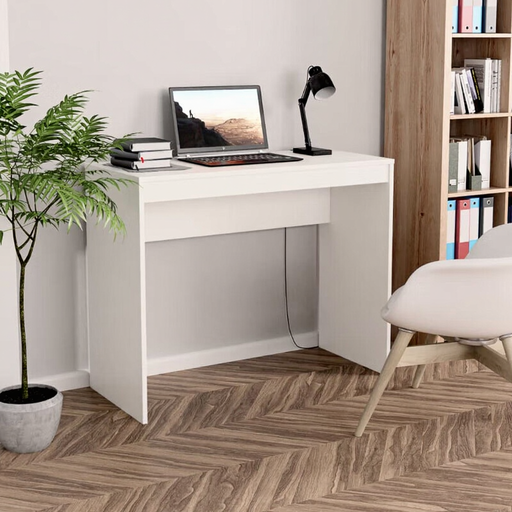
Why it suits this profile: At 90 x 40 x 72 cm, it takes up little floor space. The white finish suits a student room, bedroom or simple home office.
The exact dimensions make it clear that this is a compact model. You can check in advance whether a depth of 40 cm will be enough for your equipment.
90 cm wide, 40 cm deep, white engineered wood and, according to the product information, easy to wipe clean with a damp cloth.
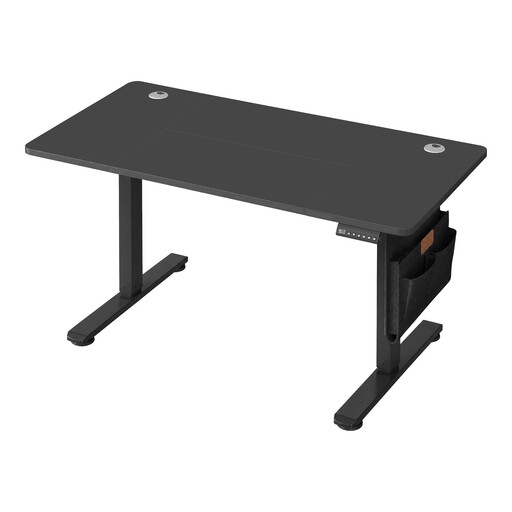
Why it suits this profile: The generous 160 x 70 cm desktop has room for multiple screens, documents or equipment. The product specifications state that the height can be adjusted from 72 to 120 cm.
The adjustment range, 70 kg load capacity and clearance warning are all clearly specified. This helps you avoid choosing a desk based on the sit-stand label alone.
Electric height adjustment, memory function, USB-C port, cable grommets and adjustable feet.
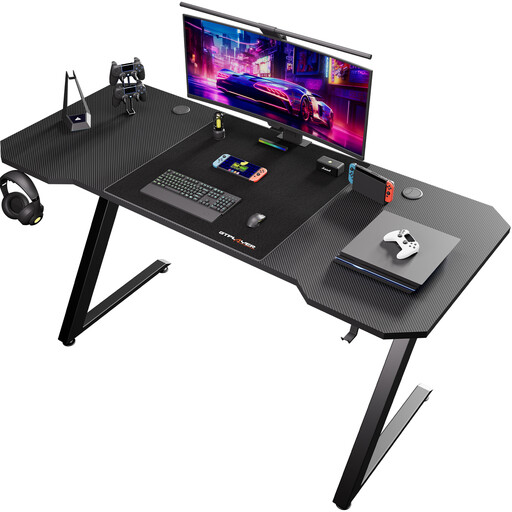
Why it suits this profile: The 120 x 60 cm size works well for a PC setup with a monitor, keyboard and accessories. The headphone hook is handy for gamers who want to keep their desk tidy.
The width and depth are clearly stated, so you can check whether there’s enough room to move your screen and mouse around.
Carbon-fibre surface according to the product name, 120 x 60 cm dimensions and an integrated headphone hook.
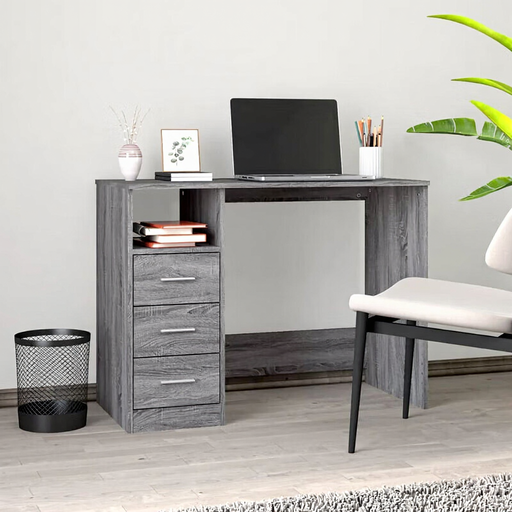
Why it suits this profile: Three drawers and an open compartment provide space for school supplies, folders and accessories. Its size also makes it suitable for a smaller room or student room.
The available storage compartments are clearly specified. The desk also needs to be fixed to the wall, so an important safety requirement is made clear too.
Three drawers, one open compartment, 102 x 50 x 76 cm dimensions and a smooth engineered wood surface.
We’ve put together a complete, up-to-date list of products that meet these strict selection criteria and the applicable European safety regulations.
It depends on your equipment. A width of 80 to 90 cm may be enough for a laptop and writing. For a monitor, keyboard and documents, 120 cm is more practical. If you use a desktop computer, choose a depth of around 60 cm or more where possible, so the screen isn’t right at the edge.
Its lifespan depends on the material, assembly, load and how it’s used. An engineered wood desk can last a long time with normal indoor use, but moisture, abrasive cleaning and overloading can damage the finish. Check the screws, fixing points and any wall anchors regularly.
Power consumption depends on how often and for how long you use the motor. The motor only runs briefly while the desk is being adjusted. A model with an energy-saving mode may reduce consumption when it’s not in use, but the exact amount varies by product. Check the technical information and adapter details on the product page.
