
Vandaag of morgen in huis

Kwaliteit gegarandeerd

Welkomstaanbiedingen ontgrendelen: GRATIS bezorging | Tot 80% korting | Gratis 30 dagen JoyPlus-proefperiode
Download de app
Choosing a desk may seem straightforward at first. Yet many buyers are drawn to a stylish design without checking whether the desk suits their room, equipment and day-to-day needs. A desktop that’s too small, wobbly legs or drawers that can barely hold anything are problems you often notice only after assembly.
Whether you’re looking for a computer desk, study desk, writing desk or home workspace, check the practical features first. Read on to find out what to look for and which models suit different needs.
An industrial-style desk with a black metal frame and wooden top often looks at home in a modern interior. But style tells you nothing about stability, legroom or weight capacity. Always check the dimensions, frame material and whether it has adjustable feet.
A large desk gives you more room for a monitor, laptop, printer and documents, but it also takes up more floor space. Don’t just measure the spot where the desk will go. Remember to allow for your desk chair, room to move around, skirting boards and doors.
With a corner desk, it’s also important to check which side is the longer one. A reversible model may be more practical if you want to change your room layout later.
A desk with drawers or built-in storage may seem handy, but check how many drawers it has, where they’re positioned and how much legroom is available. Open shelves are useful for books or accessories you want to keep within easy reach. Drawers are better for documents, cables and smaller items you’d rather keep out of sight.
For a computer desk, the width of the desktop determines how much you can fit on it. A 80 cm wide desktop is suitable for a compact laptop or monitor setup. If you use multiple screens, a printer or lots of paperwork, a desktop measuring 150 to 160 cm gives you more flexibility.
Depth matters just as much. A depth of around 50 cm suits smaller rooms, while 80 cm deep gives you more distance from the screen and extra space for accessories. Many desks have a working height of around 75 cm, but check that it suits your desk chair and height.
A metal frame can provide a sturdy base, but the construction matters just as much as the material. Look for crossbars, extra supports and how the desktop is attached to the frame.
Adjustable feet are useful on uneven floors. They help keep the desk stable and can reduce scratches or wobbling caused by small differences in floor height. Once assembled, put the desk in its final position and adjust the feet there.
Chipboard is a commonly used material for desktops. The product description may specify E1 chipboard, for example. Always check the maximum static load as well. The 80 × 50 cm model has a stated weight capacity of 50 kg. According to the product description, the 160 × 80 cm model can support up to 400 kg.
A stated weight capacity doesn’t mean you should place heavy items anywhere on the desktop. Distribute monitors, computers and other equipment evenly, and follow the assembly instructions.
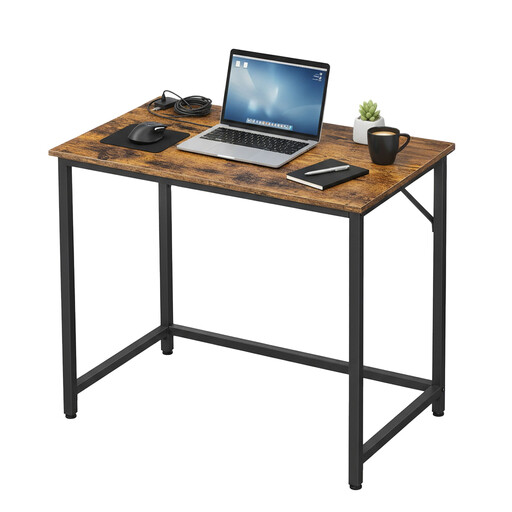
Why it suits this type of buyer: Measuring 80 × 50 × 76 cm, this compact desk fits in a bedroom, student room or small home office. It’s suitable for working, studying or light computer use.
The dimensions and maximum static load of 50 kg are clearly stated. This makes it easier to check in advance whether your monitor, laptop and accessories will be within the limits.
Compact design, steel frame, adjustable feet and a stated weight capacity of 50 kg.
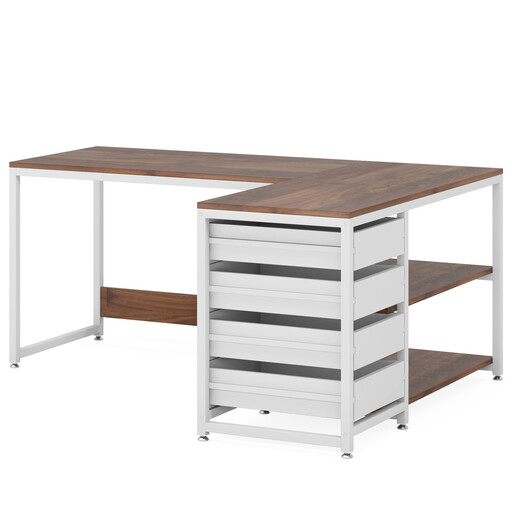
Why it suits this type of buyer: This 150 × 110 × 75 cm corner desk combines a spacious work surface with four drawers and two open shelves. Its reversible layout suits different room arrangements.
The storage is clearly specified, with four drawers and two shelves. The reversible layout means you don’t have to commit to one fixed arrangement in advance.
L-shaped design, four drawers, two open shelves, metal frame and adjustable feet. The product description states that the desktop is made from E1 chipboard.
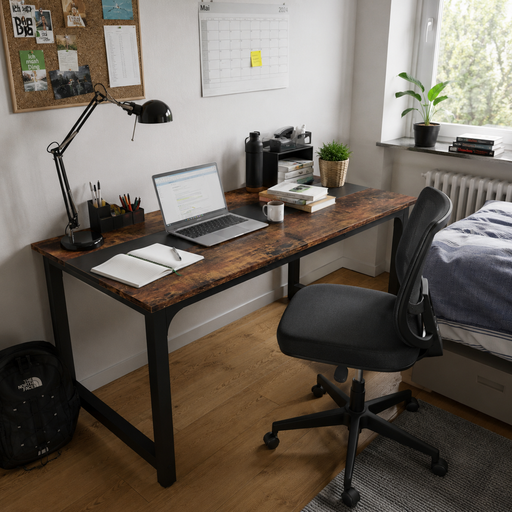
Why it suits this type of buyer: The 160 × 80 cm desktop has room for multiple screens, a printer, documents or a shared workspace. This makes the model suitable for intensive home working and larger setups.
The generous dimensions make it less likely that the desktop will feel cluttered. According to the product description, the extra steel supports, triangular brace and adjustable feet are designed to improve stability.
160 × 80 cm desktop, steel frame, two extra supports and adjustable legs. The product description states a maximum capacity of 400 kg.
We’ve put together a complete, up-to-date list of products that meet these strict selection criteria and the applicable European safety requirements.
A compact desk of around 80 × 50 cm is often enough for a laptop. If you use an external screen, keyboard, printer or paperwork, choose a wider desktop. A size of 150 × 75 cm or 160 × 80 cm gives you noticeably more workspace.
Check that the frame has been assembled correctly and that all the connections are secure. Put the desk in its final position and adjust the feet. Even a small difference in floor height can cause movement on an uneven surface.
It depends on the layout. Drawers provide storage without the need for an extra cabinet, but they can take up legroom. A model with open shelves or a corner desk may make more efficient use of the available space. Measure the clearance around the desk before you order.
