
Resident of a cool flat
Your windows regularly mist up and the room stays cool for a long time. You want to assess the source of the damp first, then check whether a desiccant model is suitable for that temperature.


Start by tackling possible sources of damp and keep the room ventilated; a dehumidifier is an addition, not a replacement for fresh air. If the room stays cool for long periods, compare desiccant models by temperature range, noise, energy use and water drainage. In a heated room, it’s also worth comparing compressor dehumidifiers.
Your windows regularly mist up and the room stays cool for a long time. You want to assess the source of the damp first, then check whether a desiccant model is suitable for that temperature.
The appliance would be close to where you spend time or sleep. In that case, noise and positioning may matter more than a high stated daily capacity.
If you’ll use it regularly, you’ll want to weigh up energy use, automatic controls and how often you’ll need to empty the water tank.
First, investigate the source of the damp and keep your home ventilated. Then compare the technology and model specifications for the temperature and usage in your flat. The Consumentenbond and Milieu Centraal highlight the importance of addressing the cause of damp and maintaining good ventilation, respectively.
| What to consider | What should you check? | Who should pay particular attention? |
|---|---|---|
| Performance at room temperature | Measure the temperature and check the temperature range of the exact model. Compare capacity under the stated test conditions; a maximum figure in l/24 hours won’t necessarily apply to every room. | If my room stays cool for a long time, I want to know whether a model is designed for that temperature. Around 33% of consumers consider performance at room temperature their main concern. |
| Noise and positioning | Check the noise levels for each setting, the dimensions and the clearance required around the air inlet and outlet. | In a small flat, I want to use the appliance without its noise dominating the living or sleeping area. Around 27% of consumers put quiet operation first when buying. |
| Energy use | Compare the power consumption for each setting and, where available, energy use under similar temperature and humidity conditions. Also consider how long you expect to use it for. | If I use it regularly, I want to compare how much electricity each setting uses. Around 20% of consumers say energy use is their main concern when buying. |
| Water drainage and maintenance | Check the tank capacity, the full-tank alert or automatic shut-off, whether it can be connected to a hose, and the maintenance instructions. | I don’t want to keep emptying a tank; a hose only helps if a suitable drain and position are available. Around 20% of consumers give the most weight to emptying and maintenance. |
Poor ventilation, leaks, heating and structural issues can all contribute to recurring damp. A dehumidifier won’t automatically solve the underlying cause.
Assess the situation and tackle any identifiable causes before choosing an appliance as the solution. The Consumentenbond, Milieu Centraal and GGD Leefomgeving all highlight the importance of addressing the source and ventilating.
How much water an appliance removes depends in part on the temperature and humidity. A maximum figure therefore doesn’t necessarily tell you how it will perform in your flat.
Compare figures under relevant test conditions. The Consumentenbond tests dehumidifiers at different combinations of temperature and humidity.
The technology alone doesn’t tell you how quiet a particular model is or how much electricity it will use in your situation.
Compare the stated noise levels for each setting and energy-use figures under similar conditions. If the room is heated, compare them with a compressor dehumidifier too.
The performance figures and recommended uses listed here come from manufacturers; they are not independent tests in a flat. Always compare the specifications and conditions for the exact model. Inclusion here does not confirm that a suitable version is available to buy in the Netherlands.
Qlima describes the DD 208 and DD 808 as desiccant models to consider for a small or cooler room.
The TTR 57 E is a desiccant model that TROTEC recommends for cooler rooms.
The WDD80 is another model to compare if use in a cool room and hose drainage are important to you.
The DD8L Junior is another model to compare for noise levels and energy use under the stated operating conditions.
These product options are relevant to dehumidifying living spaces, but they are not all desiccant models. Check the technology and temperature range for each appliance. Electrical appliances placed on the market in the Netherlands must meet applicable European product requirements; check the documentation for the exact model.
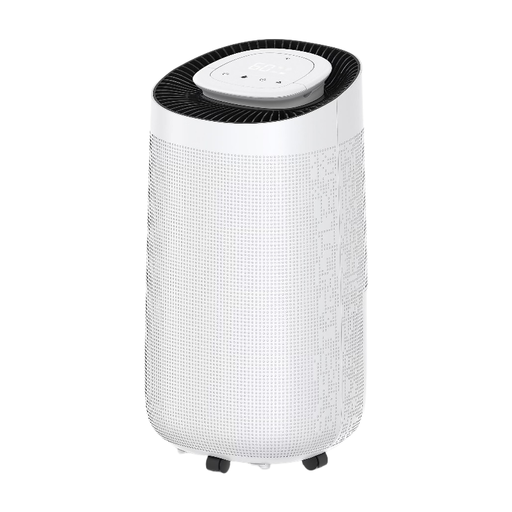 No image available
For anyone considering the stated daily capacity and tank size when choosing an appliance for a living space.
The product title lists 16 L/day and a 3.2 L water tank. Check the temperature range for the room where you plan to use it.
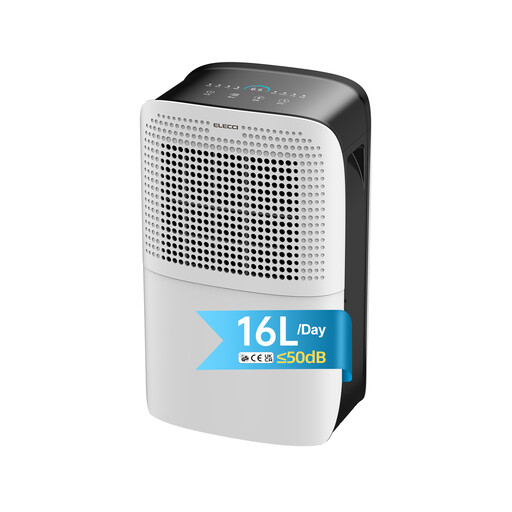 No image available
One option to compare if stated capacity, tank size and a timer are important to you.
The product title lists 16L/D, a 3.1 L water tank and a 24H Timer. Check that the stated room and temperature specifications suit your room.
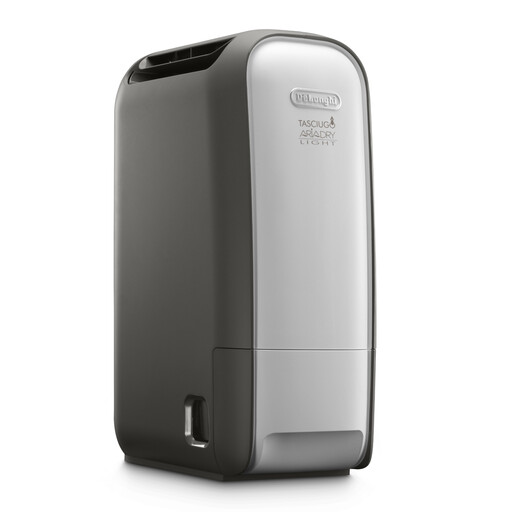 No image available
For anyone looking to compare a model with a stated capacity of 8 L per Day.
The product title lists 8 L per Day. Check the test conditions and temperature range before comparing its capacity with your flat’s requirements.
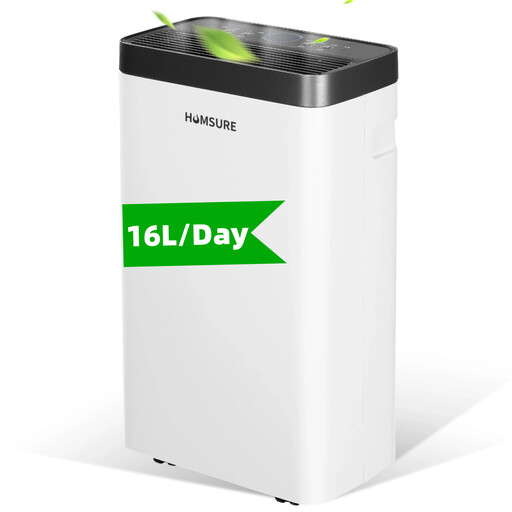 No image available
An option to compare if you’re considering the stated room size, capacity and tank size.
The product title lists 16L/Day, use in 25m² Rooms and a 1.4 L tank. Check the temperature requirements and whether the small tank suits your needs.
 No image available
This product description identifies it as a compressor dehumidifier, so you can include it when comparing desiccant and compressor models.
The product title lists 16L and a 2.5 L tank. Compare its stated performance at the temperature of your room.
Yes, ventilation is still essential; a dehumidifier doesn’t replace the supply of fresh air. Maintain basic ventilation and ventilate more when cooking or showering. Don’t keep ventilation grilles closed.
To allow air to circulate freely, don’t put the appliance in a corner or behind furniture. Check the filter and air openings too, and follow the instructions for cleaning and water drainage. The Consumentenbond advises leaving enough space around the appliance.
The Consumentenbond recommends 40–60% relative humidity at a room temperature of 18–24 °C as a comfortable range. Measure the conditions in your room; this setting won’t guarantee that condensation disappears from every cold window.
An electrical appliance placed on the market in the Netherlands must meet the applicable European product requirements. According to Business.gov.nl, after the required conformity assessment, the manufacturer must affix the CE marking and draw up an EU declaration of conformity. A CE marking is not an independent quality assessment; check the documentation for the exact model.
No. Room temperature and how you use the appliance both help determine which technology to compare. Desiccant models are worth considering if the room stays cool for long periods; in a heated room, a compressor dehumidifier may also be suitable. Compare energy use and performance under relevant conditions.