What should you look for when buying?
First compare the room temperature and source of damp. Then consider the recommended room size, noise levels for each setting, water collection and how you expect to use the appliance.
Desiccant dehumidifier
Suitable when: the room is often cool or unheated and you still need to dehumidify it after addressing the source of damp.
Trade-off: the Consumers' Association says this type works well in cold spaces, but generally uses more electricity than a compressor model.
Compressor or refrigerant dehumidifier
Suitable when: the room is usually warmer; the Consumers' Association describes compressor models as particularly suitable from 15 °C upwards.
Trade-off: according to the Consumers' Association, compressor models work less well in cooler spaces. Compare the operating conditions for the models you’re considering.
Improve ventilation and address the source of damp
Suitable when: damp is linked to poor ventilation, a leak, recurring mould or a possible structural defect.
Trade-off: an appliance won’t fix the cause. If you suspect a defect in a rented home, the Dutch Government recommends reporting it to your landlord.
| What to consider |
What to look for |
Who is this most important for? |
| A cool room |
Note the usual room temperature and compare the stated room coverage and the conditions under which the capacity was measured. |
If my room is often cool, I want to know which type is suitable and what coverage is specified for that particular space. Around 33% of consumers prioritise suitability for a cool room. |
| Drying washing indoors |
Check whether the exact model has a laundry-drying setting or adjustable airflow, and how to empty its tank. |
If you dry washing indoors, you’ll want to manage the moisture in that room without using the whole flat as a drying space. Around 27% of consumers prioritise dealing with moisture from indoor drying. |
| Noise in a small room |
Compare the noise levels for each setting and think about where the appliance can go without blocking the airflow. |
If I want to use the appliance near where I sleep or work, the noise level on my chosen setting matters. Around 20% of consumers prioritise bedroom noise levels. |
| Energy use |
Compare the power ratings of the settings you plan to use and consider how long you expect to run the appliance. |
If you plan to run the appliance often, you’ll want to factor in the electricity use of the relevant setting. Around 20% of consumers prioritise running costs. |
Joybuy dehumidifier
This Joybuy listing may suit you if you’re looking for an electric dehumidifier for a separate room. Compare the stated product details with your room and how you plan to use it.
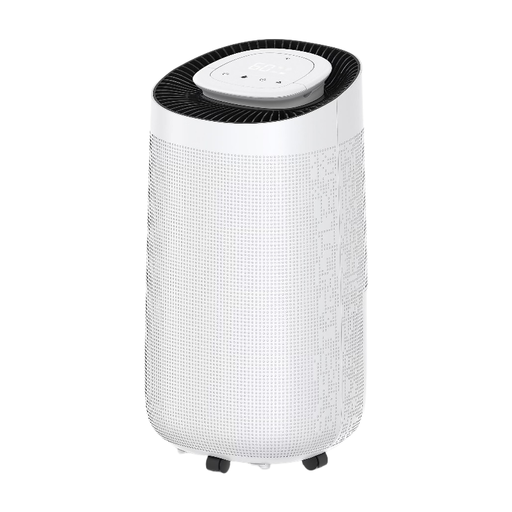 Image unavailable
Komodo Humi+ Dehumidifier, 16 L/day, 3.2 L Water Tank, White
For anyone looking for a dehumidifier for a separate living space; compare the stated coverage with the room where you plan to use it.
The product name lists a capacity of 16 L/day and a 3.2 L water tank. These are different figures, so consider each separately for your needs.
Joybuy
Frequently asked questions
Should I buy a dehumidifier as soon as I see mould?
First address the cause of the damp and remove any existing mould safely. The GGD recommends reducing damp, ventilating, heating and removing mould. A leak or recurring mould may also need to be repaired.
How should I use a dehumidifier when I have to dry washing indoors?
A laundry-drying setting can help, but it isn’t essential. The Consumers' Association recommends leaving enough space between garments and directing airflow towards or across the washing. Also follow the instructions for use and safety guidance for the exact model.
What should I check for maintenance and electricity use?
Check how to empty the tank or connect a drain, which filters need maintaining and how much power the setting you use requires. How long you run the appliance and which setting you choose will also affect electricity use.
What should I do if damp or mould is caused by a defect in my rented flat?
Report the possible defect to your landlord first and ask them to arrange repairs. The Dutch Government advises tenants to report poor maintenance, including damp problems and leaks, to their landlord first.
What are my rights if my dehumidifier breaks down too soon?
If a product is faulty despite normal use, ACM ConsuWijzer says you’re entitled to a statutory guarantee from the seller. Depending on the circumstances, the seller must put things right free of charge; a manufacturer’s warranty doesn’t replace this right.


