
Home worker with a clothes airer
You dry laundry in the same room where you work and need to concentrate. The Consumentenbond recommends leaving space between garments and directing airflow over or around the laundry.


A desiccant dehumidifier is best suited to a cool or unheated home office. In a heated room, it’s worth comparing compressor or refrigerant models too. The Consumentenbond recommends desiccant models for cold spaces, but also notes that they use more electricity than refrigerant dehumidifiers. Consider noise levels, airflow over your laundry and how the water drains. A dehumidifier doesn’t replace home ventilation.
You dry laundry in the same room where you work and need to concentrate. The Consumentenbond recommends leaving space between garments and directing airflow over or around the laundry.
Your home office isn’t heated much, so you want to choose a dehumidifying technology that suits the temperature while your laundry is drying. The Consumentenbond recommends desiccant models for cold spaces.
You often dry laundry indoors and want to know whether a laundry mode, controls and a practical way to drain the water will fit your routine. The Consumentenbond recommends checking the dust filter more often if you use the appliance frequently.
Best suited to: a cool or unheated home office.
The trade-off: the Consumentenbond says this technology uses more electricity than refrigerant dehumidification.
Consider this option if: your home office is usually heated. The Consumentenbond says temperatures above 15 °C are favourable for compressor models.
Dehumidification may be less effective in a cool room. Noise, fan settings and water drainage vary by model.
Best suited to: tackling the source of moisture and improving ventilation first, or avoiding running an appliance while you work.
Ventilation and removing moisture are different things: a dehumidifier doesn’t expel polluted indoor air.
Don’t treat a capacity rating in litres per day as a guide to how long your laundry will take to dry: room temperature and the conditions used for the rating both matter. The Consumentenbond also recommends leaving enough space between garments and directing airflow over or around the laundry.
| What to consider | What should you look for? | Who is this important for? |
|---|---|---|
| Airflow over the laundry | Check whether you can direct the air outlet towards or over the clothes airer, and whether there’s enough space around the appliance and laundry. | If I dry laundry in the room where I work, I want to be able to direct the airflow over it. This matters to around 33% of consumers who choose drying assistance as their main reason. |
| Noise while you work | Compare noise ratings for each fan setting and check whether you can point the air outlet away from your workspace. A dB(A) rating isn’t a measurement of the noise in your room. | When I’m on a call or need to concentrate, I want to position the appliance so the noise and airflow are less distracting. Around 27% of consumers put undisturbed home working first. |
| Performance at room temperature | Think about how warm the room is while your laundry is drying. Compare capacity ratings carefully, taking the stated test conditions into account. | If my home office is cool, I mainly want a technology that works well at that temperature. For around 20% of consumers, performance in a cool room is the top priority. |
| Electricity use and maintenance | Check the controls, power rating, tank or optional drain hose, and filter maintenance instructions. | If I dry laundry indoors regularly, I want to fit running time, emptying the water and filter maintenance into my routine. Around 20% of consumers put running costs and maintenance first. |
Room temperature and humidity affect dehumidification. For example, the product specifications for the De'Longhi DNS80 state 30 °C and 80% relative humidity; this doesn’t directly predict how quickly your laundry will dry.
Check the test conditions behind the stated capacity, and don’t compare models as if they were tested under identical conditions.
A relatively enclosed space can help with dehumidification, but it doesn’t remove the need for home ventilation. A dehumidifier doesn’t expel polluted indoor air.
Plan drying sessions around suitable home ventilation, and tackle any persistent damp at its source too. Milieu Centraal describes ventilation as both bringing in fresh air and removing polluted air.
A model name alone doesn’t tell you enough about its technology or specification. For the DNS80, a Joybuy product page lists white in the title and black/grey in the colour details, while De'Longhi Nederland describes the model as grey.
Check the full specification and technical documentation before assuming you know exactly which product you’re looking at or whether it’s suitable for your needs.
Qlima describes the DD 808 as a desiccant dehumidifier for cooler spaces, which may make it relevant for a home office that isn’t heated much.
Trotec describes the TTR 57 E as a desiccant dryer for spaces including cool rooms, and lists a setting to help dry laundry.
EcoAir describes the DD1 Classic as a desiccant model with a directional air outlet, including for drying clothes.
Meaco describes the DD8L as a desiccant model that’s also designed for use with laundry.
Joybuy products for indoor dehumidification.
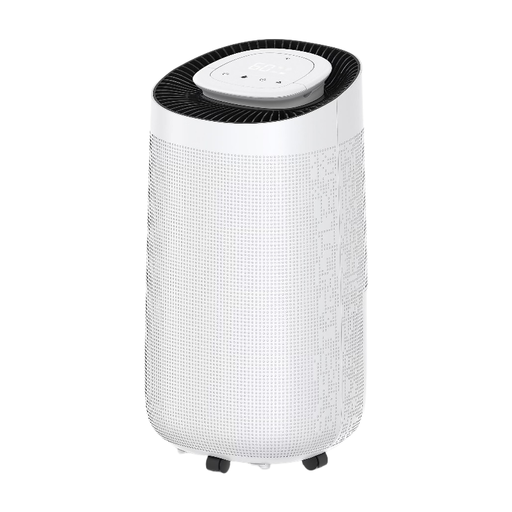 No image available
An option for indoor dehumidification. Before buying, check whether the version on offer uses desiccant technology if that’s a requirement for your home office.
The product name lists a capacity of 16 L/day, a 3.2 L water tank, an antibacterial filter and the colour white.
No. According to the Consumentenbond, a dehumidifier can help dry laundry even without a dedicated laundry mode. Make sure air can flow over the clothes and check which settings your model offers.
A dehumidifier doesn’t replace home ventilation. The Rijksoverheid recommends allowing fresh air in, so maintain suitable ventilation even when you want to reduce the humidity around your laundry.
Empty the tank when needed, keep the air inlet clear and clean the filter according to your model’s instructions. The Consumentenbond recommends checking the dust filter more often if you use the appliance frequently.
No. A two-year manufacturer’s guarantee doesn’t automatically determine how long your statutory guarantee lasts. ACM ConsuWijzer explains that, in the Netherlands, this depends on what you can reasonably expect from the product with normal use. The retailer is your point of contact.
According to the Nederlandse Voedsel- en Warenautoriteit, CE marking is mandatory for electrical products covered by the relevant rules. If you’re unsure, check the documentation for the exact model on offer. A CE mark alone doesn’t prove how well it dries.