What should you look for when choosing?
Your choice mainly depends on the temperature in your room, ventilation, available space and the setting the appliance runs on.
Desiccant dehumidifier
A good fit if: you regularly dry laundry indoors in a cool room and can place the appliance near the airer.
Bear in mind: electricity use, noise at each setting, and how temperature and humidity affect capacity.
Compressor dehumidifier
A good fit if: your room is usually heated and you want to compare this type for dehumidifying performance, noise and energy use.
Bear in mind: performance may drop in a cool room. The Consumentenbond test from October 2026 covers condensation models and isn’t a head-to-head ranking of desiccant models.
Airer with ventilation
A good fit if: the space and ventilation you have are enough to dry your laundry, and you don’t want to run an electrical appliance.
Bear in mind: extra ventilation is important when drying laundry indoors. Recurring damp or mould needs to be assessed separately.
| Factor |
What to look for |
Especially relevant to |
| Drying laundry in a cool room |
Check the room temperature, whether there’s a laundry-drying setting or suitable airflow, and whether you can hang clothes with space between them. |
If my room stays cool and I often dry laundry indoors, I want to know whether air can flow around the airer. Around 33% of consumers give drying laundry in a cool room top priority. |
| Reducing moisture and ventilating |
Check that the vents or extractor fan are working, and whether you also have problems with damp when you aren’t drying laundry. |
When I dry laundry indoors, I want to tackle moisture without forgetting about ventilation, and check whether the problem persists when there’s no laundry. Around 27% of consumers prioritise moisture control. |
| Noise and space |
Compare the noise at each setting and check the space around the air inlet, air outlet and airer. |
In a room where I sleep and study, I want to be able to position the appliance without the airer blocking the way. Around 20% of consumers give peace and available space top priority. |
| Electricity use |
Compare the power consumption at each setting, any timer options and the number of hours it runs. Calculate kWh by multiplying the power in kW by the running time in hours. |
If I dry laundry electrically more often, I want to estimate my usage based on the setting and running time I’ll actually choose. Around 20% of consumers prioritise running costs. |
Joybuy products
The Joybuy products below are dehumidifiers whose product information mentions a laundry- or clothes-drying function. Check that the specific version carries the required CE marking; the NVWA explains that this is required for electrical consumer products.
 No image available
Comfee' MDDO-10DEN7 – 10L/Day, 2.5L-tank, R290
The product information lists a laundry-drying setting and automatic humidity control.
The product name states 10L/Day, a 2.5L water tank and R290; the description lists a sleep mode at 36 dB(A).
Joybuy
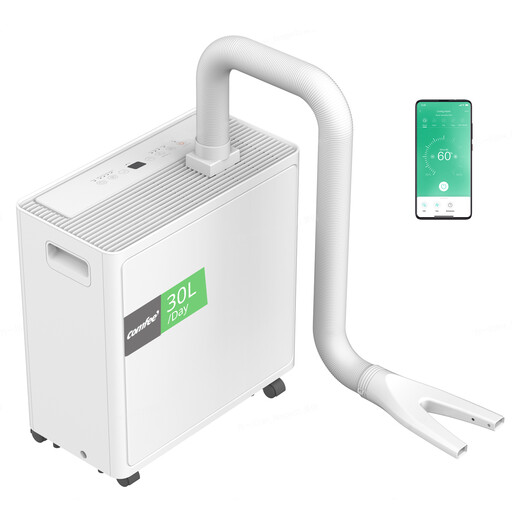 No image available
Comfee' MDDA-30DEN7-SD – 30L/Day, 3.2L-tank, R290
The product information lists a Laundry Drying mode and app control.
The product name states 30L/Day, a 3.2L water tank and R290. The description also mentions a timer and continuous drainage.
Joybuy
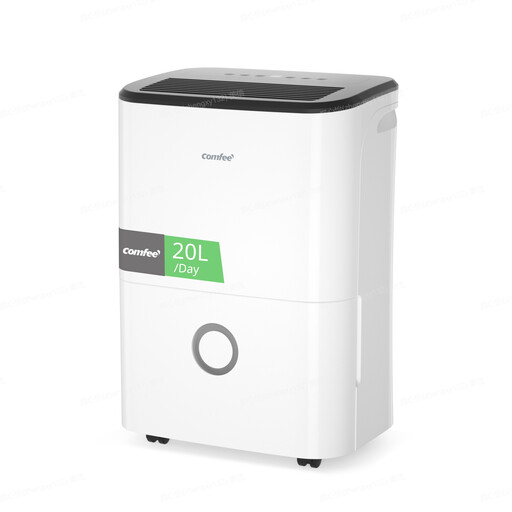 No image available
Comfee' MDDF-20DEN7 – 20L/Day, 3L-tank, R290
The product information lists a clothes-drying mode and automatic humidity control.
The product name states 20L/Day, a removable 3L water tank and R290. The description mentions a timer and tank or hose drainage.
Joybuy
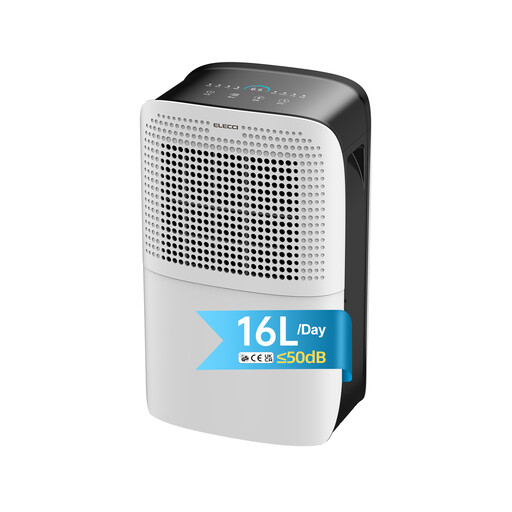 No image available
ELECCI 16L/D – 3.1L-tank, R290
The product information lists a drying mode and automatic control based on humidity.
The product name states a 3.1L tank, R290, continuous drainage and a timer.
Joybuy
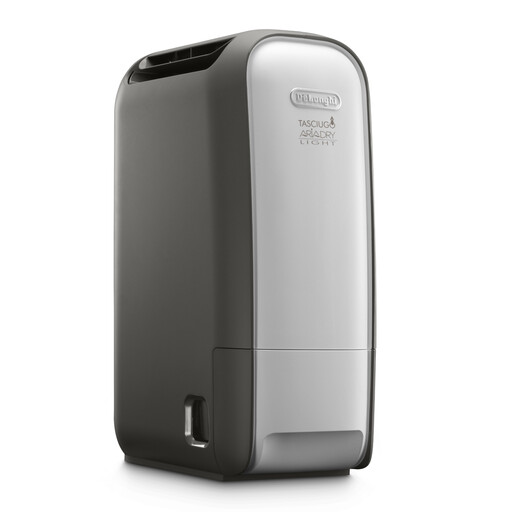 No image available
De'Longhi AriaDry Light DNS80 – 8L per Day
The product information lists a laundry-drying function and a timer.
The product name states 8L per Day. The description lists three speeds and a 2.8-litre water tank.
Joybuy
Frequently asked questions
Does a dehumidifier need a dedicated laundry-drying setting?
No, a dedicated laundry-drying setting isn’t essential for helping to dry your clothes. According to the Consumentenbond, you can also do this without that function if you set the appliance appropriately. Hang clothes with space between them, and check whether a laundry-drying setting switches off automatically.
Can I close the ventilation vents while the dehumidifier is running?
A dehumidifier doesn’t replace the supply of fresh air or the removal of stale air. Milieu Centraal emphasises the need for extra ventilation when drying laundry indoors, so keep your ventilation vents or extractor fan in use.
How can I estimate the electricity use for one load of laundry?
Divide the power consumption of the setting you use, in watts, by 1,000, then multiply it by the running time in hours to estimate the usage in kWh. Multiply that figure by your own price per kWh. The settings you choose and any automatic shut-off will affect the actual running time.
Who should I contact if the appliance develops a fault after purchase?
Report the fault to the retailer. According to the Dutch government, you’re entitled to a product that works properly in the Netherlands. There’s no fixed statutory warranty period, and a manufacturer’s warranty doesn’t replace this right.
Is CE marking compulsory for an electric dehumidifier in the Netherlands?
Yes, the NVWA states that CE marking is compulsory for electrical consumer products. Check that the specific version on offer carries the marking; the model name alone doesn’t confirm this.


