If your hobby room is usually below 15 °C while you dry laundry, a desiccant dehumidifier may be a suitable option; the Consumentenbond recommends this type for cold or unheated rooms. If the room is usually warmer, consider a compressor dehumidifier too, as the Consumentenbond says it uses less electricity than a desiccant model. Measure the room temperature and consider ventilation, noise, airflow and how you’ll empty the water tank. A dehumidifier is no substitute for ventilating your home.
Who is this buying guide for?
Drying laundry in a cold hobby room
If you also use a room that is heated very little as a place to dry laundry, measure its usual temperature before choosing a type of dehumidifier. The Consumentenbond recommends desiccant models for cold or unheated rooms.
Doing laundry often and keeping an eye on energy use
If you regularly dry laundry indoors, weigh the potential help with drying against electricity use and your ability to ventilate. Milieu Centraal recommends drying laundry on a line whenever possible.
Hobbies alongside the airer
If you work in the same room, consider noise, the space around the appliance, the direction of the airflow and how you’ll empty the tank. The Consumentenbond recommends leaving enough space around the dehumidifier.
What should you look for when buying?
Start by checking the temperature of your hobby room, then decide whether you need an appliance in addition to ventilation. The Consumentenbond recommends desiccant models for rooms below 15 °C and compressor models for rooms above 15 °C. This is a buying guideline, not a guaranteed performance threshold.
Desiccant dehumidifier
Suitable when: your hobby room is usually cold or unheated and you dry laundry indoors.
Things to consider: according to the Consumentenbond, this type uses more electricity than a compressor dehumidifier. Its stated daily capacity won’t predict exactly how much moisture it will collect in your room.
Compressor dehumidifier
Suitable when: your room is usually warmer than 15 °C and you want to remove extra moisture as well as ventilating.
Things to consider: the Consumentenbond says this type is less suitable for cool rooms. Compare its electricity use with your intended use.
Airer and ventilation
Suitable when: your laundry dries in good time and you can remove the moisture with appropriate ventilation.
Things to consider: ventilation is important when drying laundry indoors. If dampness persists, you’ll also need to look into its cause.
| Thing to consider |
What should you look for? |
Who is it most important for? |
| Drying laundry |
Check that you can position the appliance with enough space around it and direct the airflow along the laundry. A dedicated laundry mode is useful, but not essential. |
If I dry laundry indoors, I want the air to flow freely past the airer. Around 31% of consumers put drying laundry first. |
| Performance in cold conditions |
Measure the room temperature while drying. Only compare stated litres per 24 hours alongside the stated testing conditions. |
If you keep your hobby room cool, you’ll want a type suited to the temperature you’ve measured. Around 25% of consumers prioritise performance in a cold room. |
| Electricity use |
Consider the stated power and control settings in relation to how often and for how long you’ll use the appliance. Daily capacity is not a measure of energy use. |
If I often dry laundry indoors, I want to weigh electricity use against other ways of removing moisture. Around 25% of consumers put running costs first. |
| Using it in a hobby room |
Compare noise levels for each setting and check how to empty the tank or drain the water. Leave enough space around the appliance and continue to ventilate. |
If I work in the same room while drying laundry, noise and practical positioning matter. Around 19% of consumers give shared use of the room top priority. |
Common things to watch out for
-
Taking an advert’s claim to be an official energy label
The European Commission states that no EU energy efficiency class has been established for dehumidifiers. So a claim such as A++ in a product title is not an official EU class for this product category.
Compare the stated power and control settings for a use case that matches your laundry-drying routine.
-
Assuming litres per day equals the amount collected in a cold hobby room
The stated capacity depends on the testing conditions. For example, De’Longhi’s Dutch manufacturer page gives a capacity of 7.5 litres per 24 hours for the DNS80 at 30 °C and 80% relative humidity. This is not a prediction for a colder room.
Compare the testing conditions with the temperature and humidity in your room, and don’t interpret the capacity as the amount collected per load of laundry.
-
Confusing dehumidifying with ventilation
A dehumidifier removes moisture from the air, but it does not remove stale indoor air in the same way as ventilation. Milieu Centraal describes ventilation as bringing in fresh air and removing indoor air.
Continue to ventilate your home appropriately and address any persistent sources of damp, even when using a dehumidifier while drying laundry.
Brands to compare
Trotec
Trotec describes the TTR 57 E as a desiccant dryer with a laundry-drying function and lists a coverage area of up to 20 m².
- The manufacturer lists a 5-litre tank and a stated capacity of 9 litres per 24 hours.
- These are manufacturer specifications, not the results of an independent performance test. How much it collects in your hobby room depends on more than the stated daily capacity.
Qlima
Qlima describes the DD 808 as a desiccant model for cold rooms, with an adjustable hygrometer and timer.
- Qlima lists a capacity of 8 litres per 24 hours.
- The stated capacity does not predict how quickly a particular load of laundry will dry in your hobby room. Check the conditions given with the product specifications.
De’Longhi
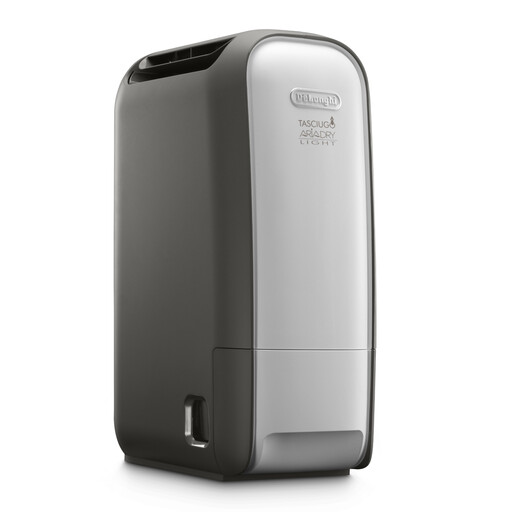
The Dutch product information describes the DNS80 AriaDry Light as having a laundry function, an adjustable humidistat and the option of continuous drainage.
- De’Longhi Netherlands lists a capacity of 7.5 litres per 24 hours for the DNS80 at 30 °C and 80% relative humidity, and an input power of 695 W.
- These figures do not describe how much water it collects or how much electricity it uses when drying laundry in a colder hobby room. The claim that clothes dry faster comes from the manufacturer and has not been independently verified.
Products for drying laundry indoors
These Joybuy products include one model listed with a laundry function and several compressor dehumidifiers as alternatives; not all of them are desiccant models. If you’re specifically looking for a desiccant model, check the technology and specification of the exact model.
 No image available
De’Longhi AriaDry Light DNS80, white
An option to compare if you’re looking for a dehumidifier listed with a laundry function.
The product information lists three fan speeds, a timer and a 2.8-litre tank. The Joybuy listing describes a white model with R290, while the Dutch manufacturer page describes a grey DNS80. So don’t assume they’re the same version or use the same technology without checking.
Joybuy
 No image available
CONOPU 16L dehumidifier
Worth comparing if you’re considering a compressor model with a laundry-drying function; the product description specifies compressor operation, not desiccant technology.
The description lists a 2.5-litre tank, continuous drainage with a hose and a 24-hour timer. Check which accessories are included with the version on offer.
Joybuy
 No image available
ELECCI 12L/D dehumidifier
A compressor model to compare if your room is usually warmer; the description specifies compressor operation, not desiccant technology.
The product information lists a 3.8-litre tank, continuous drainage, adjustable fan speed and a timer. Check the space required and positioning instructions for the exact model.
Joybuy
 No image available
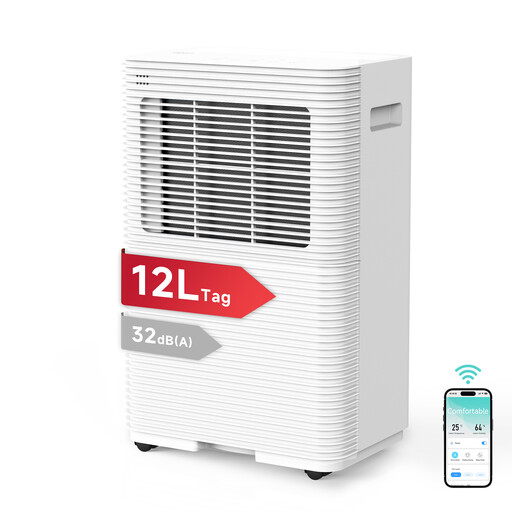
VINO 12L Smart Dehumidifier
Worth considering if you want to compare a compressor model with app control; the product description specifies compressor operation, not desiccant technology.
The description lists app control, a timer, a 1.8-litre tank and continuous drainage. The product information says the drain hose is not included.
Joybuy
 No image available
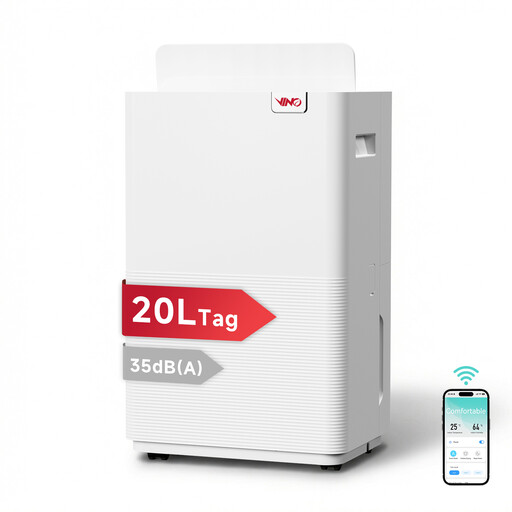
VINO 20L Smart Dehumidifier
Worth comparing if you’re looking for a compressor model listed with a laundry-drying function; the product description specifies compressor operation, not desiccant technology.
The product information lists app control, a 24-hour timer, a 2.5-litre tank and continuous drainage. Check that the drainage method suits the way you’ll position it in your hobby room.
Joybuy
Frequently asked questions
Is a desiccant dehumidifier suitable for a cold hobby room?
It may be a suitable choice if the room usually stays below 15 °C. The Consumentenbond recommends desiccant models for cold or unheated rooms. Measure the temperature while drying and bear in mind that, according to the Consumentenbond, this type uses more electricity than a compressor model.
Do I need a dedicated laundry-drying mode?
No, a dedicated laundry-drying mode isn’t essential. According to the Consumentenbond, a dehumidifier can still help without one if you set the humidity and fan speed appropriately. Direct the airflow along the laundry and leave space between the garments.
Should I ventilate while the dehumidifier is running?
Yes, maintain appropriate ventilation in your home: a dehumidifier does not remove stale indoor air in the same way as ventilation. The Consumentenbond recommends using a closed room for a drying cycle and directing airflow along the laundry. This doesn’t mean you should routinely switch off essential ventilation in your home.
Is an energy label required for a dehumidifier?
According to the European Commission, no EU energy efficiency class has been established for dehumidifiers. So compare specific information such as the stated power and operating settings. A claim such as A++ is not an official EU energy class for this category.
What should I check for the safety of an electrical model?
Check the markings, applicable voltage and usage restrictions for the exact version. The NVWA outlines safety requirements and CE marking for electrical equipment covered by the Commodities Act Decree on Electrical Equipment. The low-voltage rules apply, among other things, to a nominal AC voltage of 50 to 1000 V. A CE mark is not an independent performance test.
How do I keep a dehumidifier in good working order?
Keep the air inlet and outlet clear, and clean the dust filter according to the model’s instructions. The Consumentenbond suggests cleaning it every two months as a general guideline, and more often with intensive use. Also check the tank and any drain hose.


