What should you look for in a desiccant dehumidifier?
For a large living room, the litres-per-day figure alone won’t tell you whether a dehumidifier can handle the space. Consider the temperature, the stated operating area and the practicalities of running it for long periods too.
| What to consider |
What should you check? |
Who is this most important for? |
| Coverage in the living room |
Measure the floor area and ceiling height, then compare them with the stated operating area and airflow. |
I want the appliance to suit the room where I keep my clothes, not just the area right next to it. Around 33% of consumers prioritise sufficient coverage across the living room. |
| Performance at low temperatures |
Measure the temperature during damp periods and check the operating temperature range for the exact model. |
If my living room stays cool for long periods, I want to know whether the technology I choose is suitable. Around 27% of consumers prioritise performance in a cool room. |
| Noise in your living space |
Check the noise range at the settings you need and compare it with the corresponding airflow. |
I’m often in the same room as the appliance and want to know whether I can live with the noise at the setting I need. Around 20% of consumers prioritise a quiet living room. |
| Electricity use and water drainage |
Compare the power consumption at the setting you intend to use; check whether a tank or a suitable hose outlet would be practical. |
If I’m using it for long periods, I want to know how often I’ll need to empty it and how much power the chosen setting uses. Around 20% of consumers put electricity use and water management first. |
Joybuy products for humidity control and drying clothes
The Joybuy products below are designed for humidity control and drying clothes. Compare each model’s stated room coverage with your living room, and check whether its technology suits the temperature in the space.
 No image available
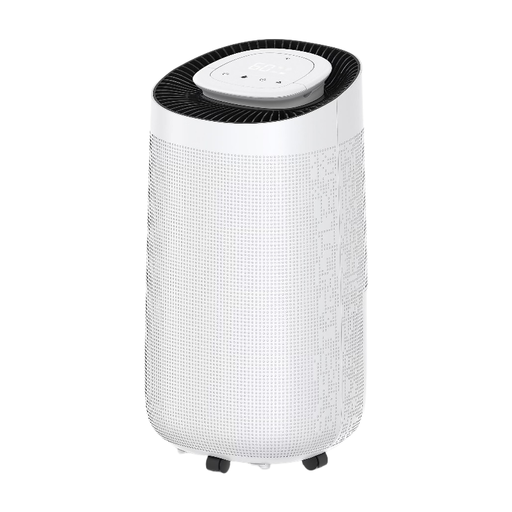
Komodo Humi+ 16 L/day dehumidifier
An option if you’re looking for a dehumidifier with a laundry-drying setting. Its stated coverage of up to 30 m² should be compared with the size of your actual living room.
The product information lists a 3.2-litre tank, a drainage hose, a timer, a sleep mode and automatic shut-off when the tank is full.
View at Joybuy
 No image available
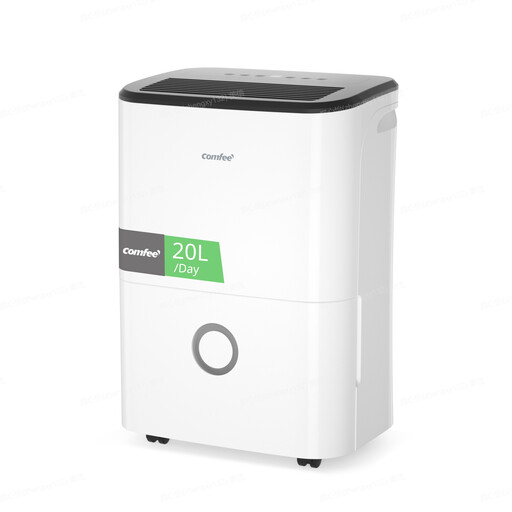
Comfee MDDF-20DEN7, 20 L/day, 3-litre tank
This model may be worth considering if you need coverage of around 100 m³ (40 m²). Compare this with the measurements of your living room.
The product information lists a capacity of 20 L/day, three fan speeds, a timer and a laundry-drying mode. The tank holds 3 litres; a separate hose is required for continuous drainage.
View at Joybuy
 No image available
CONOPU 16L dehumidifier with 2.5L tank
The product information gives coverage of up to 60 m² and a clothes-drying function. Compare the stated area with the size of your living room.
It also lists automatic humidity control, a timer and continuous drainage with the hoses supplied.
View at Joybuy
 No image available
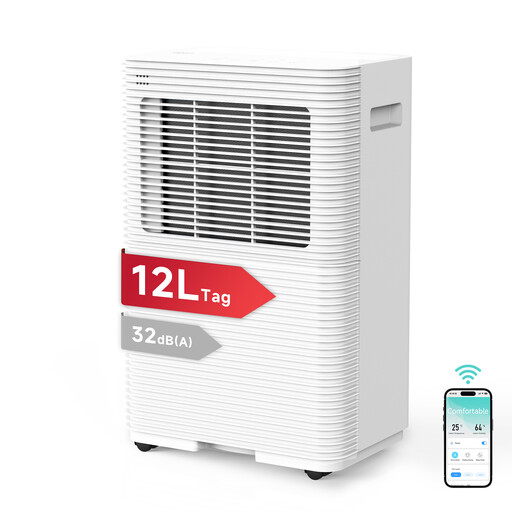
VINO 12L Smart dehumidifier
This model is listed for rooms up to 24 m² and has a clothes-drying function. Check that the stated coverage is suitable for your living room.
The product information lists app control, a timer and a 1.8-litre tank. The user instructions state that the drainage hose is not included.
View at Joybuy
 No image available
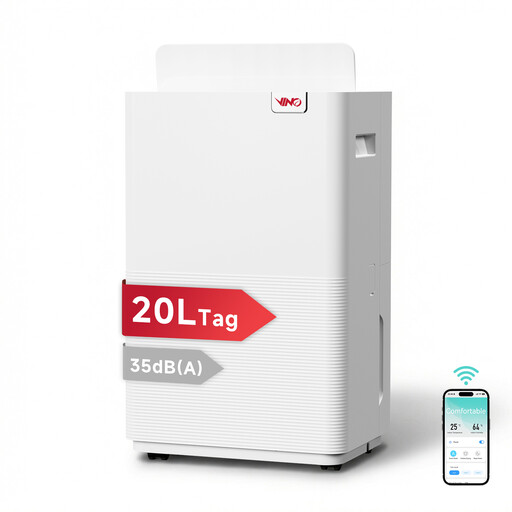
VINO 20L Smart dehumidifier
The product information gives a room size of up to 40 m² and lists a laundry function. Compare this coverage with the measurements of your living room.
The tank holds 2.5 litres. The product information also lists app control and the option of continuous drainage via a hose.
View at Joybuy
Frequently asked questions
When is a dehumidifier useful if my stored clothes feel damp?
First, check the humidity and look for possible causes such as poor ventilation or leaks. The Consumentenbond says a dehumidifier may help if humidity stays consistently above 65% after the underlying causes have been addressed. This is buying advice, not a legal limit.
Do I still need to ventilate if I have a dehumidifier?
Yes, ventilation is still necessary. According to Milieu Centraal, ventilation removes polluted indoor air and brings fresh air in; a dehumidifier doesn’t replace this air exchange. If mould quickly returns or appears in several places, have any potential structural cause investigated too.
How can I tell whether a model is large enough for my living room?
Measure the floor area and ceiling height, then compare them with the stated operating area for the exact model. Take the temperature and humidity into account too: a capacity figure in litres per day depends on the conditions and won’t, on its own, tell you whether the appliance can handle your room.
When is a desiccant dehumidifier a better choice than a compressor model?
A desiccant model is worth considering when the room stays cool for long periods. According to the Consumentenbond, desiccant models generally use more electricity than compressor models. If your living room stays warm, compare both technologies based on the temperature you’ll use them at and the features that matter to you.
What should I look for in an appliance with a water tank?
Check the tank capacity and whether you can connect a drainage hose, and follow the instructions for placement and maintenance. Wood’s lists a 2-litre tank and a hose connection for the WDD90; check that a suitable drainage point is within easy reach for the model you choose.


