
Working in a cool room
Your home office gets little heating and stays damp, and you want to know whether desiccant technology suits the room temperature. The Consumentenbond says desiccant dehumidifiers are suitable for cold or unheated spaces.


A desiccant dehumidifier is worth considering if your home office stays cool and damp after you’ve addressed the cause of the moisture. Ventilation is still essential: according to the RIVM, ventilation replaces indoor air with fresh outdoor air. In a room that’s usually heated, a compressor model may be a better fit if energy use is a key concern. Then compare capacity under the same test conditions, operating noise and water drainage.
Your home office gets little heating and stays damp, and you want to know whether desiccant technology suits the room temperature. The Consumentenbond says desiccant dehumidifiers are suitable for cold or unheated spaces.
You work or make calls in the same room as the appliance and want to know how loud the setting you can actually use will be. Manufacturers list noise levels for specific models and settings.
You’ve noticed condensation or damp patches and want to address the cause before deciding whether you need additional dehumidification. The RIVM describes ventilation as replacing indoor air; GGD Haaglanden stresses the importance of addressing the cause of damp.
Start by identifying the source of the moisture and checking ventilation. Then choose the technology that suits the temperature in your home office. The Consumentenbond says desiccant dehumidifiers are suitable for cold rooms, but generally use more electricity than compressor models. It says compressor models are mainly suitable above 15 °C.
| Concern | What to look for when buying | Who is this important to? |
|---|---|---|
| Dehumidifying at the actual room temperature | Measure the temperature while you’re working and compare the model’s stated temperature range and test conditions. | If my home office is often cool, I want to know whether the appliance will work at that temperature before comparing litres per day. Around 33% of consumers put suitability for cold conditions first. |
| Noise while working and on calls | Check which operating setting the noise level applies to, and whether you can use that setting while working. | When I’m on a call or concentrating next to the appliance, the noise from the setting I can use matters. Around 27% of consumers give operating noise top priority. |
| Energy use with regular operation | Compare the stated power consumption under similar conditions and check whether the model adjusts automatically to the humidity level you’ve set. | If the appliance is on frequently, I want to factor in its energy use. In a warm room, I’d also compare compressor models. Around 20% of consumers put running costs first. |
| Recurring damp and water drainage | Check the tank capacity, whether the appliance stops when the tank is full and whether the model supports continuous drainage. Also investigate leaks and ventilation. | If I keep noticing damp, I want to know whether draining the water will be practical, without losing sight of the source of the moisture. Around 20% of consumers prioritise recurring damp and water drainage. |
An appliance removes moisture from indoor air, but it doesn’t refresh the air or fix a leak or structural problem.
Investigate damp patches and ventilation first; use a dehumidifier only as a possible extra measure.
The stated capacity of the EcoAir DD1 Classic MK6 is measured at 20 °C and 60% relative humidity. Figures for models tested under different conditions therefore aren’t directly comparable.
For each model, check the temperature and relative humidity used to calculate its capacity.
If you’re working next to the appliance, it matters which operating setting the noise rating applies to.
Check the noise figures for each setting and see whether you can choose a suitable one while on calls.
According to the Rijksoverheid, a paid warranty is only worthwhile if it gives you rights beyond those you already have.
Before deciding, read exactly what the retailer and the additional cover include.
The TTR 57 E is a desiccant model to consider for a cool, relatively small home office where a generously sized water tank would be useful.
The WDD80 is a desiccant model for a cool home office if its fan settings and hose drainage suit the way you use it.
The DD1 Classic MK6 is a desiccant option if automatic controls and a stated low-noise setting are important to you.
The DD8L Junior illustrates features that may be useful if you work in the same room, such as a selectable quiet fan setting and humidity-controlled operation.
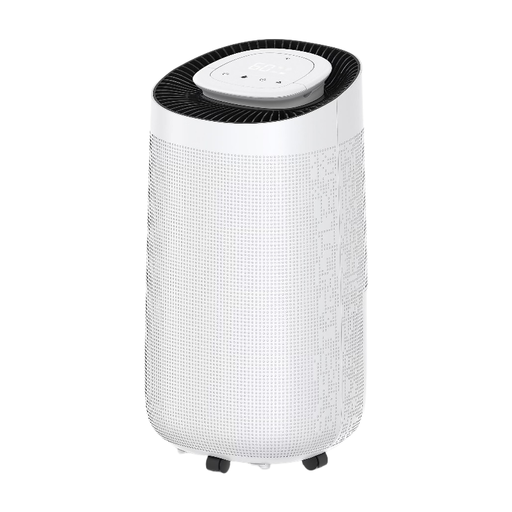
This Joybuy product is one option for collecting moisture in a home office. Before buying, check that the technology, test conditions and stated capacity suit the temperature in your home office.
 No image available
The stated water tank and drainage hose are worth considering if you’re weighing up how the water is collected and whether you’ll need to empty it by hand. The sleep mode and multiple operating modes offer different ways to use the appliance at home.
Check that the technology and the conditions behind the stated capacity suit the temperature in your home office.
First, check ventilation, possible leaks and other structural causes. The Consumentenbond says a dehumidifier may help if humidity remains consistently above 65% after the causes have been addressed; this is buying advice, not a legal limit.
No. Dehumidifying doesn’t replace ventilation: the appliance removes moisture, while ventilation replaces indoor air with fresh outdoor air. The RIVM describes ventilation as a continuous exchange of air; also follow your appliance’s instructions for positioning and maintenance.
Follow the manual for your chosen model when emptying and cleaning it and maintaining its filter. The Wood’s WDD80 manual says to unplug the appliance before cleaning the filter or carrying out maintenance; don’t assume this instruction applies to other models.
For online purchases from a business, you usually have 14 days to change your mind, according to the Rijksoverheid. You’re also entitled to a product that meets reasonable expectations. The Netherlands has no fixed statutory warranty period, and the retailer is your point of contact if there’s a problem. Check which terms apply to your purchase.