What should you look for when choosing?
Start with the room temperature and the cause of the damp: the Dutch Consumers’ Association considers desiccant dehumidifiers suitable for rooms below 15 °C, while the GGD’s Living Environment service stresses the need for appropriate, continuous ventilation. If you still need extra dehumidification, compare the conditions used to calculate capacity and how easy it is to drain the water.
| What to consider |
What to look for |
Who it matters to |
| Dehumidifying at low temperatures |
Note the room’s usual temperature and check the model’s permitted operating temperature range. Compare the capacity with the stated temperature and humidity. |
If my hobby room stays cold, I want a unit that can work at that temperature. Around 33% of consumers put suitability for a cold room at the top of their list. |
| Cause of condensation |
Pay attention to when and where condensation forms, how the room is ventilated, and whether hobbies or a leak are adding moisture. |
I want to find out first whether ventilation, a source of moisture or the building needs attention, so I don’t just tackle the visible symptom. Around 27% of consumers prioritise identifying the cause. |
| Electricity use and capacity |
Compare the power rating, controls and litres per day, including the conditions used to measure capacity. Use your own running hours to estimate consumption. |
If I’m using it for long periods, I want effective dehumidification without unnecessary running time. Around 20% of consumers focus most on the balance between electricity use and useful capacity. |
| Noise and water drainage |
Check the noise level for each setting, the tank and whether continuous drainage is possible for the exact model. |
If I’ll be staying in the room while I’m working on my hobbies, I want to know how noisy the unit is and how to manage the water. Around 20% of consumers prioritise quiet operation and ease of use. |
Joybuy product picks
These Joybuy picks focus on automatic humidity control, timers and water management. For a cold hobby room, check the dehumidifier type and permitted operating temperature for each product. A stated room size or litres-per-day figure alone doesn’t prove that a model is suitable for a cold room.
 No image available
Comfee’ MDDO-10DEN7, 10 L/dag
Could be a good fit if you’re looking for automatic humidity control and a timer; first check that the operating principle is suitable for your room temperature.
The product information mentions automatic control at 45–55% humidity and a sleep mode. The title specifies 10 L/dag, a 2.5-litre tank and approximately 16 m².
View at Joybuy
 No image available
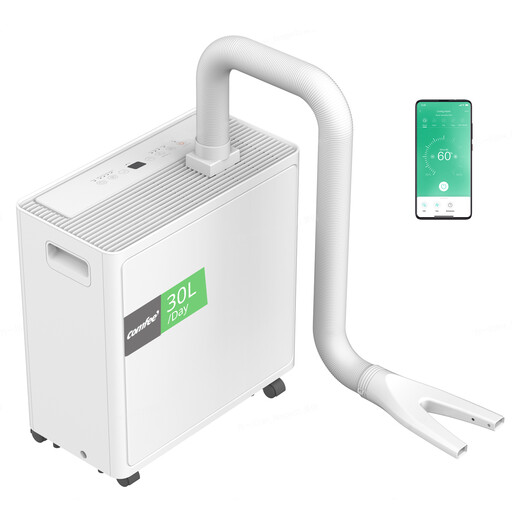
Comfee’ MDDA-30DEN7-SD, 30 L/dag
Could be a good fit for planned use where app control, a timer or continuous drainage matters; check that it’s suitable for the temperature in your room.
The product information mentions app control and continuous drainage. The title specifies 30 L/dag, a 3.2-litre tank and approximately 73 m².
View at Joybuy
 No image available
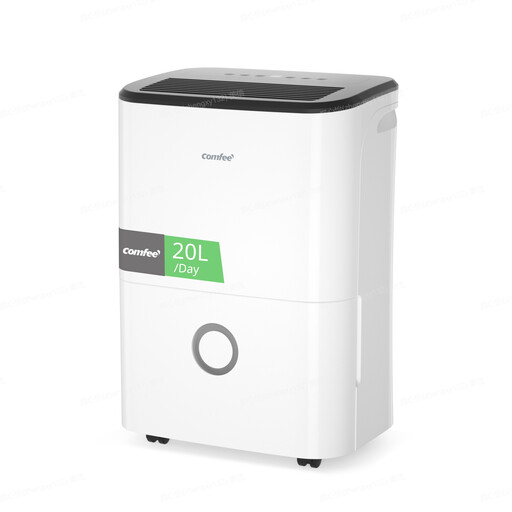
Comfee’ MDDF-20DEN7, 20 L/dag
Could be a good fit if you’re looking for an adjustable humidity setting and the option of continuous drainage; the drain hose is not included.
The product information mentions humidity control at 45–55% and a connection for continuous drainage. The title specifies 20 L/dag, a 3-litre tank and approximately 40 m².
View at Joybuy
 No image available
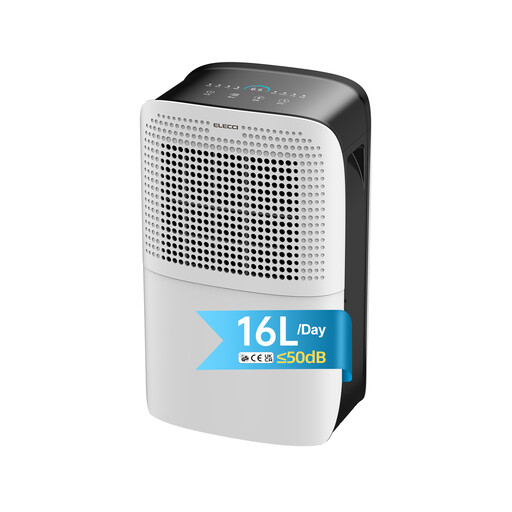
ELECCI 16L/D, with drain hose
Could be a good fit if you’re looking for an adjustable humidity range and water drainage during extended use; check that it’s suitable for the room temperature.
The product information mentions an adjustable range of 40–80% RH and four operating modes. The title specifies 16 L/dag, a 3.1-litre tank and approximately 32 m².
View at Joybuy
Frequently asked questions
Do I need to ventilate when using a dehumidifier?
Yes, appropriate ventilation is still essential. The GGD’s Living Environment service stresses that ventilation removes polluted indoor air; a dehumidifier doesn’t. Follow the ventilation guidance for your home.
How do I choose the right capacity for my hobby room?
Start with the room temperature, floor area and moisture load. For small rooms of 15–20 m², the Dutch Consumers’ Association gives a rule of thumb of up to 10 l/24 u, but temperature and humidity affect the actual output. Don’t take this rule of thumb as a measured output for a desiccant model.
How can I estimate electricity use?
Multiply the power rating in kW by the number of hours the unit actually runs at that power to calculate consumption in kWh. Automatic controls and different settings mean that a calculation using only the maximum power rating is a scenario, not a prediction of your actual consumption.
What should I know about positioning and maintenance?
Follow the manual for the exact model variant for clear airflow, emptying the tank, filter maintenance and any hose connection. EcoAir describes the DD1 Classic as switching off when the tank is full and having a connection for continuous drainage; other models don’t necessarily have these features.
What electrical safety information should I check?
Check the electrical specifications and the required CE marking for the exact model variant. According to EUR-Lex, the EU Low Voltage Directive applies to electrical equipment within the range of 50–1,000 V AC; this general rule does not confirm that an individual product listing is compliant.


