What should you look for when choosing?
Desiccant
A good fit when: your bedroom is cool or rarely heated and a damp problem persists after you’ve dealt with the source.
The trade-off: the Consumentenbond describes desiccant dehumidifiers as suitable for cold spaces, but says they generally use more electricity than compressor models. A stated daily capacity doesn’t guarantee the same results in your room.
Compressor
A good fit when: your bedroom is usually warmer than 15 °C and electricity consumption is a key consideration.
The trade-off: according to the Consumentenbond, compressor dehumidifiers work best above 15 °C and are less suitable for cool spaces. Compare performance and noise levels at the temperature of your bedroom.
Small Peltier dehumidifier
A good fit when: the damp problem is limited to a very small space, such as a cupboard, and the stated capacity is sufficient.
The trade-off: the Consumentenbond describes these appliances as small and quiet, but their capacity may be limited for a damp bedroom.
Tackling the source and ventilating
A good fit when: a leak or insufficient ventilation may be the cause, or measurements show no persistent damp problem.
The trade-off: an appliance alone won’t fix the cause or remove polluted indoor air. The Dutch government advises keeping your home sufficiently ventilated day and night.
The Consumentenbond highlights temperature, electricity consumption and noise as things to consider when comparing models. For bedroom use, humidity control, water collection and drainage are also important.
| What to consider |
What should you check? |
Who should pay extra attention? |
| Keeping the room dry at its usual temperature |
Measure the temperature and humidity; compare the intended operating temperature and the conditions used to determine the stated capacity. |
If my bedroom is cool, I want to know whether the appliance is suitable and can help keep clothes dry. Around 36% of consumers prioritise keeping things dry at room temperature. |
| Noise while you sleep |
Compare the stated noise level for each setting and check which quiet settings and controls are available. |
If I sleep beside the appliance, I want to know how audible the selected setting is. Around 27% of consumers prioritise noise in the sleeping environment. |
| Electricity consumption during long-term use |
Check the stated power and test conditions, humidity control and expected running time. |
If the appliance runs often, I want to consider its electricity consumption alongside the technology I choose. Around 19% of consumers give this their highest priority. |
| Water collection and maintenance |
Check the tank capacity, whether the appliance gives an alert or switches off when the tank is full, and whether a hose can be connected and routed to a suitable drain. |
If I don’t want to empty the tank often, I’ll check whether a suitable drain can be used. Around 18% of consumers prioritise water drainage and maintenance. |
Joybuy products for bedroom use
These Joybuy products are listed for managing humidity in rooms. Before using one in a cool bedroom, check that its dehumidification technology and stated operating temperature suit your situation. A sleep mode on its own doesn’t mean the appliance is suitable for a cool room. Also check the documentation for the specific appliance.
 No image available
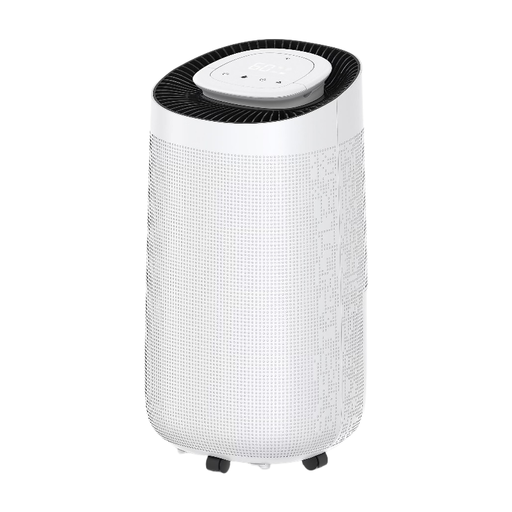
Komodo Humi+ dehumidifier, 16 L/day, 3.2 L tank, antibacterial filter, white
The product listing mentions a sleep mode and a room size of up to 30 m²; check whether its operating temperature suits the bedroom where you store your clothes.
The listing mentions a 3.2 L tank, a drainage hose, a timer and a humidity indicator.
Before buying, check the relevant product documentation for this specific appliance.
View at Joybuy
 No image available
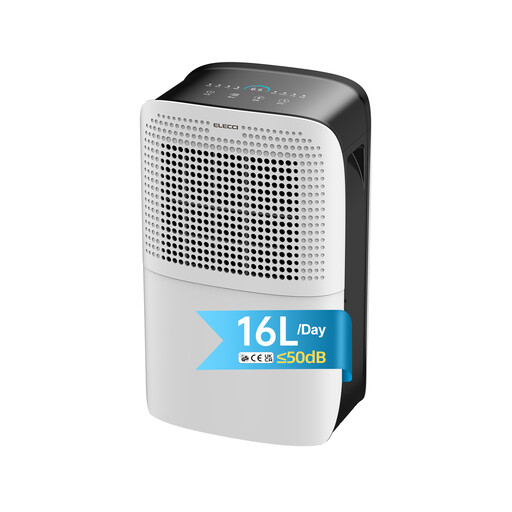
ELECCI 16L/D dehumidifier, 3.1L tank, 4 modes, R290, 32m²
The product listing mentions a sleep mode and coverage of up to 32 m²; compare its operating temperature with that of your bedroom.
The listing mentions a 3.1 L tank, continuous drainage and a 24-hour timer.
Before buying, check the relevant product documentation for this specific appliance.
View at Joybuy
 No image available
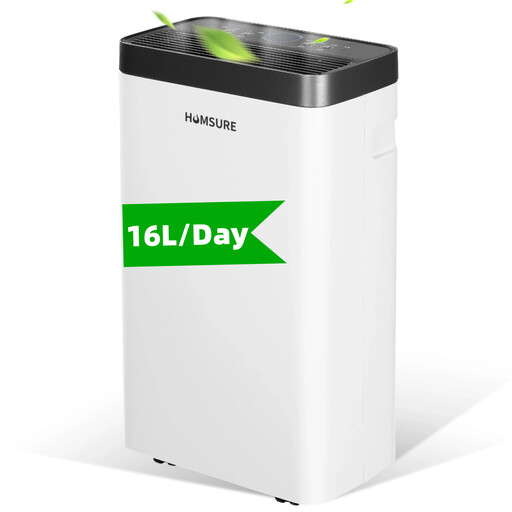
HUMSURE dehumidifier, 16L/Day, 25m², 1.4L tank, R290, 3 modes
The product listing mentions automatic humidity control and a sleep mode; check whether the stated operating temperature is suitable for your bedroom.
The listing mentions a 1.4 L tank, a 24-hour timer and a drainage hose. The description states that noise is below 50 dB.
Before buying, check the relevant product documentation for this specific appliance.
View at Joybuy
Frequently asked questions
When is a dehumidifier more useful than ventilation alone?
First, investigate any leaks or insufficient ventilation and measure the humidity. According to the Consumentenbond’s buying advice, a dehumidifier may help if humidity remains consistently above 65% after the causes have been addressed. A dehumidifier doesn’t replace ventilation.
Can I close an air vent while the dehumidifier is running?
No. A dehumidifier isn’t a replacement for ventilation. The Dutch government advises keeping your home sufficiently ventilated day and night, with extra attention after sleeping.
How do I connect a drainage hose?
Follow the instructions for your chosen model and check that there’s a suitable drain. For the Qlima DD 208, Qlima specifies that the hose must slope downwards and have no kinks or bends.
What warranty and return rights apply to online purchases?
If you buy as a consumer from a trader in the EU, Your Europe states that faulty goods are covered by a minimum two-year legal guarantee; an additional manufacturer’s guarantee doesn’t replace it. For online purchases, you’ll generally have a 14-day cooling-off period. Check who the seller is and which terms apply to your order.
What product documentation is relevant for an electrical appliance in the Netherlands?
Electrical appliances placed on the market in the Netherlands must meet the applicable European requirements. Ondernemersplein explains that, after confirming conformity, the manufacturer must affix a CE marking and draw up an EU declaration of conformity. Check the documentation for the specific appliance; model information alone doesn’t confirm that an individual unit meets these requirements.


