
Vandaag of morgen in huis

Kwaliteit gegarandeerd

Welkomstaanbiedingen ontgrendelen: GRATIS bezorging | Tot 80% korting | Gratis 30 dagen JoyPlus-proefperiode
Download de app
Limescale is a recurring problem in many British households. Hard water leaves white deposits on taps, shower screens and tiles. In appliances, limescale can build up in water pipes, heating elements and reservoirs. The right descaler helps with maintenance, but not every product is suitable for every application.
The word “universal” on the packaging does not automatically mean that a product is safe for every material or appliance. Always check the application, dosage and safety instructions before buying a limescale remover.
A bathroom descaler is designed for surfaces such as tiles, sanitaryware and taps. Its ingredients, fragrances and usage instructions may differ from those of a coffee machine descaler. For an espresso machine or fully automatic coffee machine, only use a product that the product information confirms is suitable for that type of appliance.
A 750 or 900 ml bottle may seem like good value, but the amount required per treatment determines the actual cost. A bottle of liquid descaler may provide several applications, while descaling tablets have a fixed dosage per cycle. So do not compare only millilitres or the number of tablets. Also compare the number of treatments stated.
According to De’Longhi’s own information, EcoDecalk contains plant-based lactic acid and is formulated for different coffee systems. According to JURA’s own information, the tablets work in two stages, with protection against corrosion mentioned alongside descaling. Such claims are manufacturer product information and are not a universal guarantee for every appliance. Always check your machine’s manual.
Start by considering the appliance or surface:
Products including Siemens descaler, Philips Saeco descaler, De’Longhi descaler and JURA descaling tablets cater for specific appliances. A universal descaler can be convenient, but only if your appliance and material are explicitly covered by the stated application.
Liquid descaler is easy to measure and is often diluted with water. This is practical for coffee machines with an automatic descaling programme. The Gaggia and Philips Saeco products in this selection are liquid and contain 250 ml.
Descaling tablets have a fixed format and dosage. This makes them straightforward to use, provided you use the correct number per cycle. The Siemens TZ80032A contains 9 tablets and states that it provides 9 cleaning cycles for suitable EQ machines. The JURA 70751 pack contains 36 tablets; according to the product information, these are enough for 12 treatments.
Acids and other cleaning substances can damage certain materials. Do not use bathroom products on marble, limestone, travertine, aluminium, copper, silver, gold or damaged coatings if the label advises against it. For example, Ajax Shower Power states that it should not be used on marble, limestone, old cast iron or damaged enamel.
Before use, read the hazard and precautionary statements on the packaging. Some products may cause skin irritation, serious eye irritation or eye damage. Wear gloves or eye protection if specified, ventilate the room and never mix a descaler with bleach or other cleaning products.
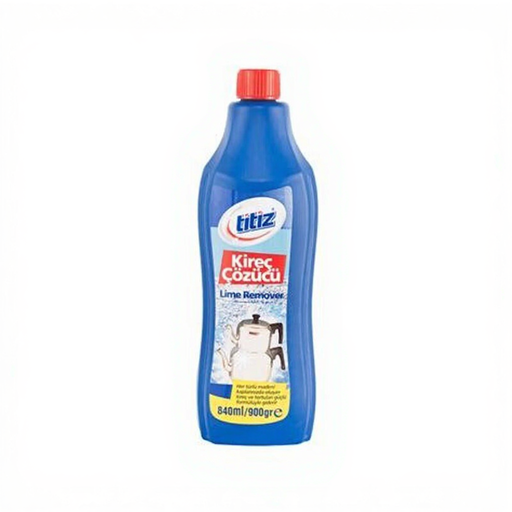
Why it suits this profile: A 900 ml bottle is practical for households looking for one descaler for kitchen maintenance. Check beforehand that the intended appliance is mentioned on the label.
The product category is clearly described as a kitchen descaler. This makes it less likely to be confused with a bathroom or machine product.
900 ml capacity; intended for kitchen maintenance according to the product description.
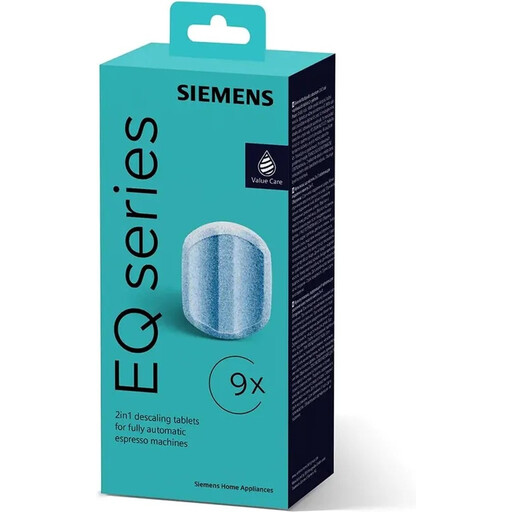
Why it suits this profile: Suitable for owners of Siemens EQ fully automatic and built-in fully automatic coffee machines who want to use original accessories.
Compatibility is clearly and specifically defined: Siemens EQ.series. This reduces the risk of choosing just any universal descaler.
9 tablets; 9 stated cleaning cycles; 2-in-1 function according to the product specification.
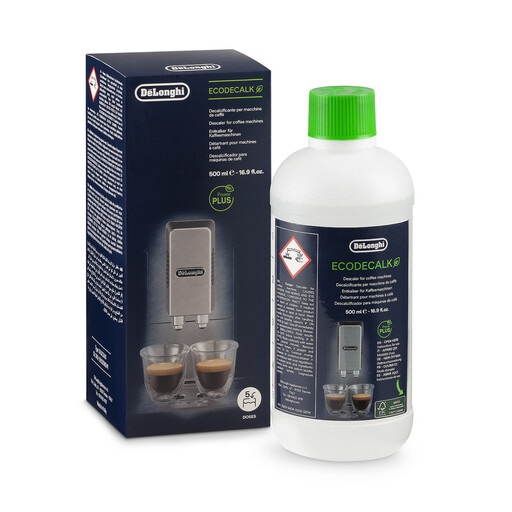
Why it suits this profile: Ideal for households with a De’Longhi espresso, filter or portafilter machine who want to get several treatments from one bottle.
The product information lists the suitable machine types and refers to the manual for dilution instructions. This prevents you from measuring the dosage based solely on the bottle size.
500 ml; according to the product information, enough for 5 applications; liquid formula.
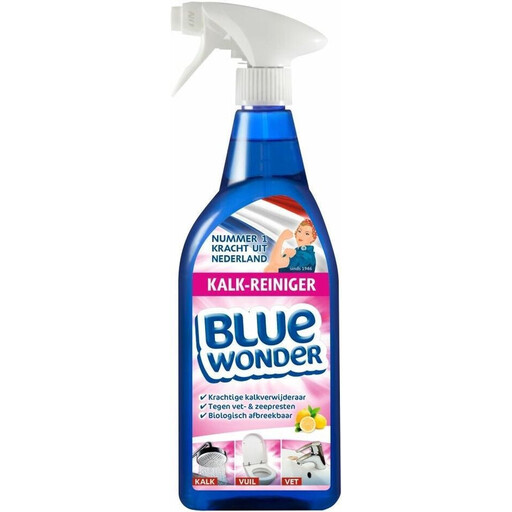
Why it suits this profile: A spray is practical for shower doors, washbasins, tiles, baths and taps when you want to target specific areas.
The product description clearly states that it is suitable for several bathroom surfaces. Do not use it as a machine descaler and, if in doubt, test it on an inconspicuous area first.
750 ml spray; suitable for washbasins, toilets, shower doors, mirrors, baths and tiles, among other surfaces.
The same principle applies to washing machines: choose a washing machine descaler or cleaner that is specifically described for this purpose. A bathroom limescale remover does not belong in the drum or detergent drawer unless the label explicitly permits it.
We have put together a complete, up-to-date list of products that fully meet these strict selection criteria and the applicable European safety regulations.
Use a product that is suitable for your machine’s brand and model. Specific tablets are available for Siemens EQ machines. Philips Saeco and Gaggia machines have liquid options in this selection. The manual remains the definitive guide for dosage and programme settings.
This depends on the water hardness, how often the machine is used and the appliance’s notification. A machine that makes several cups every day may need maintenance more frequently than one that is used occasionally. Follow the maintenance indicator and the manufacturer’s instructions.
Not without checking first. Products for bathroom surfaces and machine maintenance are designed for different applications. Check the label and confirm that the material or appliance is explicitly mentioned. If in doubt, use a product-specific descaler.
