
Vandaag of morgen in huis

Kwaliteit gegarandeerd

Welkomstaanbiedingen ontgrendelen: GRATIS bezorging | Tot 80% korting | Gratis 30 dagen JoyPlus-proefperiode
Download de app
A deodorant spray may seem like a straightforward purchase, but the differences between products are greater than the size of the can might suggest. Are you mainly looking for protection against body odour, do you want to reduce perspiration, or do you have sensitive skin? If you focus only on the fragrance or a prominent claim on the packaging, you could end up buying a product that does not suit your everyday needs.
The following three pitfalls are common:
A deodorant for everyday use can help mask or reduce unwanted odour. An antiperspirant targets sweat and odour and often contains aluminium chlorohydrate or a similar aluminium compound. The product information for several sprays in this range lists ingredients such as aluminium chlorohydrate, aluminium sesquichlorohydrate or aluminium chlorohydrate.
If you mainly want to feel fresh after showering, a standard deodorant may be enough. If you perspire heavily during work, exercise or warm weather, an antiperspirant spray may be the more suitable choice. Pay attention to the exact product description, rather than just the name “deodorant”.
If you are looking for a deodorant for sensitive skin, it is worth checking the ingredients list. An alcohol-free deodorant may be an option if you want to avoid ethyl alcohol. The product information for Dove Go Fresh, Dove Fresh Care and Odorex Marine Fresh, for example, states that the formulas are alcohol-free. This does not mean that every user will have the same experience; fragrances and fragrance allergens may still be present.
Other products contain ingredients that, according to the brand description, are intended to care for the skin. Dove, for example, lists one-quarter moisturising cream in several formulas. Deoleen Sensitive Spray contains aloe extract, among other ingredients. These are verifiable ingredients or product claims, not a guarantee of a particular skin reaction.
A 150 ml deodorant is a common size for everyday use. Check whether you are buying a single can or a multipack. A pack of six may be practical for keeping at home, but it requires more storage space and means paying more upfront. Smaller options are also available, such as a 40 ml antiperspirant spray for targeted use, as well as larger 250 ml packs.
With an aerosol, the usage instructions are important:
Aerosols are flammable and pressurised. Keep them away from heat, sunlight, sparks and naked flames. Do not puncture or burn a can, even when it appears to be empty.
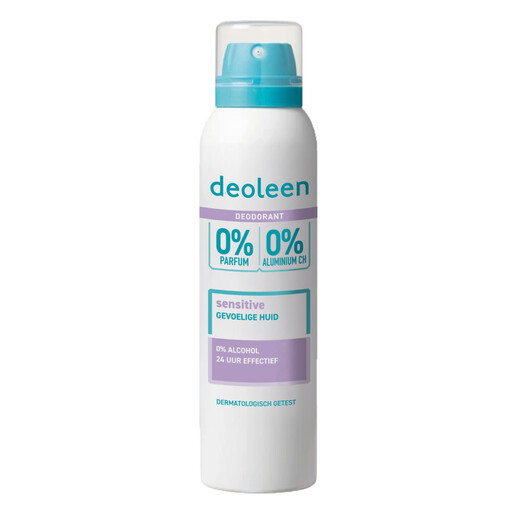
Why it suits this profile: A straightforward choice for anyone looking for a 150 ml spray without complicated positioning and who wants to check the ingredients beforehand.
The product information states 0% and does not list an aluminium compound in the specified ingredients. Check the current packaging when it arrives.
150 ml; aloe extract listed among the ingredients; use from a distance of approximately 20 cm.
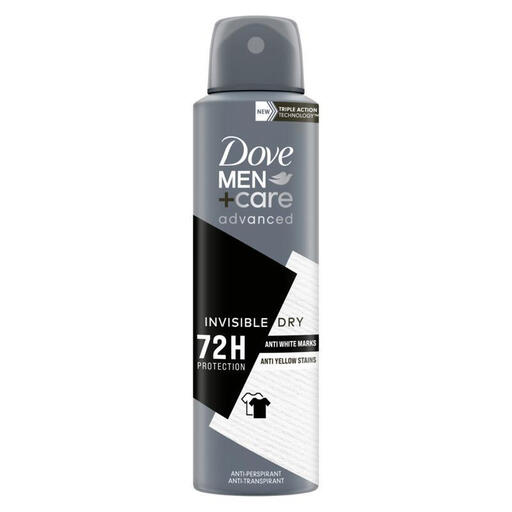
Why it suits this profile: Designed for adults looking for a men’s deodorant with antiperspirant protection and a focus on reducing visible marks on clothing.
The brand description mentions a formula that helps reduce white marks and yellow discolouration on clothing. This still depends on how it is used and the fabric of the garment.
150 ml; aluminium compound listed; according to Dove, up to 72 hours’ protection against sweat and odour.

Why it suits this profile: Intended for men and women looking for an unperfumed, compact spray for targeted use and long-lasting protection against perspiration.
The product information recommends using it once or twice a week, preferably in the evening. It is therefore not a standard everyday spray.
40 ml; unperfumed according to the product details; aluminium chlorohydrate and allantoin listed.
We have put together a complete, up-to-date list of products that fully meet these strict selection criteria and the applicable European safety regulations.
That depends on the product. Many sprays are intended for everyday use on clean, dry armpits. An intensive antiperspirant spray may have different usage instructions. Lucovitaal, for example, states that it should be used once or twice a week. Always follow the label and stop using it if irritation occurs.
The expiry information is shown on the packaging. Store an aerosol in a cool, dry place, away from direct sunlight and heat sources. Exposure to temperatures above 50 °C can be dangerous because the packaging is pressurised. Do not use a can if the packaging is damaged.
Do not compare only the price per can; also consider the volume and number of items. A 150 ml spray is suitable for regular use, while a 40 ml version may cost more per millilitre but is convenient for targeted use. With a multipack, you pay more upfront, while the price per spray may be lower. Also consider how many sprays you use each time: spraying briefly from the recommended distance helps to minimise waste.
