
Vandaag of morgen in huis

Kwaliteit gegarandeerd

Welkomstaanbiedingen ontgrendelen: GRATIS bezorging | Tot 80% korting | Gratis 30 dagen JoyPlus-proefperiode
Download de app
If you’re searching for dental care dog treats, you’ll quickly come across dentastix for dogs, chews for dogs and other dental sticks. But not every chew is suitable for every dog. The right choice depends on your dog’s weight, age, chewing strength and the treat’s ingredients.
As Joybuy’s Product Recommendation Officer, I filter product information based on practical points. That way, you can more easily see which dog treats for tartar control suit your dog, and which marketing claims you should take with a pinch of salt.
A dental stick for a small dog isn’t automatically right for a medium or large dog. A treat that’s too small can be swallowed more quickly. A treat that’s too big and hard can be difficult for a small dog or puppy to manage.
Always check the recommended weight category, for example:
These categories vary by brand. Use the product packaging as a guide and also consider your dog’s chewing style.
Words like “against tartar”, “for healthy teeth” or “scientifically proven” sound convincing, but they don’t always tell you what to expect in practice. According to Mars/Pedigree’s own research, certain Dentastix varieties can reduce tartar formation by up to 80% with daily use. That’s a claim from the brand under specific research conditions, not a guarantee for every dog.
Chews can support daily dental care because your dog chews on them. They don’t replace brushing or a check-up with the vet. If your dog has bad breath, bleeding gums, pain or visible tartar, professional advice is wiser than simply switching treats.
A large multipack often seems good value, but first check:
Some products need to be used within a certain period after opening. A smaller pack can then be more practical than a large box that stays open for a long time.
The shape and size affect how long your dog spends on the treat. X-shaped dental sticks or ridged chews can make contact with different parts of the teeth, but the effect depends on how your dog chews. A dog that wolfs down a stick in seconds will probably have a different chewing experience from a dog that chews slowly.
For small dogs, dental sticks for small dogs such as a mini size make more sense. Medium dogs usually need a firmer, larger size. For large dogs, dental sticks for large dogs or a multipack for dogs from 25 kg are available.
Check the ingredients list and the analytical constituents. Pay particular attention to:
Dog treats are complementary food. Keep the amount limited and deduct the calories from your dog’s daily food. As a practical guideline, many product labels state that treats should provide no more than about 10% of daily calorie intake.
Check whether the treat is suitable from a certain age. The selected Pedigree varieties, for example, are intended for dogs from 4 months old. Always give a chew under supervision and provide fresh drinking water. Remove any small pieces that your dog could swallow in one go.
For a puppy, older dog, dental problem or strong chewer, it’s wise to consult your vet. A treat that’s suitable for one dog may be too hard, too big or less appropriate for another.
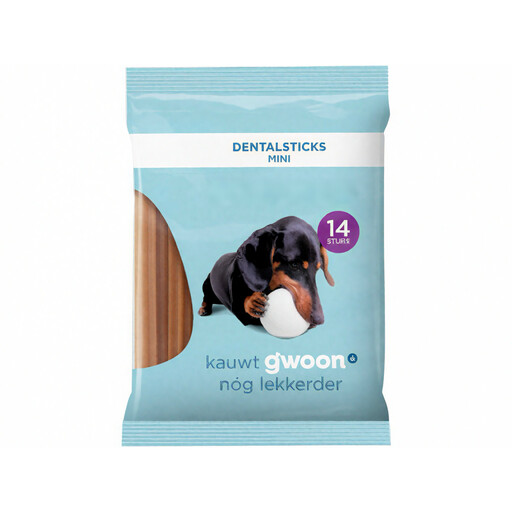
Why this fits the profile: The mini size is, according to the product description, developed for small dogs and is therefore an accessible choice for daily dental care.
The product information explicitly mentions small dogs as the target group. Still check your dog’s weight before ordering.
Mini size; designed to support oral hygiene; according to the product information, contains none of the 14 main EU allergens.
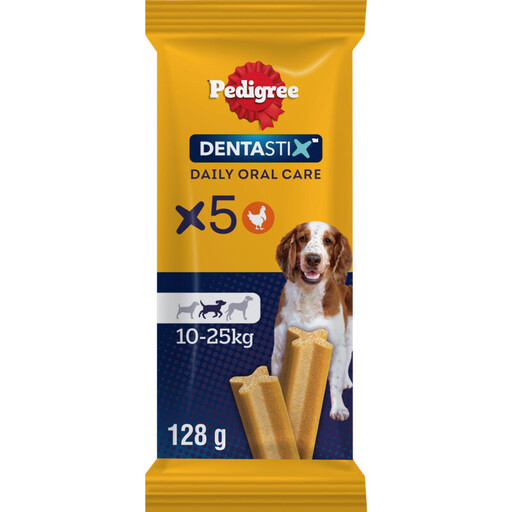
Why this fits the profile: This variety is tailored to medium dogs and includes a daily feeding instruction of one chew.
The product page states the target group, age limit from 4 months and storage period after opening. According to Mars/Pedigree’s own research, daily use can reduce tartar formation by up to 80%.
For medium dogs; no added sugars; 1.3% fat according to the stated analytical constituents.
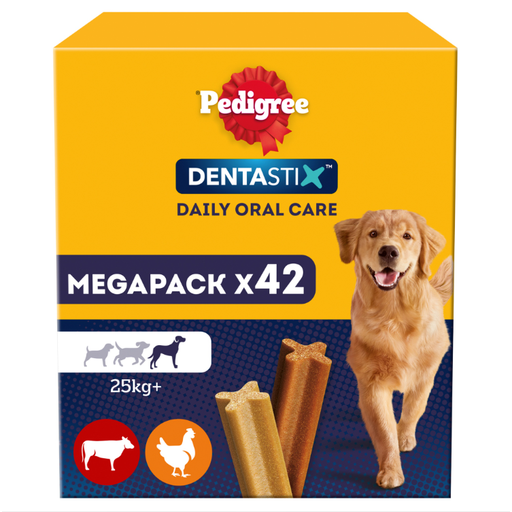
Why this fits the profile: The pack contains 42 sticks for large dogs from 25 kg. That suits households that give a dental stick daily and want to keep a stock.
The target group and number of sticks are clearly stated. Do check the shelf life after opening and store the bag in a dry, well-sealed place.
42 sticks; intended for dogs of 25 kg and over; no added sugars according to the product information.
We’ve put together a full, up-to-date list of products that fully meet these strict selection criteria and comply with current European safety regulations.
Chewing movements can support daily oral care. The result varies per dog and depends on size, texture and chewing behaviour. Claims from a brand, such as a reduction in tartar, are based on that brand’s own research and are not a guarantee. Dog treats for tartar control do not replace brushing or a treatment from the vet.
Follow the feeding instructions on the packaging. Many dental sticks are intended for a maximum of one piece per day. Take the total calorie intake into account: according to many product guidelines, treats should make up no more than about 10% of the daily diet. Always provide fresh water as well.
Dental sticks are usually designed with a specific shape, texture or added ingredient for daily dental care. Regular chews, such as chew bones or chews for dogs, are mainly intended as a reward or activity. Both types can encourage chewing, but always check suitability for your dog’s size, age and chewing strength.
