What should you look for when choosing one?
First, check whether ventilation needs improving or there’s another source of moisture. If the room still feels damp afterwards, compare the type of appliance with the room’s usual temperature, then consider noise, water collection and how long you’ll use it for.
| What to consider |
What to look for |
Who is this important for? |
| Damp and its cause |
Check the humidity at different times and look at ventilation and visible sources of moisture. The Consumers’ Association says a dehumidifier may help if humidity stays above 65% after the cause has been addressed. This is buying advice, not a legal limit. |
I want to find out why the room stays damp before buying an appliance that might mask a leak or ventilation problem. Around 33% of consumers put identifying the cause and controlling moisture first. |
| Noise while sleeping |
Compare the noise level in the mode you actually plan to use. Also check whether a night mode, timer or dimmable display would suit the way you’ll use it. |
If I sleep in the same room, I want to know in advance how much noise the appliance makes while it’s running. Around 25% of consumers put sleep noise at the top of their list. |
| Drying laundry indoors |
Check that the airflow, tank or drain and any timer are suitable for drying a load of washing. According to the Consumers’ Association, a dedicated laundry-drying mode isn’t always necessary. |
I sometimes dry laundry in my room and want the appliance to suit that use without running for longer than necessary. Around 25% of consumers say drying laundry is their main concern. |
| Cold rooms and electricity use |
Check the usual room temperature and the appliance’s operating temperature range. Compare electricity use under suitable conditions and take the expected running time into account. |
If my room stays cold for long periods, I want a type designed for those conditions and to factor in its electricity use. Around 17% of consumers put cold temperatures and running costs first. |
Brands to consider
The specifications listed are provided by the manufacturers, not based on independent tests in a student room. Compare capacity alongside the stated conditions, noise level and the practical implications of the tank size.
Eurom
The DryBest 10 is a compressor dehumidifier worth comparing for a heated room if you want an adjustable humidistat and a water tank.
- According to Eurom: a stated capacity of 10 l/24 hours, a 2-litre tank, a continuously adjustable humidistat and a maximum noise level of 42 dBA.
- These are manufacturer specifications, not independently measured results in a student room. Output may differ in a cold room.
De'Longhi
The Tasciugo AriaDry DEX210SF is a compressor model worth comparing if the stated noise level is an important consideration.
- According to De'Longhi, it has a stated capacity of 10 l/24 hours at 30 °C and 80% relative humidity, a stated noise level of 36 dB(A) and an input power of 250 W. The model also has a laundry function.
- This capacity doesn’t tell you how much moisture it will remove in a cooler or less humid room. The stated noise level isn’t based on an independent sleep test. The DNS65 is a different model.
Duux
The Bora 12L is a compressor model worth comparing if you’re looking for automatic humidity control and a laundry mode.
- Duux lists a maximum of 12 litres per day, an adjustable humidistat, a 1.7-litre tank and a noise level of 42 dB.
- The relatively small tank may need emptying more often during intensive use. A manufacturer’s claim about energy savings when drying laundry isn’t an independent measurement of savings in a student room.
Trotec
The TTR 57 E is a desiccant model for a room that stays cold for long periods. This type isn’t automatically a general replacement for a compressor dehumidifier.
- Trotec states that it can be used from 1 °C and has a maximum capacity of 9 l/24 hours.
- The Consumers’ Association warns that desiccant models use more electricity than refrigerant models. Compare energy use for the way you intend to use it rather than relying solely on a manufacturer’s efficiency claim.
Dehumidifiers at Joybuy
These Joybuy products are dehumidifiers designed to control indoor humidity. Compare the stated capacity, tank size and features with your room temperature and intended use. CE marking is mandatory in the Netherlands for electrical consumer products. Check the marking and applicable conformity requirements for the specific appliance, as explained by the NVWA.
 No image available
Comfee' MDDO-10DEN7
An option to compare if you’re looking for automatic humidity control and a drying mode.
The product name lists 10 l/day, a 2.5-litre tank, 3 modes, a 24-hour timer, automatic defrosting and a sleep mode with a stated noise level of 36 dB. R290 and child lock are also listed.
The product information recommends 25 cm of clearance around the appliance and placing it upright on the floor.
View at Joybuy
 No image available
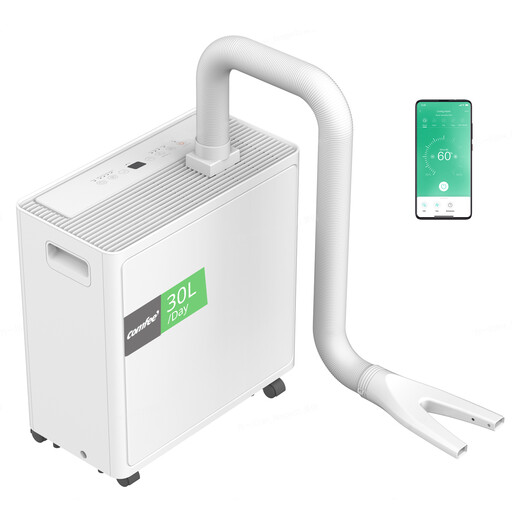
Comfee' MDDA-30DEN7-SD
An option to compare if you’re looking for a drying mode, app control and drainage via a tank or hose.
The product name lists 30 l/day, a 3.2-litre tank, 4 modes, a 24-hour timer, automatic defrosting and R290.
According to the product information, the stated maximum capacity applies at 30 °C and 80% relative humidity.
View at Joybuy
 No image available
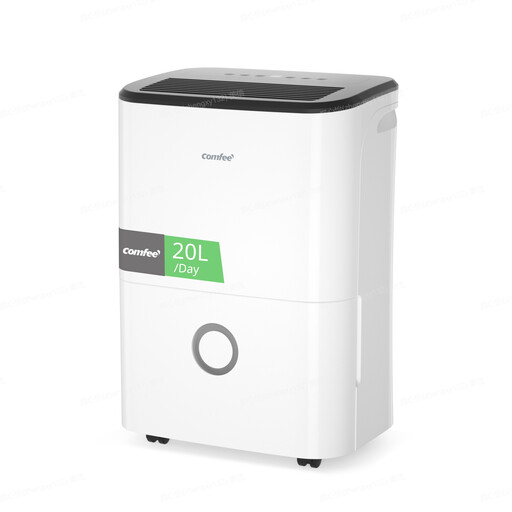
Comfee' MDDF-20DEN7
An option to compare if you want to combine humidity control with a drying mode.
The product name lists 20 l/day, a removable 3-litre tank, 3 modes, a 24-hour timer, automatic defrosting and R290.
The product information describes the stated capacity as a maximum. Compare it with the conditions in your room.
View at Joybuy
 No image available
CONOPU 16L
An option to compare if sleep mode and humidity control matter when using the appliance in the same room.
The product name lists a maximum of 16 litres per day, a 2.5-litre tank, continuous drainage, a 24-hour timer, automatic defrosting and a washable filter.
According to the product information, the stated capacity applies at 95 °F and 90% relative humidity.
View at Joybuy
 No image available
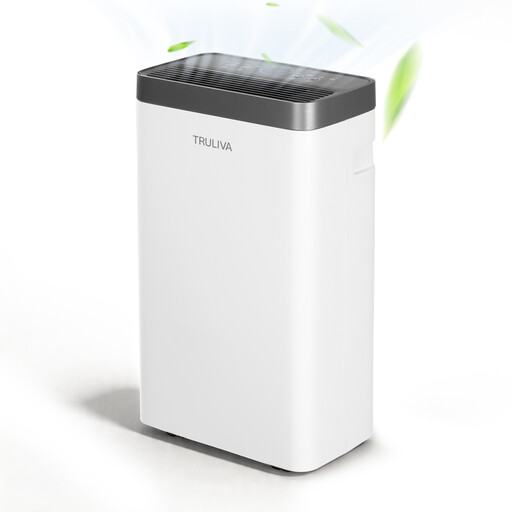
TRULIVA AP10-2012EE
An option to compare if you’re looking for a timer, drying mode and continuous drainage.
The product name lists a 24-hour timer, automatic defrosting and continuous drainage.
According to the product information, frost may form below 15 °C, causing the compressor to stop temporarily while the appliance defrosts. The tank holds 1.35 litres; continuous drainage is an alternative.
View at Joybuy
Frequently asked questions
What humidity level should I set in my room?
The Consumers’ Association recommends a relative humidity of 40–60% at 18–24 °C as a comfortable range, with 45–50% as a guide for living rooms and bedrooms. This is usage advice, not a legal standard. Also check whether a leak or inadequate ventilation could be contributing to the problem.
Should I close the window while the dehumidifier is running?
The Consumers’ Association’s usage tips recommend closing windows and doors while dehumidifying, so the appliance isn’t constantly treating new, damp air. That doesn’t mean you should stop ventilating altogether: the Dutch government recommends ensuring an adequate supply of fresh air, day and night.
What should I do if mould returns because of poor maintenance?
If you suspect damp, a leak or mould is due to poor maintenance, report it to your landlord in writing first and keep a copy. The Dutch government explains what steps you can take if the problem isn’t fixed. The right course of action depends in part on the defect and your rental situation.
What should I consider when it comes to electricity use and the guarantee?
Compare electricity use and running time under similar conditions; a wattage figure alone doesn’t tell you how much electricity an appliance uses per month. If a product is faulty in the Netherlands, the retailer is your point of contact for your statutory guarantee. According to the Dutch government, there is no fixed two-year term for this guarantee.
What safety rule applies to an electric dehumidifier in the Netherlands?
CE marking is mandatory for electrical consumer products. Check the marking and any applicable restrictions on use for the specific appliance; a product listing alone doesn’t prove conformity. According to the NVWA, this is a product safety requirement, not a permit that residents need to apply for to use the appliance normally.


