
Student dealing with shower moisture in their room
Wants to know whether better ventilation is enough before bringing an appliance into the room.


First, increase ventilation during and after showering; a dehumidifier is no substitute for removing moist air. If the room remains damp after you’ve addressed the cause, choose a model based on the room temperature, noise level, available space and how often you want to empty the tank. A compressor or refrigerant model is generally better suited to a heated room. Adsorption may be suitable for a room that stays cold for long periods, but according to the Consumentenbond it uses more electricity.
Wants to know whether better ventilation is enough before bringing an appliance into the room.
If damp persists, they also need to consider noise, where to place the appliance and how often to empty the tank.
Needs to match the dehumidifying technology to the temperature and take electricity consumption into account.
First, check whether ventilation and addressing the source of the damp make a difference. If humidity remains high for a long time, compare how well the appliance works at your room temperature, as well as the practical implications of noise, the tank and where you can place it.
| What to consider | What to look for | Who should pay particular attention? |
|---|---|---|
| Persistent moisture after showering | Check ventilation and possible sources of damp; compare the capacity with the conditions under which it was measured. | If I mainly want to deal with moisture after showering, I first want to know whether ventilation and fixing the cause will be enough. Around 36% of consumers say persistent moisture after showering is their main concern when buying. |
| Noise while sleeping or studying | Check the noise level for each setting and see whether the model has a timer or night mode. | If I sleep or study in the same room, I want to know how audible the appliance is while it’s running. Around 29% of consumers give noise and controls top priority. |
| Performance in a cold room | Match the technology to the room’s usual temperature and check the model’s stated operating temperature. | In a cold or unheated room, I mainly want to know whether the chosen technology is suitable. Around 21% of consumers prioritise effective dehumidification at low temperatures. |
| Energy use and space | Check the dimensions and compare the power rating with the expected running time; consider tank capacity separately from daily dehumidifying capacity. | If my room has limited space or the appliance will need to run often, I want to consider both how much room it takes up and how much electricity it uses. Around 14% of consumers say running costs and available space are their main concerns when buying. |
A dehumidifier removes moisture from the air in the room, but it doesn’t remove stale, moist air and vent it outside. Milieu Centraal recommends increasing ventilation while showering.
First, check whether a window, air vent or ventilation system can remove the moist air. If damp problems persist, have possible causes, such as a leak, investigated too.
How much moisture an appliance collects depends partly on the temperature and humidity. That’s why the Consumentenbond measures dehumidifying performance at different combinations of these conditions.
Compare the stated capacity with the conditions under which it was measured and with your room temperature.
Capacity in litres per 24 hours and the capacity of the water tank are two different things. For example, Eurom lists the DryBest 10 as removing 10 litres per 24 hours and having a 2-litre tank.
Check both figures separately and make sure the tank is easy to empty or that you have a suitable place for continuous drainage.
According to the Consumentenbond, adsorption is suitable for cold rooms, but this technology uses more electricity than refrigerant dehumidification.
First, work out how cold the room usually gets. Then weigh the suitability of the technology against how long the appliance is likely to need to run.
The DryBest 10 is a compressor option worth comparing for a heated room with a persistent damp problem.
Qlima offers the D 812 Smart, a refrigerant model, and the DD 808, an adsorption model, giving you options to weigh up for different room temperatures.
The Compact 12L is a compressor option worth comparing if available space and straightforward controls are important to you.
The Arete One 20L is mainly an option to compare for a larger space, and isn’t necessarily the right choice for a single student room.
These models are worth comparing if you’re considering additional dehumidification after improving ventilation and addressing the source of the damp. For a small student room, check carefully that the stated capacity and recommended room size are suitable.
 No image available
Worth comparing for a room where a stated maximum area of around 16 m² is relevant.
The product information lists a capacity of 10 litres per 24 hours, a 2,5-litre tank and automatic control at 45–55% humidity. It also lists a timer and a sleep mode rated at 36 dB(A).
 No image available
Before choosing this model, carefully compare its stated recommended room size with the dimensions of your room.
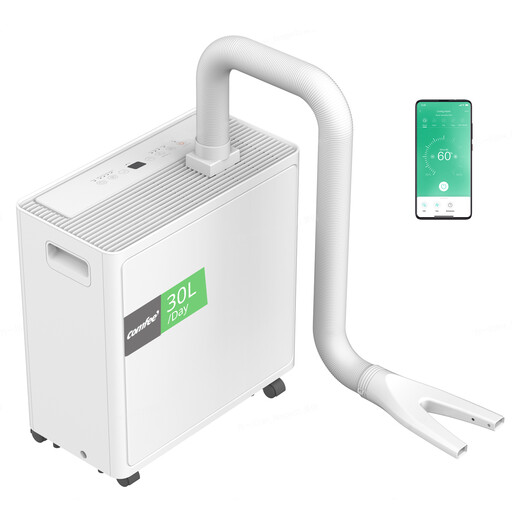
The product information lists a capacity of 30 litres per day, a 3,2-litre tank and continuous hose drainage. It also gives a recommended room size of up to around 73 m² and app control.
 No image available
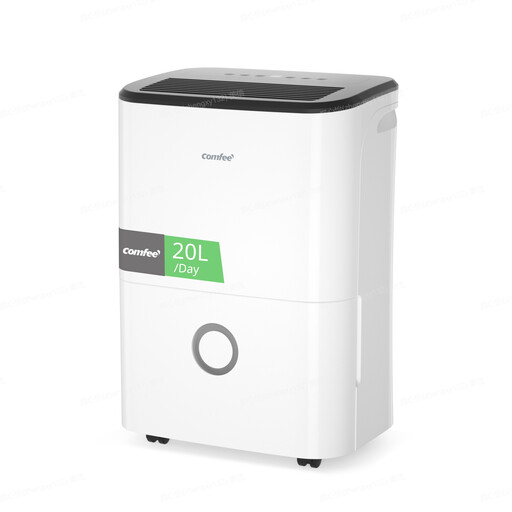
If you’re considering a model with a capacity of 20 litres per day, compare its stated recommended room size with your room.
The product information lists a 3-litre tank, continuous drainage and a smart mode for 45–55% humidity. Its stated recommended room size is around 40 m².
 No image available
The product information gives a recommended room size of up to 60 m²; compare this with the size of your room.
The stated capacity is up to 16 litres per day. The product information also lists a 2,5-litre tank, continuous drainage, a timer and an adjustable humidity range of 40–70%.
 No image available
The product information recommends this model for smaller spaces of up to 25 m²; check whether that suits your room.
The stated capacity is up to 12 litres per day, measured at 86°F and 90% relative humidity. The product information also lists a 3,8-litre tank and continuous hose drainage.
No, a dehumidifier isn’t a substitute for ventilation. Ventilation removes stale, moist air and vents it outside; Milieu Centraal recommends increasing ventilation while showering.
If damp mainly occurs after showering, first check whether better ventilation and addressing the cause help. The Consumentenbond says a dehumidifier may be a useful addition if humidity remains consistently above 65% after the causes have been addressed; this isn’t a legal limit.
An adsorption dehumidifier may be suitable for a room that stays cold for long periods. According to the Consumentenbond, adsorption works well in cold rooms, but this technology uses more electricity than refrigerant dehumidification.
Follow the instructions for your chosen model on where it can be placed and how to maintain it. Also check that the tank is easy to empty and that there’s a suitable drainage point if you want continuous drainage. A stated IP rating doesn’t automatically mean that every spot in a bathroom is suitable.
Report any suspected maintenance issue to your landlord in writing and describe the problem. According to the Rijksoverheid, you can ask for it to be fixed within six weeks; if it’s urgent, ask for action sooner. The Huurcommissie offers a Defects Check to help you work out which next step is right for your rental situation. Mould isn’t automatically considered a defect that the landlord is responsible for in every case.