
Hobbyist dealing with shower moisture
You notice dampness in an adjoining hobby room after showering and want to find out whether better ventilation will be enough. Milieu Centraal and GGD Leefomgeving emphasise ventilation and limiting moisture.


First, vent shower moisture outdoors and check whether the hobby room stays damp for a prolonged period afterwards; a dehumidifier is no substitute for ventilation or repairing a leak. If a heated room remains damp, compare compressor dehumidifiers sized appropriately for the space. For a room that stays cool for long periods, a desiccant model may be worth considering, although it generally uses more electricity. The Consumentenbond explains this temperature trade-off. For a specific appliance, check the manual, placement requirements and CE marking: the NVWA requires this marking on electrical consumer products covered by the relevant regulations.
You notice dampness in an adjoining hobby room after showering and want to find out whether better ventilation will be enough. Milieu Centraal and GGD Leefomgeving emphasise ventilation and limiting moisture.
You use an unheated room that stays damp for long periods and want to know whether a particular appliance can work at the room’s temperature. The Consumentenbond identifies room temperature as a factor when choosing.
You store items such as books or musical instruments and want to manage persistent damp without unnecessary noise or having to empty the tank frequently. The Consumentenbond highlights room size and temperature as important considerations.
Deal with the source of the moisture first. Only compare dehumidifier types if the hobby room stays damp for a prolonged period afterwards.
Choose this when: the hobby room is heated but still stays damp for a prolonged period after ventilation.
Trade-off: performance falls in cooler rooms; the stated daily capacity is not a guaranteed result in your home.
Choose this when: the hobby room stays cool or unheated for long periods and dehumidification is still needed.
Trade-off: according to the Consumentenbond, desiccant dehumidifiers generally use more electricity than condensing dehumidifiers.
| Consideration | What to look for when buying | Who might care more about this? |
|---|---|---|
| Source of moisture and ventilation | Check whether damp air is vented outdoors and whether the damp problem persists after showering. | If I notice damp in the hobby room after showering, I want to know first whether better ventilation will solve the problem. Around 31% of consumers prioritise the source of moisture and ventilation. |
| Capacity and temperature | Compare the capacity alongside its stated test conditions and operating range with the temperature and size of your room. | If I use an unheated hobby room, I want to know whether the appliance can dehumidify at that temperature. Around 31% of consumers prioritise performance at their room’s temperature. |
| Belongings and working comfort | Check whether it has a humidistat and compare the stated noise level of the exact model variant. | If I keep books or musical instruments in the room, I want to manage persistent damp without distracting appliance noise while I work. Around 23% of consumers prioritise protecting their belongings and working in peace. |
| Emptying and use | Compare the tank capacity and automatic shut-off with the option of practical continuous drainage. | If I use the appliance regularly, I want to know how often I’ll need to empty the tank and whether a drain hose will work with my set-up. Around 15% of consumers prioritise maintenance and ease of use. |
A dehumidifier removes water from indoor air, but it doesn’t vent damp, polluted air outdoors. The underlying source of moisture may therefore remain.
First, check the ventilation and how shower moisture is being removed. Also look into a possible leak or recurring mould.
Capacity figures may be measured at high temperatures and humidity levels. In cold conditions, a compressor dehumidifier’s performance falls.
Compare the stated test conditions and operating range with the temperature in your hobby room. Don’t treat the stated daily capacity as a guaranteed result at home.
A tank needs to be emptied; a hose for continuous drainage will only work if the set-up and drainage point are suitable.
Check the tank, automatic shut-off, hose and manual for the exact model variant. Without suitable drainage, you may still need to empty the tank by hand.
Continuous drainage requires a suitable location and correctly positioned hose. If that isn’t possible, you’ll need to empty the tank regularly.
De’Longhi lists the DNS80 as a grey model, while a Joybuy listing describes a white one. A similar model name doesn’t automatically mean that all the specifications match.
Before buying, compare the full model number, colour and specifications of the specific listing.
The DryBest 10 is a compressor option to compare for a heated hobby room, with a collection tank and humidistat.
The D 612 offers a model to compare if you’re considering an appliance for a damp environment; whether it’s suitable depends on exactly where you place it.
The TTR 57 E is a desiccant model to compare for a hobby room that stays cool for long periods.
The DEX210SF and DNS80 are models to compare side by side; look at the technology and the full model identification.
Joybuy products for managing damp in a hobby room; compare the recommended room size, capacity and drainage options with your needs.
 No image available
Compare this model with a hobby room around the stated recommended size of approximately 16 m². Actual capacity also depends on temperature and humidity.
The stated capacity is 10 L/day and the tank holds 2.5 L. The product description lists an adjustable humidity target of 45–55%, automatic shut-off when the tank is full and a noise level of 36 dB(A).
 No image available
Compare the stated recommended room size with your hobby room before considering this model; a higher capacity doesn’t necessarily mean it’s the right choice.
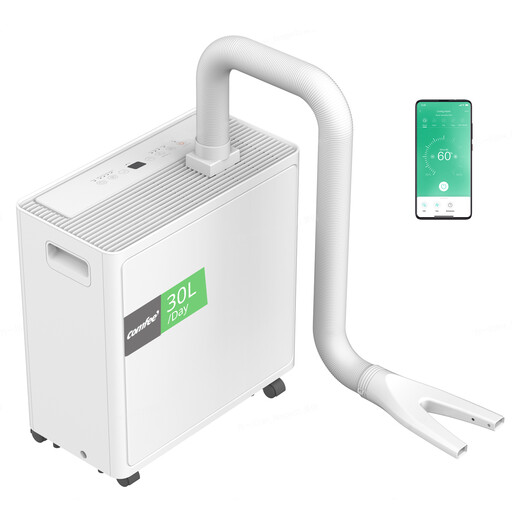
The stated capacity is 30 L/24 hours and the recommended room size is approximately 73 m². The description lists a 3.2 L tank, adjustable humidity control and a connection for continuous drainage.
 No image available
Compare the stated recommended room size of approximately 40 m² with your hobby room, and take temperature and humidity into account.
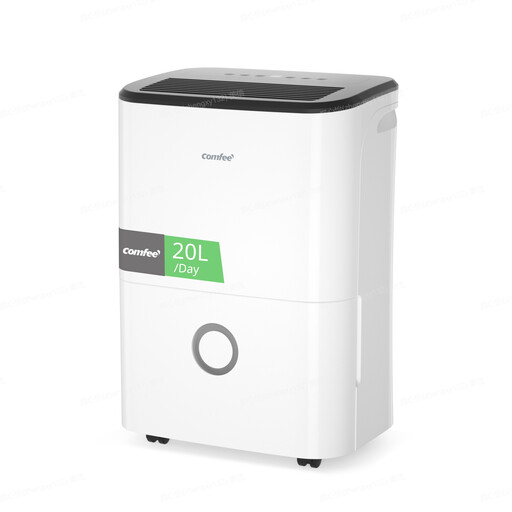
The stated capacity is 20 L/24 hours and the tank holds 3 L. The description lists a noise level of 46 dB and a connection for continuous drainage alongside the removable tank.
 No image available
Compare the stated recommended room size with your hobby room. The stated maximum is 60 m², but that doesn’t guarantee the same output in your conditions.
The description lists a compressor, a capacity of 16 L per day, a 2.5 L tank and adjustable humidity control. It also mentions drain hoses for continuous drainage.
 No image available
Compare the maximum recommended room size of 25 m² with your hobby room, and check whether your planned drainage set-up is possible.
The description lists a compressor and a maximum capacity of 12 L per day. The tank holds 3.8 L, and a drain hose and automatic shut-off when the tank is full are also mentioned.
If humidity mainly rises after showering, first improve the way damp air is vented and check for other causes. The Consumentenbond suggests considering a dehumidifier if humidity stays consistently above 65% after the causes have been addressed; this isn’t a legal threshold for buying one.
Not based on the product category alone. Check the manual, protection rating and placement instructions for the exact model, as well as the electrical connection. Qlima lists IP24 for the D 612, but that specification doesn’t apply to other dehumidifiers.
Only use a drain hose if your set-up is suitable, and follow the manual for your model. Place the appliance on a stable surface with its air vents unobstructed, and clean the tank and filter as instructed for your specific model.
Compare the stated power consumption with how long you expect to use the appliance. Actual consumption also depends on how long it runs and the conditions it operates in. According to the Rijksoverheid, statutory guarantees in the Netherlands don’t have a fixed duration; if a product is faulty, contact the seller.
Yes. CE marking is required for electrical consumer products covered by the applicable regulations. For electrical equipment with a rated AC voltage of 50–1000 V, the NVWA describes the relevant low-voltage regulations. This doesn’t confirm that a specific listing is compliant.