
Drying laundry without a tumble dryer
You regularly hang laundry to dry in your flat and want to know whether a dehumidifier could help. A dedicated laundry mode is worth comparing, but the Consumers’ Association says it isn’t essential.


A dehumidifier can help dry laundry indoors; a dedicated laundry mode isn’t essential, according to the Consumers’ Association. First, choose a model to suit the temperature and size of the room where your airer is, then compare noise levels, energy use and how often you’ll need to empty the tank. Keep ventilating, too: a dehumidifier doesn’t remove polluted indoor air, as Milieu Centraal explains.
You regularly hang laundry to dry in your flat and want to know whether a dehumidifier could help. A dedicated laundry mode is worth comparing, but the Consumers’ Association says it isn’t essential.
You dry laundry in a cool room and want to check that your chosen appliance can operate at that temperature. Qlima describes different options for its models for standard and cold rooms.
Your airer is in a room where you also relax or sleep. Noise, available space and energy use are therefore worth comparing, as the Consumers’ Association also points out.
Start with the temperature and size of the room where you dry your laundry, then consider noise, energy use and the tank. A laundry mode can make the controls easier to use, but you’ll still need to ventilate the room.
| What to consider | What should you check? | Who should pay particular attention? |
|---|---|---|
| Helping to dry laundry | Check whether the model has a laundry mode or adjustable humidistat. A dedicated laundry mode isn’t essential. | If I mainly dry laundry indoors, I want to remove moisture without assuming that I need a special mode. Around 30% of consumers prioritise help with drying laundry. |
| Room temperature | Check the operating temperature for the exact model and bear in mind that some compressor models may pause under certain conditions. | If my airer is in a cool room, I want to know first whether the appliance will work there. Around 30% of consumers prioritise operation at a low room temperature. |
| Noise and space | Compare the noise levels for each operating mode, and check the appliance’s dimensions and access to the tank. | If my airer is in my living room or bedroom, a quiet appliance matters when choosing a model. Around 20% of consumers prioritise noise and space in a shared room. |
| Energy use and emptying | Compare energy-use figures under similar conditions and check the tank capacity and whether a drain hose is available. | If I use the appliance regularly, I also want to know how often I’ll need to empty the tank and how much energy it uses. Around 20% of consumers prioritise ongoing running costs. |
A dehumidifier removes moisture from the air, while ventilation also removes polluted indoor air. They don’t do the same thing.
Keep ventilating when you use a dehumidifier. Milieu Centraal recommends airing the room more when laundry is drying indoors. If you have mechanical ventilation, follow the advice on which setting to use.
The stated capacity depends on the test conditions. For example, De'Longhi gives the DNS80 a capacity of 7.5 litres per 24 hours at 30 °C and 80% relative humidity. This isn’t a prediction for a different room.
Compare the conditions used for the stated capacity and check the specifications for the exact model before applying them to your drying space.
Qlima says its D 6xx and D 8xx compressor models may pause to defrost below 18 °C. The brand presents the DD 808 as an adsorption model for rooms below 15 °C; this information doesn’t automatically apply to other brands or models.
Check the temperature where your airer is and the operating conditions for the specific model.
Qlima offers the D 812 Smart for standard rooms and the DD 808, an adsorption model for cool rooms. These are different options to consider, not a sign that one model is better for every home.
Meaco offers the European Arete One 12L for flats and individual rooms, among other spaces.
The Dutch product range includes the Tasciugo AriaDry Light DNS80, which offers a laundry function as a possible operating option.
These Joybuy dehumidifiers may help you dry laundry indoors. Compare the listed features with the temperature and available space where your airer is.
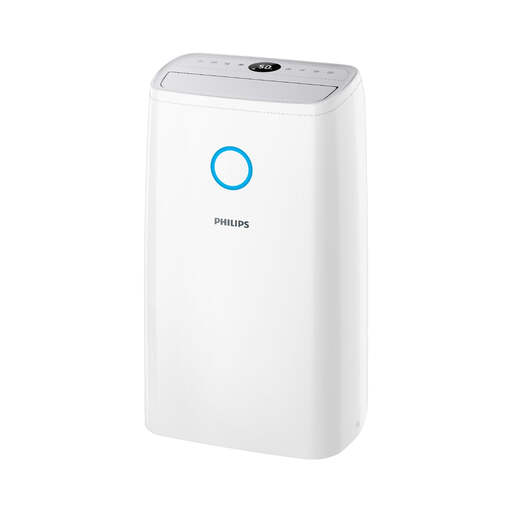 No image available
The dehumidifying function may suit you if you want help drying laundry indoors; the Consumers’ Association says a dedicated laundry mode isn’t necessary.
The product description lists three fan speeds, automatic shut-off when the tank is full and a 1–9-hour timer.
The description specifies a 4-litre tank and optional continuous drainage.
 No image available
The product description lists a clothes-drying mode, which may suit you if you want help drying laundry indoors.
The description specifies a 2.5-litre tank, continuous drainage and a 24-hour timer.
The stated capacity of 16 litres per day applies at 86 °F and 90% relative humidity; it doesn’t predict performance under different conditions.
The sleep mode is stated to operate at 30 dB.
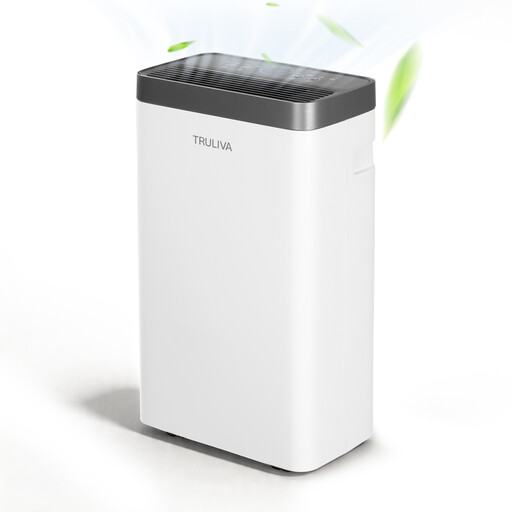 No image available
The product description lists a laundry-drying mode and automatic control based on the selected humidity level.
The title says it is suitable for rooms of around 32 m². The description specifies a 1.35-litre tank and continuous drainage with a hose.
The description says to leave at least 10 inches of clearance around the appliance.
The description also lists a timer and automatic defrosting.
 No image available
The product description lists a laundry-drying mode and adjustable humidity, so you can tailor dehumidification to your needs.
The title says it is suitable for rooms up to 25 m². The description specifies a 3.8-litre tank and continuous drainage.
The stated capacity of 12 litres per day applies at 86 °F and 90% relative humidity; it isn’t a prediction for different conditions.
The description lists a timer and adjustable fan speed.
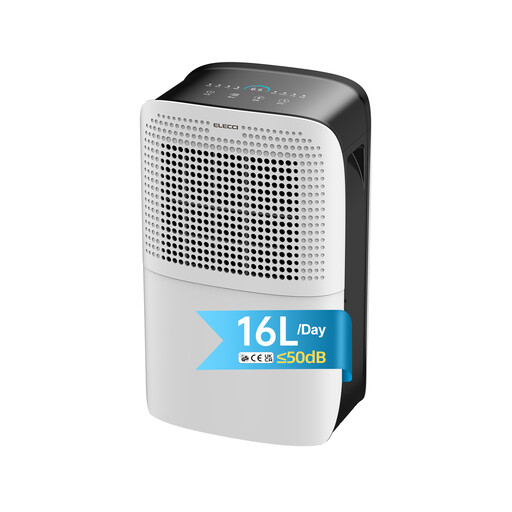 No image available
The product description lists a clothes-drying mode as well as the dehumidifying function.
The title says it is suitable for rooms up to 32 m². The description specifies a 3.1-litre tank and hose drainage.
The stated capacity of 16 litres per day applies at 86 °F and 90% relative humidity; it isn’t a prediction for different conditions.
The description lists four modes and automatic humidity control.
No, you don’t need a dedicated laundry-drying mode to use a dehumidifier for drying laundry indoors. The Consumers’ Association says an appliance can help dry laundry without this feature; check how to set the standard dehumidifying mode.
No, keep ventilating, as this also removes polluted indoor air. Milieu Centraal recommends airing your home more when laundry is drying indoors. If you have mechanical ventilation, the organisation recommends using the higher setting while laundry is drying inside.
First, check the temperature at which the exact model can operate. Qlima positions its DD 808 as an adsorption model for rooms below 15 °C and says its D 6xx and D 8xx compressor models may pause to defrost below 18 °C. Don’t apply this information to other brands.
This depends on factors including the energy used in the selected mode, how long you use the appliance and your electricity tariff. Compare energy-use measurements taken under similar conditions; the Consumers’ Association also measures energy use when appliances switch on and off automatically.
For distance sales, you generally have a 14-day cooling-off period, according to the Dutch government. You’re also entitled to a product that works properly; if there’s a fault, the seller must provide a solution. Check the terms and who the seller is for the specific purchase.