
People who dry laundry in a large living room
You regularly hang laundry to dry in your living room and want the stated room coverage to suit the size of the space.


First, choose a dehumidifier with a stated room coverage and performance that suit the temperature in your living room. Then compare noise levels, airflow, energy use and drainage. A dedicated laundry-drying mode can be useful, but it isn’t essential and doesn’t replace ventilation. The stated capacity in litres per day isn’t a promise of how much moisture the unit will remove in your home.
You regularly hang laundry to dry in your living room and want the stated room coverage to suit the size of the space.
You spend time in the living room while your laundry dries, so you take noise, positioning and ventilation into account.
You use a dehumidifier regularly and want to compare energy use, emptying the tank and the practicality of drainage.
Start with the room coverage and the room temperature. Then compare noise levels and drainage for your needs. A stated maximum capacity alone won’t tell you how quickly your laundry will dry.
| What to consider | What should you check? | Who should consider this? |
|---|---|---|
| Room size and capacity | Check the stated room coverage and the temperature and humidity conditions used to calculate the capacity in litres per day. | If I dry laundry in a large living room, I want to know whether the stated coverage suits my space. Around 36% of consumers put capacity suited to laundry and their living room first. |
| Noise and ventilation | Compare noise levels for each setting and choose a position with clear air inlets and outlets; keep your home ventilated. | If I stay in the living room while the laundry dries, I want to take the noise and the air in the room into account. Around 29% of consumers prioritise comfort at home. |
| Energy use | Check the power rating and compare energy-use and moisture-removal measurements only when the conditions are the same. | If I run the dehumidifier often, I want to consider its electricity use alongside its capacity. Around 21% of consumers put running costs during frequent use first. |
| Tank and drainage | Check the tank capacity, automatic shut-off, whether a hose is included and the maintenance instructions. | If I dry laundry regularly, I want to know how often I’ll need to empty the tank and whether drainage is practical. Around 14% of consumers prioritise less frequent emptying and easy maintenance. |
The Consumers’ Association of the Netherlands (Consumentenbond) lists room size, temperature, speed and noise as factors to consider when choosing a dehumidifier. The European Commission states that no EU energy class has been established for dehumidifiers, so don’t compare appliances based on an assumed EU energy label rating.
The stated capacity depends on the conditions under which it was measured. For example, Wood’s lists the MDK21 as having a capacity of 20 litres per 24 hours at 30 °C and 80% relative humidity. That doesn’t guarantee a particular drying time in a living room.
Compare the room coverage and the conditions behind the capacity figure, and don’t treat a maximum figure as the output you can expect at home.
According to the Consumers’ Association of the Netherlands, a dehumidifier can help dry laundry with or without a dedicated laundry-drying mode. The presence of this mode alone doesn’t prove that drying will be quicker or use less energy.
Choose this mode if you value the convenience of a dedicated laundry setting. Otherwise, compare room coverage, noise, energy use and controls first.
A dehumidifier removes moisture from the air, but it doesn’t remove all polluted indoor air. The Dutch National Institute for Public Health and the Environment (RIVM) stresses the importance of ventilation. The Dutch government advises keeping enough trickle vents and top-hung windows open day and night.
Keep your home ventilated and investigate the source of any persistent damp problems.
A product page on Joybuy Netherlands for the Komodo Humi S 20L lists a capacity of 4 litres in the title and 6.5 litres in the description.
If the information conflicts, check the exact model variant and tank capacity in the manual or with the manufacturer before making your decision.
Meaco Netherlands lists the Arete One 20L as a dehumidifier for larger spaces, with stated coverage of up to 100 m².
Wood’s describes the MDK21 as a compressor dehumidifier for heated living spaces, with stated coverage of up to 70 m².
Qlima positions the D 820 A Smart for standard rooms and the DD 808 for cooler spaces.
The product page for the Tasciugo AriaDry Multi DDSX220 lists a laundry function and continuous drainage.
This selection includes dehumidifiers whose product information lists a laundry-drying mode. Check that each model’s stated room coverage suits your living room; the stated capacity doesn’t guarantee a particular drying time. Also check the safety information and CE marking: a visible mark alone doesn’t prove that a specific item meets all applicable requirements.
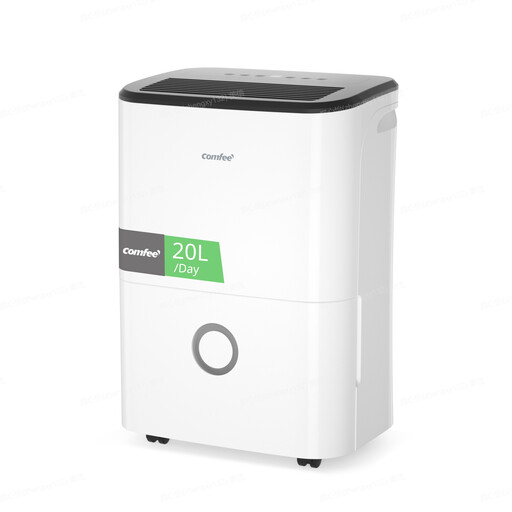 No image available
Could be a good fit if your living room falls within the stated coverage and you want a laundry-drying mode.
Stated coverage of up to 40 m² and a maximum capacity of 20 litres per 24 hours at 30 °C and 80% relative humidity. The product information lists 46 dB, an airflow of 166 m³/u, typical power of 280 W and a 3-litre tank. Connection for continuous drainage; hose not included.
 No image available
Could be a good fit if the stated coverage suits your living room and you want a laundry-drying function.
The product information lists coverage of up to 60 m², a maximum capacity of 16 litres per day, a 2.5-litre tank and a laundry-drying function. It also lists a 30 dB sleep mode and continuous drainage; check which accessories are included with the model variant.
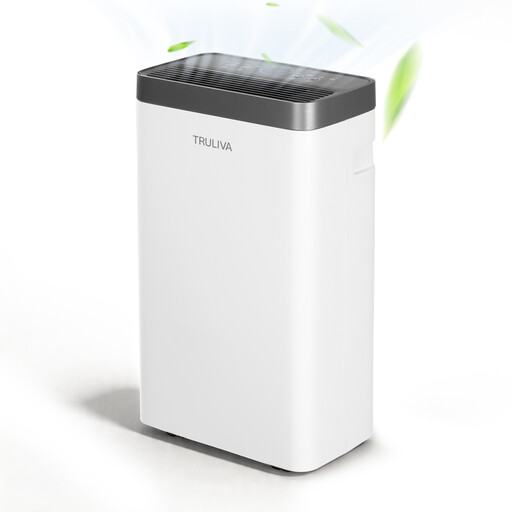 No image available
Could be a good fit if your living room falls within the stated coverage of around 32 m² and you want a laundry-drying mode.
The product information lists a maximum capacity of 16 litres per day, a 1.35-litre tank and a hose included for continuous drainage. A timer and sleep mode are also listed.
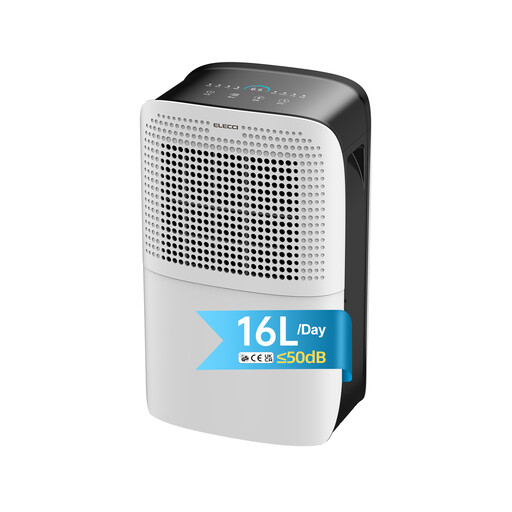 No image available
Could be a good fit if your room falls within the stated coverage and you want to use a drying mode as well as dehumidifying.
The product information lists coverage of up to 32 m², a maximum capacity of 16 litres per day, a 3.1-litre tank and a maximum power of 213 W. It also lists four modes, including drying, and continuous drainage.
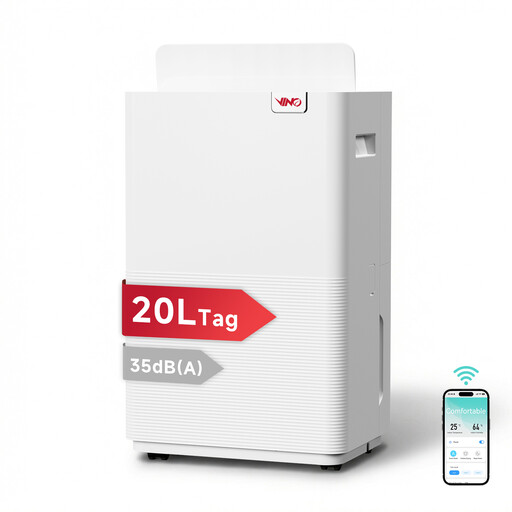 No image available
Could be a good fit if your living room falls within the stated coverage of 40 m² and you want a laundry-drying mode.
Maximum stated capacity of 20 litres per day at 30 °C and 80% relative humidity. The product information lists 365 W, a 2.5-litre tank, 40 dB(A) and an airflow of 150 m³/u; the sleep mode is rated at 35 dB. Continuous drainage is also listed.
No, a dedicated laundry-drying mode isn’t essential for a dehumidifier to help dry laundry. According to the Consumers’ Association of the Netherlands, it can help with or without this mode. Choose the function for the convenience of its controls, not as proof that laundry will dry faster.
Keep your home properly ventilated. A dehumidifier removes moisture from the air, while ventilation also removes polluted indoor air. The Dutch government advises keeping enough trickle vents and top-hung windows open day and night.
Check the manual for guidance on keeping the air inlet and outlet clear, and on the tank, hose and filter. For Qlima’s D 6xx and D 8xx series, the manufacturer advises leaving the appliance upright and unplugged for at least 2 hours after transport. If it was transported on its side or upside down, Qlima recommends leaving it for at least 24 hours. Don’t automatically apply this model-specific instruction to other brands.
No. The European Commission states that no EU energy class has been established for dehumidifiers. So compare the stated energy use and, where available, measured consumption under similar conditions.
CE marking is mandatory for electrical products, which must also meet the applicable electrical safety requirements. You’re also covered by the statutory guarantee: if a product doesn’t do what you could reasonably expect under normal use, the seller is responsible for providing an appropriate solution. A commercial guarantee period doesn’t automatically limit your statutory rights.