
Storing clothes in a damp hobby room
You store clothes in the room and want to check whether persistent damp could put them at risk. Consider the source of the damp and the ventilation too, not just the appliance.


First, measure the humidity and investigate persistent damp or recurring mould. A dehumidifier is no substitute for ventilation or fixing a leak. If you still need extra dehumidification, choose a model based on the temperature and size of your hobby room, and consider its controls, water collection and noise levels too. The Consumentenbond identifies temperature as an important factor when choosing: above 15 °C, a refrigerant model is the obvious choice, while below 15 °C, a desiccant model is more suitable. The stated capacity in litres per day is not a guaranteed output in your room.
You store clothes in the room and want to check whether persistent damp could put them at risk. Consider the source of the damp and the ventilation too, not just the appliance.
Your room often stays cool, and you want to choose the right technology based on the measured room temperature rather than looking only at the stated capacity in litres per day.
You want to empty the water tank less often, so you’re comparing the controls, tank and potential continuous-drain connection for each model.
For a hobby room where you store clothes, the main considerations are damp, temperature, water collection and ease of use.
| What to consider | What to look for when buying | Who is this important for? |
|---|---|---|
| Damp where clothes are stored | Measure the relative humidity at different times and investigate any recurring damp patches. | If I store clothes in the hobby room, I want to know whether the storage environment stays damp and whether there’s an underlying cause that needs attention first. Around 36% of consumers prioritise keeping clothes in a dry place. |
| Room temperature | Measure the temperature during normal use and check the permitted operating temperature range for the specific model. | If my hobby room stays cool for long periods, I want to choose a technology that suits that temperature. Around 29% of consumers prioritise performance in a cold room. |
| Water collection and drainage | Compare tank capacity and full-tank alerts. For continuous drainage, also check the connection and installation requirements. | If I don’t check the room every day, I want to know how the collected water is drained and how much attention it needs. Around 21% of consumers prioritise low maintenance. |
| Noise and energy use | Compare noise and power figures measured on the same basis, and consider the controls if you’ll use the appliance regularly. | If I work in the hobby room, I want to take the noise and how long the appliance runs into account. Around 14% of consumers prioritise quiet, controlled operation. |
How much moisture a dehumidifier can actually remove depends partly on the room’s temperature and humidity. A model’s stated capacity isn’t the same as its output in your hobby room.
Measure the conditions in the room and compare models using the same stated test conditions, controls and water-collection features.
Poor ventilation and leaks need to be dealt with separately. Milieu Centraal points out that recurring mould may have an underlying cause.
If damp persists or mould keeps returning, investigate the cause and maintain suitable ventilation.
Eurom gives the DryBest 20 a capacity of 20 l/24 hours and a 5 l tank. These are different specifications: a higher stated daily capacity doesn’t mean the tank holds more water.
Check the tank capacity, the full-tank alert and the requirements for any continuous-drain option.
Continuous drainage requires a suitable route and connection. If that isn’t possible, you’ll need to empty the tank.
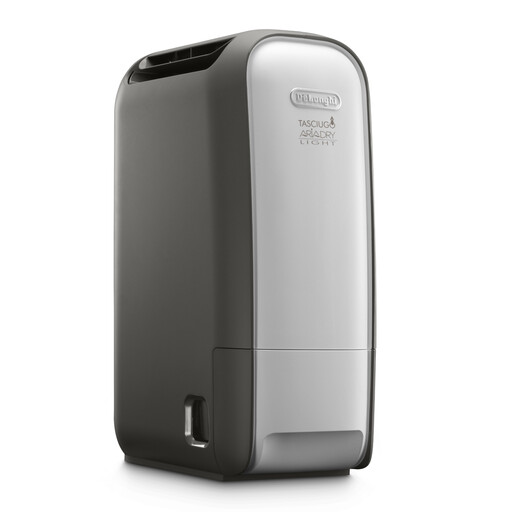
De’Longhi’s Dutch manufacturer page describes a grey DNS80 rated at 695 W. A white listing on Joybuy mentions R290; the available product information doesn’t confirm that the two versions are identical.
Before buying, compare the full version and product specifications. Treat any discrepancies as a reason to check the product identity further.
The TTR 57 E is a desiccant model worth considering for a hobby room that stays cool for long periods.
The DryBest 10 and DryBest 20 are refrigerant models with different stated capacities and tank sizes.
The D 820 A SMART is a refrigerant model worth comparing if built-in humidity measurement and controls matter to you.
The MeacoDry Arete One 20L is worth considering if you’re weighing up an included filter or an optional pump.
The Tasciugo AriaDry Light DNS80 is another model to consider, although you’ll need to check the exact version.
These Joybuy dehumidifiers are options to compare for managing damp around clothes in a hobby room. Check that each model’s temperature range, controls and drainage suit the way you’ll use it.
 No image available
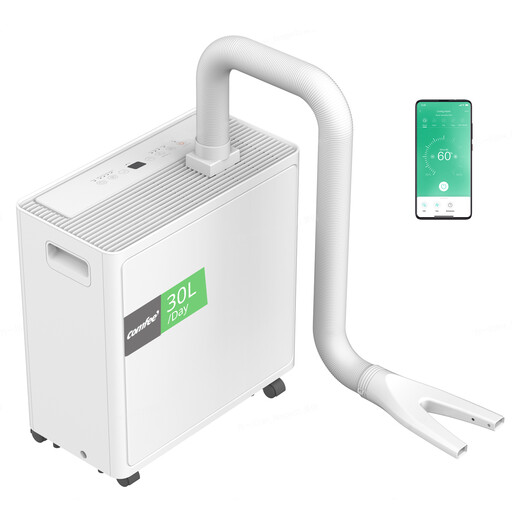
Worth considering if you want automatic humidity control and a full-tank alert. Check the settings and controls on this version.
 No image available
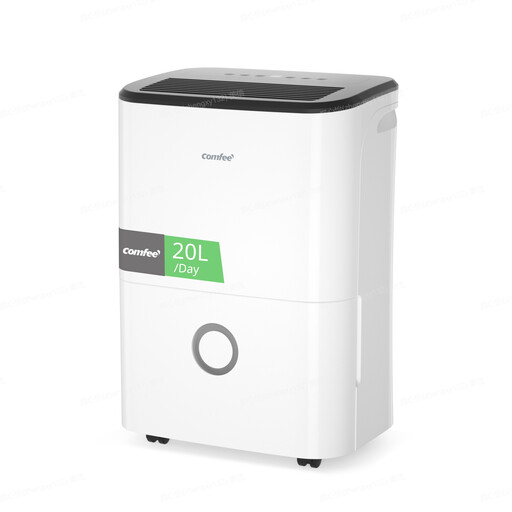
Worth considering if you want adjustable humidity control and the option of continuous drainage. Check which drain hose and accessories are included with this version.
 No image available
Worth comparing if you want automatic humidity control and less frequent manual emptying. According to the product information, continuous drainage requires a hose, which isn’t included.
 No image available
Worth considering if you’re weighing up automatic humidity control and the option of continuous drainage. Check the connection and the hoses included.
 No image available
Worth comparing if you want a timer and automatic controls. Check that the product specifications apply to the white version.
A dehumidifier can help if the relative humidity stays consistently above 65% after you’ve dealt with the causes. The Consumentenbond gives this as buying advice, not as a legal limit. If mould keeps returning, you may need to investigate a structural cause.
The Consumentenbond advises closing windows and doors while dehumidifying to limit extra moisture entering the room. However, keep your home ventilated: ventilation also removes polluted air, which a dehumidifier can’t do. Keep the air inlets clear and follow the model’s instructions.
Clean the dust filter and check the air inlets as instructed for your model. The Consumentenbond gives cleaning the dust filter every two months as a general guideline, or more often with intensive use. Models with a collection tank need emptying; continuous drainage requires a suitable connection.
Business.gov.nl explains that electrical equipment sold in the Netherlands must comply with the applicable European rules, and that CE marking and an EU declaration of conformity are among the manufacturer’s obligations. A CE mark is not an independent assessment of a specific model’s dehumidifying performance. According to ACM ConsuWijzer, online consumer purchases come with a statutory cooling-off period of up to 14 days after the product has been delivered. Your statutory guarantee applies alongside any manufacturer’s warranty, and it doesn’t automatically have the same fixed duration for every appliance.