What to consider when buying a dehumidifier
Start by considering the usual temperature in the room and the cause of the damp. Then compare the conditions used to calculate the stated capacity with those in your own space, and think about how you plan to use the appliance.
| What to consider |
What to look for |
Who is this important for? |
| Performance at room temperature |
Compare the room’s minimum temperature with the stated operating range and the conditions used to determine capacity. |
If my hobby room is unheated, I want to know whether the appliance will keep working at the lowest temperature, not just what its maximum capacity is. Around 31% of consumers say performance at room temperature is their top priority. |
| Source of damp and ventilation |
First, check for a leak or ventilation problem. Don’t use dehumidification as a substitute for changing the air. |
I want to avoid damp or mould returning because the underlying cause is still there. Around 25% of consumers prioritise tackling the source of damp or improving ventilation. |
| Noise and running costs |
Compare the stated noise levels and power input. When estimating costs, take account of the actual number of hours you’ll use the appliance and your own electricity tariff. |
When I’m working near the appliance, I want to be able to tolerate the noise and know what long-term use will mean for my electricity consumption. For around 25% of consumers, noise and running costs matter most while they’re enjoying their hobby. |
| Use when the room is empty |
Check the tank capacity, automatic shut-off and whether continuous drainage is possible. Also consider whether it’s practical to install a drain. |
If I want to leave the dehumidifier running unattended, I want to know how the water will be drained and whether the appliance will stop when the tank is full. Around 19% of consumers prioritise the controls and water drainage when they’re away. |
Dehumidifiers at Joybuy
This selection includes dehumidifiers with a range of stated capacities and room size recommendations. Choose one to suit the temperature, size and moisture levels in your hobby room.
 No image available
Comfee' MDDO-10DEN7 dehumidifier, 10 L/day
Specified for rooms up to approximately 16 m².
Capacity: 10 L per day; tank: 2.5 litres.
Automatic mode: 45–55% humidity; adjustable range: 35–85%.
Features a 24-hour timer and switches off automatically when the tank is full.
Sleep mode: 36 dB(A).
Joybuy
 No image available
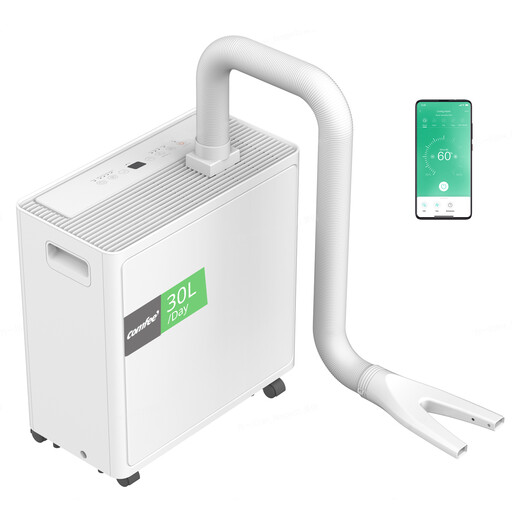
Comfee' MDDA-30DEN7-SD dehumidifier, 30 L/day
Specified for rooms up to 73 m².
Capacity: up to 30 L per 24 hours; tank: 3.2 litres.
Lists Wi-Fi app control and continuous water drainage.
The product information states that it has a 24-hour timer and humidity control.
Joybuy
 No image available
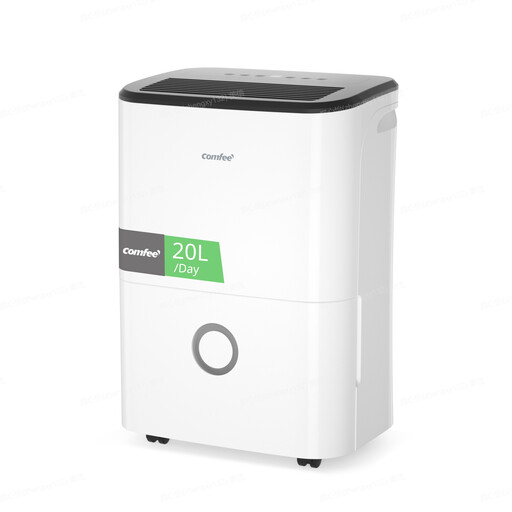
Comfee' MDDF-20DEN7 dehumidifier, 20 L/day
Specified for rooms up to approximately 40 m².
Capacity: up to 20 L per 24 hours; tank: 3 litres.
Has a continuous drainage connection; the drainage hose is not included.
According to the product information, Smart mode maintains humidity at 45–55%.
Joybuy
 No image available
CONOPU 16L dehumidifier, 16 L/day
Specified for rooms up to 60 m².
Capacity: up to 16 L per day; tank: 2.5 litres.
Lists adjustable humidity of 40–70% and continuous drainage with the hoses supplied.
Sleep mode: 30 dB.
Joybuy
 No image available
ELECCI 12L/D dehumidifier with drainage hose
The product name states a capacity of 12 L per day and use in rooms up to 25 m².
Tank: 3.8 litres; automatic defrost and 24-hour timer.
Lists continuous drainage and adjustable humidity.
Joybuy
Frequently asked questions
When is a dehumidifier useful?
The Consumers’ Association suggests a dehumidifier as a possible extra measure if relative humidity remains consistently above 65% after the causes have been addressed. This is buying advice, not a legal limit; investigate sources of damp and check ventilation first.
Can a dehumidifier replace ventilation in my hobby room?
No, a dehumidifier doesn’t replace ventilation. According to the Dutch government, ventilation removes damp and polluted indoor air; dehumidifying doesn’t refresh the air in this way.
What should I consider when setting up and maintaining the appliance?
Follow the instructions for your specific model on positioning, clear airflow, filter maintenance and safety around water and electricity. For the DryBest 10/20, Eurom specifies, among other things, an earthed socket and the recommended clearance around the appliance. Don’t automatically apply these model-specific instructions to other models.
How do I calculate the electricity costs of running it for long periods?
Multiply the power in kilowatts by the number of hours it’s used and your electricity tariff. To calculate consumption in kWh, divide the power in watts by 1,000 and multiply by the number of hours it runs. Bear in mind that the stated power isn’t the same as actual consumption at all times.
What are my rights when buying in the Netherlands?
When you buy online from a business, you generally have 14 days to change your mind; check the applicable terms and exceptions. The Dutch government also states that there is no fixed statutory guarantee period. If a product is faulty, the seller is your point of contact.


