
Drying washing in a heated room
You regularly hang washing in the room where you study or live, and want some help drying it without losing sight of humidity. The Consumentenbond discusses using a dehumidifier to dry washing.


If you regularly dry washing in a heated student room, compare dehumidifiers based on how well they work at your room temperature, how noisy they are on the setting you use, and how you can drain the collected water. If the room is often below 15 °C, consider a desiccant model; according to the Consumentenbond, this type generally uses more electricity than a compressor dehumidifier. Keep ventilating too: Milieu Centraal describes ventilation as supplying and removing air, which a dehumidifier cannot do.
You regularly hang washing in the room where you study or live, and want some help drying it without losing sight of humidity. The Consumentenbond discusses using a dehumidifier to dry washing.
You sleep close to the appliance, so you pay attention to how noisy it is on the setting you plan to use while drying. The Consumentenbond explains that noise levels can vary between fan settings.
Your room often stays cool, so choosing between a compressor and desiccant model may matter more than the stated capacity alone. The Consumentenbond identifies desiccant models as an option for cold spaces.
| What to consider | What should you look for? | Who is this most important for? |
|---|---|---|
| Drying washing in the room | Check how the model works and the temperature range it is designed for. Also make sure there is room for air to circulate around the airer. | If I dry washing in the room where I live, I want to know whether the appliance suits the temperature and the space available. Around 26% of consumers with this purchasing need prioritise drying washing. |
| Managing humidity | Check whether you can set the humidity level and whether water collects in a tank or drains continuously. Also consider ventilation and possible causes of recurring damp. | If damp patches keep coming back, I want to address the cause and ventilation as well as drying washing. Around 21% of this group prioritise humidity control. |
| Noise while in use | Compare the noise level for each setting and check whether there is a timer. Focus on the setting you will actually use during a drying cycle. | If my bed is close to the airer, noise while the appliance is running is an important consideration. Around 21% of this group are particularly mindful of getting a good night’s sleep. |
| Performance in a cool room | Check the usual room temperature while drying and the temperature guidance for the exact model. Compare compressor and desiccant models if the room stays cold for long periods. | If my room is often cold, I want to choose a type that suits those conditions. Around 16% of this group consider room temperature their top purchasing priority. |
| Electricity and maintenance | Compare energy use under similar conditions and consider tank capacity, drainage options and filter maintenance. | If the appliance runs often, I also want to factor in electricity use and the effort involved in emptying the tank and maintaining it. Around 16% of this group prioritise running costs and maintenance. |
The Consumentenbond says Peltier models are suitable for small spaces such as a cupboard or caravan, rather than as an all-purpose solution for an airer in a room.
For drying washing in a student room, first compare compressor models or, if the room stays cold for long periods, desiccant models.
The stated capacity depends on the conditions under which it was measured. For example, De'Longhi lists 10 l/24 hours at 30 °C and 80% relative humidity for the DEX210SF.
Check the test conditions for the exact model and only compare figures measured under similar conditions.
A dehumidifier collects moisture, but it does not remove stale air or fix a leak. Milieu Centraal describes ventilation as supplying fresh air and removing stale air.
Continue to ventilate adequately and report recurring mould or a suspected structural problem to your landlord.
The setting you use for a drying cycle may sound different from the quietest setting. Duux lists 35 dB on the lowest setting and 46 dB on the highest for the Bora 12L.
Compare the noise figures for the setting you actually plan to use, and check whether a timer suits your sleep schedule.
Trotec says the TTK 26 E is designed for a small, heated room and includes a laundry-drying function.
Duux says the Bora 12L combines a laundry mode and humidistat with a tank or continuous drainage.
De'Longhi describes the Tasciugo AriaDry DEX210SF as a compressor model with a laundry-drying function and continuous drainage.
Qlima describes the DD 808 as a desiccant model, positioning it for use in cold spaces.
These Joybuy products are designed for drying washing indoors. Compare their stated tank capacities, features and room sizes with your own room.
 No image available
The product name mentions a laundry-drying mode and a timer for scheduled drying cycles.
Stated specifications: 10 L/day and a 2.5 L tank; the product name also gives an approximate room size of 40 m³ (16 m²) and a sleep mode noise level of 36 dB.
 No image available
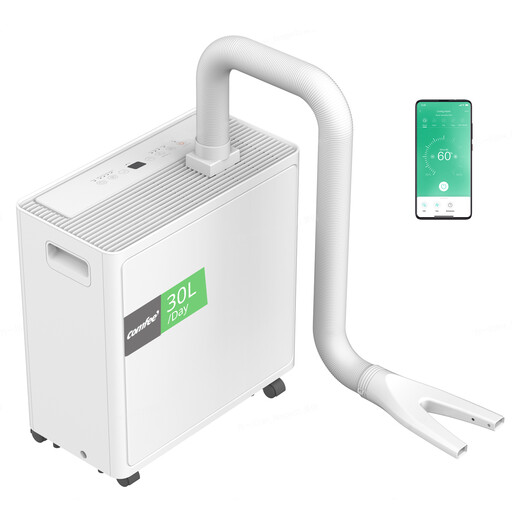
The product name mentions laundry drying and app control. Check whether the stated room size is suitable for your room.
Stated specifications: 30 L/day and a 3.2 L tank; the product name also gives an approximate room size of 130 m³ (73 m²), continuous drainage and a 24-hour timer.
 No image available
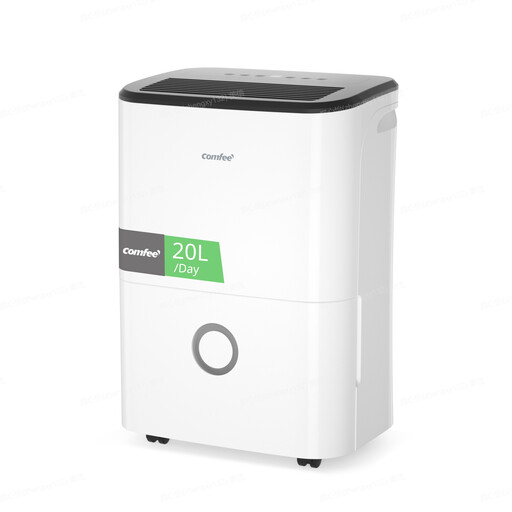
The product name mentions a laundry-drying mode. Compare the stated room size with the dimensions of your student room.
Stated specifications: 20 L/day and a removable 3 L tank; the product name also gives an approximate room size of 100 m³ (40 m²), continuous drainage and a 24-hour timer.
 No image available
The product name mentions a laundry-drying function. Compare the tank capacity with how often you want to empty it.
Specifications stated in the product name: 2.5 L tank, continuous drainage and a 24-hour timer.
 No image available
The product name mentions a laundry-drying function and continuous drainage. Check which drainage option suits your space.
The product name gives a 24-hour timer and an approximate room size of 32 m².
Yes, keep ventilating: ventilation also removes stale air. For a specific drying cycle, the Consumentenbond recommends keeping the windows and doors of the drying room closed temporarily. Make sure the room is still ventilated regularly.
No. According to the Consumentenbond, you can also dry washing without a dedicated mode by setting the appliance appropriately before the drying cycle and allowing air to flow around the laundry. Check whether continuous mode stops automatically or whether you need to use a timer.
Don’t tuck the appliance away behind furniture, so that air can circulate. Empty the tank when needed and follow the cleaning instructions for the dust filter. The Consumentenbond recommends cleaning it once every two months, or more often with intensive use.
When you buy from a business, the product must meet what you can reasonably expect; the seller is your point of contact. According to the Dutch Government, the Netherlands does not have a fixed statutory guarantee period of two years. Online purchases from a business generally come with a 14-day cooling-off period, subject to legal exceptions.
Take an old electrical appliance to a collection point, or use the old-for-new scheme when buying a similar new appliance. The Dutch Government states that shops must take back the old appliance in this case.