What should you look for?
First, consider how warm the room is while you’re drying laundry; this will help you choose the right dehumidification method. Then compare the noise level while you work and how you’ll collect or drain the water.
| What to consider |
What should you check? |
Who is this important for? |
| Drying laundry |
Compare the stated capacity, including the temperature and humidity conditions; leave space between garments and direct the airflow along the laundry. |
I want to know whether the appliance suits my room temperature and clothes airer, without assuming its maximum daily capacity is what I’ll get in practice. Around 33% of consumers with this buying question put drying laundry first. |
| Working in peace |
Check the noise level on the fan setting you plan to use and see whether a timer or other scheduling option is available. |
During calls or focused work, I want to know how noisy the chosen setting is, even if that means scheduling drying for another time. Around 27% of consumers prioritise working without interruption. |
| Cold home office |
Check the room temperature and compare compressor and desiccant models, including their electricity use. |
If my home office stays cold, I want to choose a type that suits those conditions and take its energy use into account. Around 20% of consumers give performance in a cold room top priority. |
| Use and drainage |
Check the tank capacity, whether continuous drainage is possible and the energy use under comparable conditions; keep the room ventilated. |
If I regularly dry laundry indoors, I want to know how often I’ll need to empty the tank and how the appliance will fit into my daily routine. Around 20% of consumers prioritise manageable use and water drainage. |
Dehumidifiers at Joybuy
These product picks are dehumidifiers for drying laundry indoors. Compare the stated specifications with the temperature, noise level and drainage options that suit your home office.
 No image available
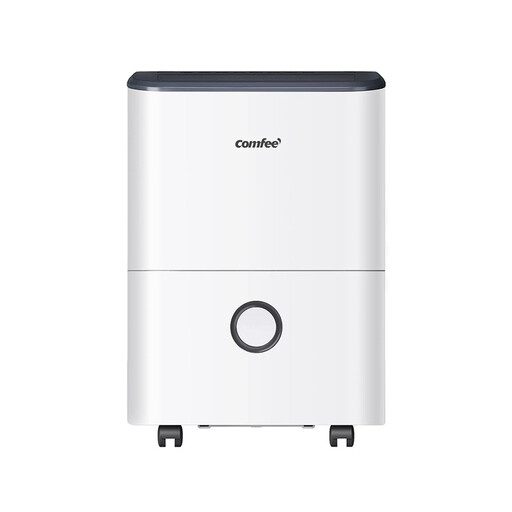
Comfee MDDF-20DEN7, 20 L/24 hours
An option to compare if you’re looking for a dehumidifier for drying laundry indoors.
Stated capacity: 20 L/24 hours; power: 290 W.
View at Joybuy
 No image available
CONOPU 16L dehumidifier, 2.5-litre tank
An option to include in your comparison for drying laundry indoors.
Specifications listed in the product name: 16 L, 2.5-litre tank and 24-hour timer.
View at Joybuy
 No image available
TRULIVA AP10-2012EE, approx. 32 m²
An option to compare if you’re considering a dehumidifier for a home office.
Specifications listed in the product name: 24-hour timer and continuous drainage.
View at Joybuy
 No image available
ELECCI 12L/D dehumidifier, 3.8-litre tank
An option to compare for drying laundry indoors, taking the water tank into account too.
Specifications listed in the product name: 12 L/D capacity, 3.8-litre tank and coverage of 25 m².
View at Joybuy
 No image available
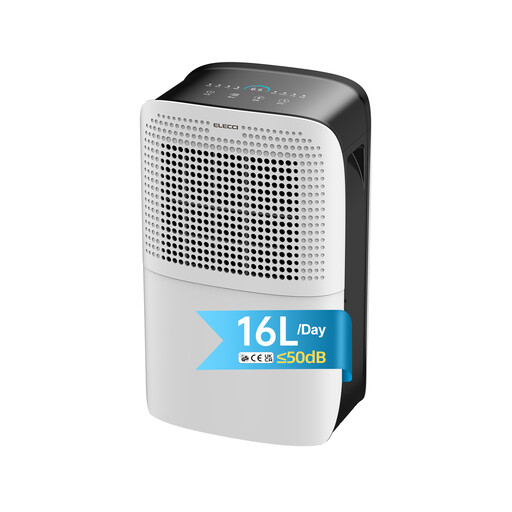
ELECCI 16L/D dehumidifier, 3.1-litre tank
An option to compare if you’re also considering water collection for longer drying sessions.
Specifications listed in the product name: 16 L/D capacity, 3.1-litre tank, four modes and coverage of 32 m².
View at Joybuy
Frequently asked questions
Do I need a dedicated laundry-drying mode?
No, a dedicated laundry-drying mode isn’t essential. According to the Consumers’ Association, a suitable appliance can help without one: adjust the dehumidifier’s settings and, if possible, direct the fan towards the laundry. Hang clothes with space between them and direct the airflow along the laundry. A dehumidifier doesn’t replace ventilation in an occupied home office.
Should I keep the door shut while drying laundry if I’m working in the same room?
According to the Consumers’ Association, a more enclosed space can help when drying laundry, but don’t block the necessary supply of fresh air. Milieu Centraal and the Dutch government stress the importance of ventilation in occupied rooms. Make sure your drying set-up works with the ventilation available, or dry your laundry in another suitable room.
How should I position and maintain the appliance safely?
Follow the instructions for your chosen model. The Eurom DryBest 10 and 20 manuals specify, among other things, that the appliance should be placed on a flat, stable surface with clear air vents. They also say to switch it off and unplug it before moving or cleaning it. These instructions are specific to those models.
How can I compare running costs?
Compare electricity use at similar temperatures, humidity levels, settings and operating times. The Consumers’ Association measures consumption over 24 hours under different test conditions. Your own usage and electricity tariff will also affect the final cost.
What are my rights when buying online in the Netherlands?
According to the Dutch government, when you buy at a distance you’re entitled to a 14-day cooling-off period in many cases; check the terms that apply to your purchase. You’re also entitled to a product that works properly. If there’s a problem, the seller must provide a solution; a manufacturer’s guarantee is in addition to your statutory rights.


