First, deal with any leaks, sources of moisture or ventilation problems: a dehumidifier won’t fix the cause or replace the need for fresh air. According to Consumentenbond, a compressor dehumidifier is generally suitable for a room that stays above 15 °C. If you’ll use it below 15 °C, consider a desiccant model, although this type uses more electricity than a compressor model. According to Consumentenbond, a small Peltier dehumidifier is intended more for a very small, enclosed space than for a damp spare room.
Who is this buying guide for?
If you have a persistent damp problem
You’ve checked for sources of moisture and looked at ventilation, but your spare room is still damp. You want to know whether a dehumidifier could help and what capacity would suit the room. Consumentenbond and Milieu Centraal stress the importance of addressing the source of the moisture and ensuring good ventilation.
If your spare room is cold
You use the room even when it’s cold and want to choose a technology that suits the temperature at which you’ll use it. Consumentenbond describes temperature as an important factor when choosing between compressor and desiccant dehumidifiers.
If you value peace and quiet or extra convenience
You sometimes sleep in the spare room or dry washing indoors. Noise, the water tank and the option to drain water away can all influence your choice; Consumentenbond highlights these points when choosing and testing dehumidifiers.
What should you look for when buying?
Consumentenbond says a dehumidifier may help when relative humidity stays above 65% over time, even after you’ve addressed the causes. Keep ventilating: Milieu Centraal describes ventilation as bringing in fresh air and removing stale air.
| What to consider |
What should you check? |
Who is this most important for? |
| Persistent damp and capacity |
Compare the stated capacity with the room size, temperature and moisture level. A maximum per day doesn’t guarantee the same output in your room. Also check whether it has an adjustable humidistat. |
If I’ve addressed the source of the moisture but the spare room is still damp, I want to choose a capacity that suits the space. Around 42% of consumers put persistent damp and a suitable capacity first. |
| Performance in cold conditions |
Measure the temperature during use and check the model’s permitted operating temperature range. Consumentenbond recommends compressor models above 15 °C and desiccant models below 15 °C; according to the organisation, desiccant models use more electricity than compressor models. |
If the room stays cold, I want a technology that suits that temperature, while keeping an eye on electricity use too. Around 25% of consumers give performance in cold conditions top priority. |
| Noise while it’s running |
Check the noise levels for each setting and compare the conditions under which they were measured. A manufacturer’s figure alone doesn’t tell you how intrusive the appliance will sound in your room. See whether it has a timer or night mode. |
If I sleep or work in the spare room, I want to know whether I’ll hear the appliance on the setting I choose. Around 17% of consumers put quiet operation first. |
| Drying washing and emptying the tank |
Check the tank capacity, whether the appliance switches off when the tank is full and whether it offers continuous drainage. A drain hose will only work if the connection and positioning are suitable. |
If I dry washing indoors or don’t want to empty the tank often, I want to know in advance where the appliance and any drain can go. Around 16% of consumers prioritise this convenience. |
Common mistakes
-
Buying a dehumidifier without investigating the source of the moisture
An appliance removes moisture from the air, but it won’t fix a leak or replace ventilation. Consumentenbond and Milieu Centraal stress that you should look at the cause and ventilation first.
Investigate recurring damp and check that the room is properly ventilated before choosing an appliance.
-
Assuming the maximum litres per day is what you’ll get in your room
Capacity figures are given for specific temperature and humidity conditions. The actual amount of moisture an appliance removes from your spare room may differ; that’s why Consumentenbond compares dehumidifiers under different conditions.
Measure the room temperature and compare the test conditions and capacity with the conditions in which you plan to use the appliance.
-
Treating a cold spare room as if it were heated
Temperature affects dehumidifying performance and can change whether a compressor or desiccant model is the better choice. Consumentenbond recommends compressor models above 15 °C and desiccant models below 15 °C.
Measure the temperature during the times you plan to use the appliance, and check the permitted operating temperature range for the specific model.
-
Looking only at tank capacity or a single noise figure
A full tank can interrupt use, while a noise figure alone won’t tell you how intrusive an appliance will sound in your room. Consumentenbond highlights noise and conditions of use, among other things, as points to consider.
Check the drainage options, the full-tank warning and the noise levels for each setting and measurement condition.
Brands to compare
These brands and models offer different features to compare; their inclusion isn’t an endorsement or confirmation of performance. Check with the retailer that the specific version on offer has the CE marking and relevant documentation. The Dutch government says that electrical appliances placed on the EU market must carry the required CE marking.
Eurom
The DryBest 10 is a compressor model to compare for a small, sufficiently warm room.
- Eurom lists a capacity of 10 l per 24 hours, a 2 l tank, a humidistat and the option of drainage.
- An older manual for product codes 370973 and 370980 warns against using or storing the appliance in a room smaller than 4 m². Check whether that manual applies to the version on offer, and follow the current instructions.
De'Longhi
The DEX210SF is a compressor model to compare if noise and continuous drainage are important to you.
- De'Longhi lists 10 l per 24 hours at 30 °C and 80% relative humidity, 36 dB(A) and continuous drainage.
- These stated figures don’t show how much water the model will remove from your spare room or how loud it will sound there.
Qlima
The D 612 is a compressor model to compare if controls, tank capacity and drainage matter to you.
- Qlima lists a timer, humidistat, drain hose, 1.8 l tank and a capacity of 12 l per 24 hours at 32 °C and 80% relative humidity.
- The noise figures in the product information aren’t based on a single directly comparable measurement method, so don’t use them to make a definitive ranking against other brands.
Trotec
The TTR 57 E is a desiccant model to consider if your spare room stays cold.
- Trotec lists a coverage area of up to 20 m² and operation from 1 °C.
- These are product specifications, not an independent comparison of electricity use or dehumidifying performance in your room. According to Consumentenbond, desiccant models use more electricity than compressor models.
Meaco
The Arete One 12L is a model to compare if you want a dehumidifier and filter in one appliance.
- Meaco lists an H13 filter and a drainage connection.
- The presence of a filter alone doesn’t prove that it will solve your damp problem more effectively than another appliance.
Products at Joybuy
These Joybuy products are designed to help reduce damp in your home. Compare their stated capacity and features with the temperature, size and available space in your spare room. When buying, also check the CE marking and relevant documentation for the specific version.
 No image available
CONOPU 16L dehumidifier
Could be suitable if a timer, automatic control and water drainage options are important to you.
Stated capacity: 16 l per day. The description lists a timer, sleep mode, laundry-drying function and continuous drainage. For sleep mode, the product description states less than 50 dB; this doesn’t guarantee that the appliance will sound quiet in your room.
The instructions say to leave the appliance upright for 2 hours after tilting it, and to leave 10 inch of clear space around it.
View at Joybuy
 No image available
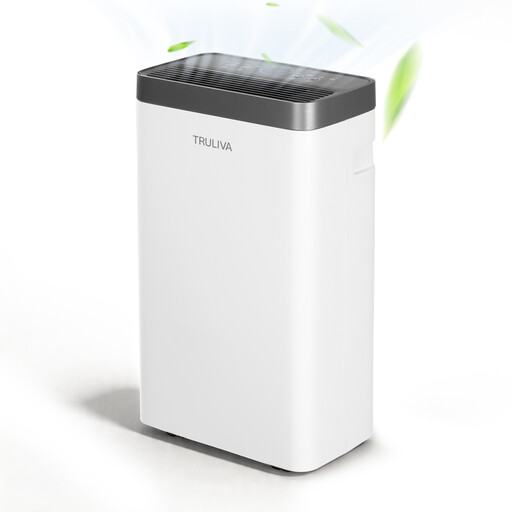
TRULIVA AP10-2012EE dehumidifier
Could be suitable if you want to compare a timer and continuous drainage with the space available in your room.
Stated capacity: 16 l per day; stated coverage: around 32 m². The product information lists automatic defrosting, a timer, a drain hose and a 1.35 l tank.
Leave 10 inch of clear space around it. The instructions say to leave the appliance upright for 2 hours after tilting it before use.
View at Joybuy
 No image available
ELECCI 12L/D dehumidifier
Could be suitable if you’re comparing a model for a smaller room with a tank and drainage option.
Stated capacity: 12 l per day; stated coverage: up to 25 m². The product information lists a 3.8 l tank, automatic defrosting, a timer and continuous drainage.
Leave 10 inch of clear space around it. The instructions say to leave the appliance upright for 2 hours after tilting it before use.
View at Joybuy
 No image available
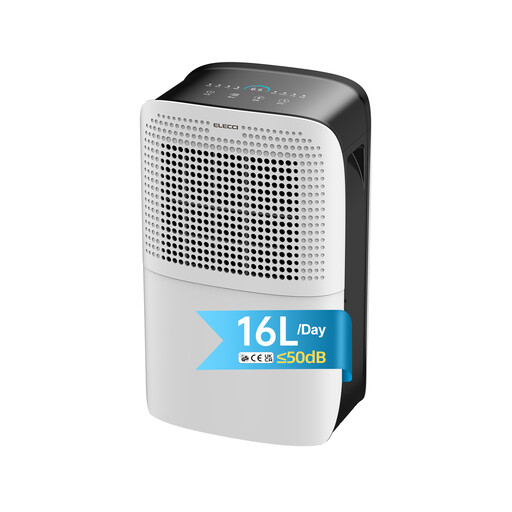
ELECCI 16L/D dehumidifier
Could be suitable if you want to weigh the stated capacity and laundry-drying features against the space available.
Stated capacity: 16 l per day; stated coverage: up to 32 m². The product information lists a 3.1 l tank, four settings, automatic defrosting, a timer and continuous drainage.
Leave 25 cm of clear space around it. The instructions say to wait an hour after tilting the appliance before plugging it in again.
View at Joybuy
 No image available
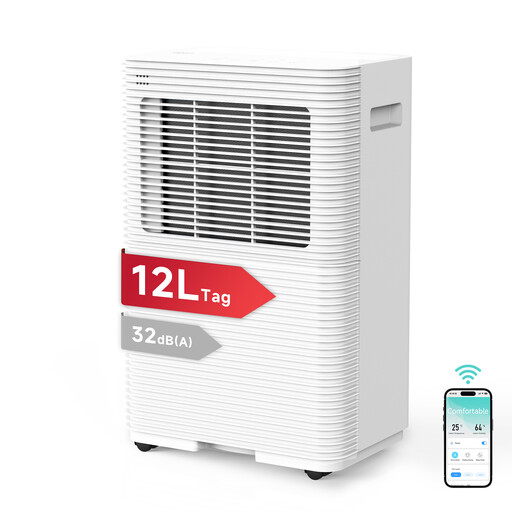
VINO 12L Smart dehumidifier
Could be suitable if you want to compare sleep mode, app control and scheduling.
Stated capacity: 12 l per day; stated coverage: up to 24 m². The product information lists a 1.8 l tank, three settings and Wi-Fi control.
Leave 20 cm of clear space around it. The product information says the drain hose is not included.
View at Joybuy
Frequently asked questions
When is a dehumidifier useful instead of just ventilating?
According to Consumentenbond, a dehumidifier may help if relative humidity stays above 65% over time, even after you’ve addressed the causes. Keep ventilating: a dehumidifier doesn’t remove stale indoor air or bring in fresh air.
Should I choose a compressor or desiccant model for a cold spare room?
If the room stays below 15 °C during use, a desiccant model is worth considering; above 15 °C, Consumentenbond recommends a compressor model. According to Consumentenbond, desiccant models use more electricity than compressor models, so compare energy use too and check the permitted operating temperature range for the specific model.
Should the windows be open while the appliance is running?
Consumentenbond recommends closing the windows and doors of the room being dehumidified while the appliance is in use. This is advice on using the appliance, not a recommendation to stop ventilating your home as needed.
Does Eurom’s warning about rooms smaller than 4 m² apply to every DryBest 10?
Not necessarily: an older Eurom manual for product codes 370973 and 370980 warns against using or storing the appliance in a room smaller than 4 m². Before use, check which current manual applies to the version on offer and follow the instructions for that version.
What can you do if mould keeps coming back?
Address the source of the moisture and have the cause investigated. The GGD lists leaks, rising damp, poor ventilation and insulation among the possible causes of recurring mould; speak to your landlord or a professional if necessary.


